23 Mar, 2026
Brookfield private equity targets 'misunderstood' businesses

By Dylan Thomas
➤ Prioritizing operational improvement over multiple expansion.
➤ Investing in "misunderstood" businesses through economic cycles.
➤ Using dividend recapitalizations to generate distributions in a challenging exit market.
Wars in Europe and the Middle East. The rise of AI and growing threat of AI disruption. On-again, off-again tariffs.
David Nowak, president of Brookfield Asset Management Ltd.'s private equity group, said the volatile macroeconomic backdrop does not shift his fundamental approach to tending a portfolio: Find businesses that are misunderstood by the market, then stay focused on creating value.
"Fifty percent of our returns have come through operational [improvement], or think of it as margin expansion. It's been a big important factor in how we've invested and how we've earned returns," Nowak said.
Nowak opened his value-creation playbook and also discussed the challenging exit environment in a conversation with S&P Global Market Intelligence at the recent SuperReturn North America private capital conference in Miami.
|
|
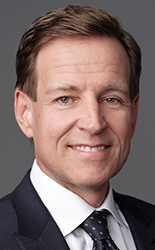 David Nowak, president of Brookfield Asset Management Ltd.'s private equity group.
S&P Global Market Intelligence: What are the key levers to pull in terms of operational improvement right now?
David Nowak:
We look at centralizing procurement spend. You'd be amazed that some of the small things, like spending money on lawyers, spending on FedEx, Microsoft, that are just done on a decentralized basis. Bringing that together and lowering the cost profile.
We do a lot of digitization. Modernizing businesses, getting them better information, making it easier to get that information disseminated around to the people within the business to make good decisions.
Less in our control are things like dynamic pricing and just getting smarter on where you make your money. You can get people all kinds of information that allows them to make better decisions. But at the end of the day, does the customer absorb that price increase or do they look for a substitution for your product?
How is the macroeconomic backdrop — war, AI disruption, you name it — playing out across your portfolio right now?
We try to find misunderstood businesses. It allows you to invest in value. And then we try to run them better.
The reason I frame that first in answering your question is that a lot of that [macroeconomic] stuff doesn't impact what we do. If you find something that is less loved or that has opportunity to drive profitability, that's not dependent on other thematic events that are going on.
That said, operating in the geopolitical environment that you have today can be difficult. There's a lot of volatility in the world right now.
There's two sides to the coin of AI. There's the fear of disruption that often gets the headlines. Then there's the other side of the coin, which is the opportunity to drive efficiencies and value and actually expand margins.
What are you keeping in mind as you deploy capital into this environment?
You need to be mindful of liquidity and balance sheet risk.
Whenever we've worried about a recession, as an example — which is a big part of your question with $100 oil, [when] there's uncertainty about where the economy is headed — what you want to do is make sure you have adequate liquidity. Don't over-lever your businesses.
Bruce Flatt, our CEO, said to me when I first joined Brookfield, "Remember, businesses don't go bankrupt. Balance sheets go bankrupt." In this type of market, make sure you're smart with information. When you have conviction, don't be afraid to go lean in with your conviction. But don't strain your balance sheet.
Does that mean you're putting more equity into new investments than you might have in the past?
Yes. You either put less of a turn of debt in the initial investment, or you reserve a turn of equity from the fund so that if something happens, you could inject that.
There has been a lot of pressure over the past few years to improve the flow of distributions for limited partners (LPs). Have you been feeling that pressure, and how are you addressing that?
We're focused on it, but we don't want to make irrational decisions that are not in the best interest of the investment.
We've been able to distribute a lot of capital back, and a lot of what we have done have been dividend recapitalizations. We could have sold the business, or we could have done a dividend recap, return capital [to LPs] and still own 100% of the business — a business we like that we think we could do more with, in terms of growing profitability and growing margins.
That leads to really good debate and discussion that ultimately gets you the right answer.