30 Mar, 2026
Average delinquency rates at top credit card issuers were stable in February

Average delinquency and charge-off rates for the five biggest US credit card issuers remained stable in February, though both metrics ticked up from January for some of the lenders.
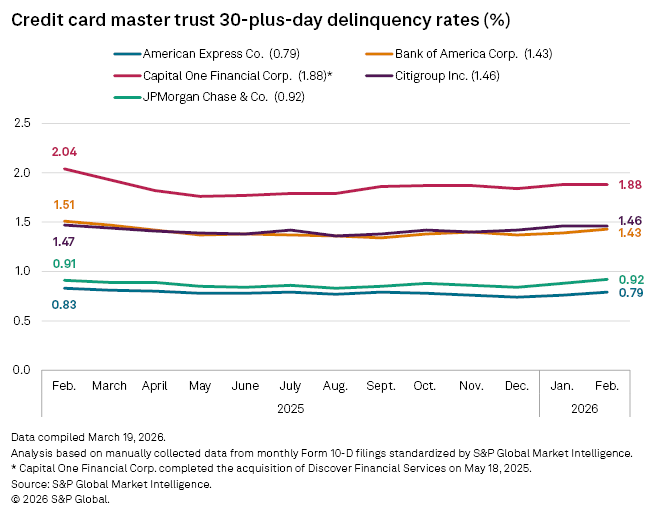
The average 30-plus-day delinquency rate for American Express Co., Bank of America Corp., Capital One Financial Corp., Citigroup Inc. and JPMorgan Chase & Co. edged up to 1.30% in February from 1.27% in January, but was 6 basis points lower than a year earlier.
On a month-over-month basis, American Express, Bank of America and JPMorgan saw upticks in their 30-plus-day delinquency rates, while Capital One's and Citigroup's were unchanged.
Year over year, all but JPMorgan posted lower 30-plus-day delinquency rates. JPMorgan's ticked up 1 basis point from February 2025. Capital One recorded the biggest year-over-year decline in 30-plus-day delinquency rate — 16 basis points — versus single-digit drops at American Express, Bank of America and Citigroup.
"We see a very stable situation," Capital One Chairman, President and CEO Richard Fairbank said during a company presentation at a February conference.
While there are concerns like inflation, consumers still find themselves in a "fairly stable" economy, he said. Credit card delinquency on a seasonally adjusted basis started improving in mid-2024 until about August 2025, after which delinquencies have been flat, he added.
Net loss rate stays below last 12 months' average
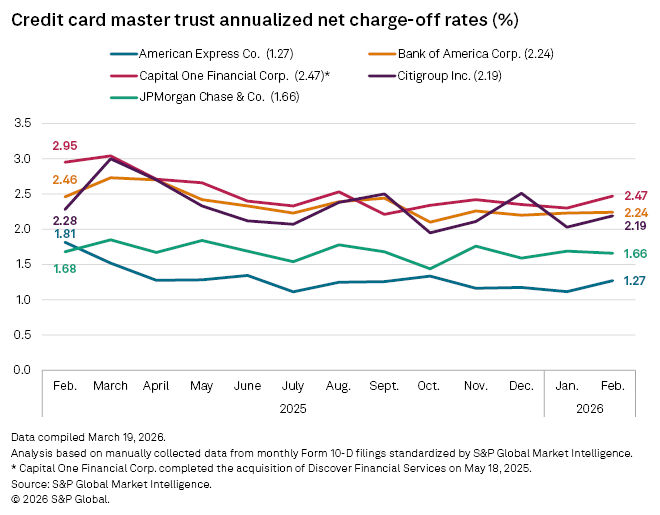
Net loss rates fell year over year at all five major card issuers, with the group's average down 27 basis points. American Express posted the biggest decline, 54 basis points, followed by Capital One and Bank of America.
Month to month, only JPMorgan posted a lower average net charge-off rate, while the rest recorded upticks in February.
The average net loss rate for the five lenders in February was 1.97%, up from 1.87% in January but still lower than the 2.02% average for the last 12 months.
*Access data on credit card master trust yields, net charge-offs and delinquencies in Excel format.
*Download a template to compare a bank's financials to industry aggregate totals.
*Read some of the day's top news and insights from S&P Global Market Intelligence.

Portfolio yields up
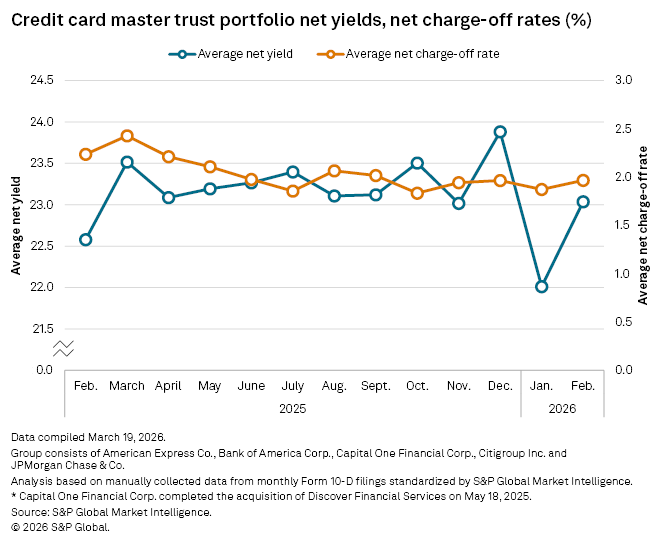
Credit card portfolios generated higher returns on average for the major US card issuers in February. The average gross portfolio yield for the group was 25.00%, up from 23.88% in January.
While American Express and Bank of America posted lower gross yields month over month, Capital One, Citigroup and JPMorgan booked sequentially higher yields.
Year over year, the group's average gross portfolio yield rose by 19 basis points in February from the same month in 2025.
While Bank of America and Capital One recorded year-over-year declines in their gross portfolio yields, American Express, Citigroup and JPMorgan posted higher gross returns. Citigroup booked a 150-basis-point year-over-year increase in February, the largest in the group.