14 Jan, 2026

Miners seek price collar for rare earths in Australia's A$1.2B strategic reserve

SNL Image

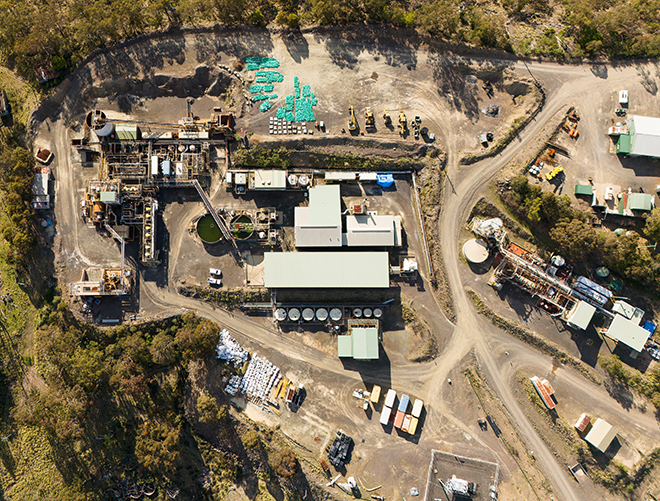
Larvotto Resources' Hillgrove gold-antimony project in New South Wales, Australia. Antimony will be prioritized in Australia's critical minerals strategic reserve.
Source: Larvotto Resources Ltd.

Miners in Australia want the federal government to adopt a price collar to ensure certainty for producers of rare earths, which will be part of the initial focus of the country's critical minerals strategic reserve.

The Australian government announced Jan. 12 that its A$1.2 billion strategic reserve, which will be operational in the second half, will prioritize rare earths, gallium and antimony. Australia has the world's sixth-largest resources of rare earths and antimony, according to the government. Work is underway to quantify the country's resource potential for gallium.

SNL Image
Australian Resources Minister Madeleine King.
Source: Paydirt Media Ltd.

The government will also introduce legislation to expand Export Finance Australia's powers, enabling "offtake agreements with fixed or floating prices, trading in forward offtake agreements and intermediary demand and supply aggregation, as well as stockpiling and contracts for difference," Resources Minister Madeleine King told media in Rockingham, Western Australia, on Jan. 12.

"What we want the strategic reserve to do is to use a number of tools, and that's what the legislation will enable Export Finance Australia to do: to be able to support that industry [and] set a minimum price so that we can encourage more investment, create stability in the market, but also as prices rise — and we think they will — that there is the opportunity for the Australian taxpayer to get the upside," King said.

The Department of Industry, Science and Resources will manage strategic reserve transactions with oversight by the resources minister.

The Association of Mining and Exploration Companies (AMEC) welcomed the new details on the strategic reserve and said it could be optimized with the Rare Earths Production Scheme that the group designed with 10 rare earths developers.

The scheme was launched Jan. 3 to build on the critical minerals framework that Australian Prime Minister Anthony Albanese signed with US President Donald Trump in October 2024.

The new model uses a contract for difference with a price collar to "provide targeted support to both heavy and light rare earth projects, while minimizing downside risk for taxpayers," according to AMEC's Jan. 12 statement. The scheme would ensure commercial bankability and consistency with the government's policy objectives, and limit fiscal exposure for taxpayers, the group said.

Under the price collar scheme, the government will cover the gap when the spot price falls below a price floor, and receive a negotiated proportion of revenue when the spot price exceeds a price ceiling.

"The referenced spot price may be the higher of the market price on either the Shanghai Metals Market or an ex-China index, if operational. [The] volume for the scheme will be allocated through a tender process, and prices will be set via a reverse auction," AMEC said.

Balancing risks and rewards

AMEC's scheme "appropriately balances risk and reward for the government and investors," Arafura Rare Earths Ltd. managing director and CEO Darryl Cuzzubbo told Platts, part of S&P Global Energy.

"When prices are low, the government pays; when prices are high, the government shares in the profits. This ensures the appropriate balance of industry support and taxpayer protection," Arafura said in a Jan. 12 LinkedIn post.

The stockpile may offset some of Beijing's influence on critical minerals markets, Neil Welsh, head of metals at Britannia Global Markets, said in a Jan. 12 note. "A key objective for the reserve would be to establish a floor for critical mineral prices to help protect producers against future market slumps driven by surges of cheap supplies from China," Welsh said.

The reserve will serve as a long-term source of critical minerals as global demand accelerates across applications, including solar panels, defense and high-tech manufacturing, according to a Jan. 12 statement from Larvotto Resources Ltd.

"The strategic reserve will secure rights to Australian-produced minerals and on-sell to allied countries, strengthening Australia's role in global supply chains and economic partnerships," Larvotto said.

Larvotto operates Australia's largest antimony deposit, the Hillgrove gold-antimony project in New South Wales. Hillgrove, which could produce about 5% to 7% of global mine supply, is scheduled to start production by mid-2026.

In October 2024, Larvotto rejected a takeover offer from US government supplier United States Antimony Corp.

Growing recognition

The Minerals Council of Australia welcomed the government's ongoing support for the country's role in the global supply chain for metals and minerals, especially for rare earths, gallium and antimony.

"Australia has many opportunities to unlock. Encouraging new operations to contribute to a voluntary strategic reserve, is an important tool in the broader kit of productivity reforms that can deliver a more internationally competitive mining industry," the council said in a Jan. 12 post.

"There is growing recognition around the world that Australia's abundant supply of critical minerals will be essential for global supply chains, with both strategic and economic importance," Victory Metals Ltd. said in a Jan. 12 LinkedIn post.

Victory Metals CEO Brendan Clark had briefed the Trump administration about the company's North Stanmore project, according to the post. The project is Australia's largest and most advanced heavy rare earths project and also hosts other critical minerals such as gallium.