Featured Topics
Featured Products
Events
S&P Global Offerings
Featured Topics
Featured Products
Events
S&P Global Offerings
Featured Topics
Featured Products
Events
S&P Global Offerings
Featured Topics
Featured Products
Events
Financial and Market intelligence
Fundamental & Alternative Datasets
Government & Defense
Professional Services
Banking & Capital Markets
Economy & Finance
Energy & Commodities
Technology & Innovation
Podcasts & Newsletters
Financial and Market intelligence
Fundamental & Alternative Datasets
Government & Defense
Professional Services
Banking & Capital Markets
Economy & Finance
Energy & Commodities
Technology & Innovation
Podcasts & Newsletters
28 Jan, 2026

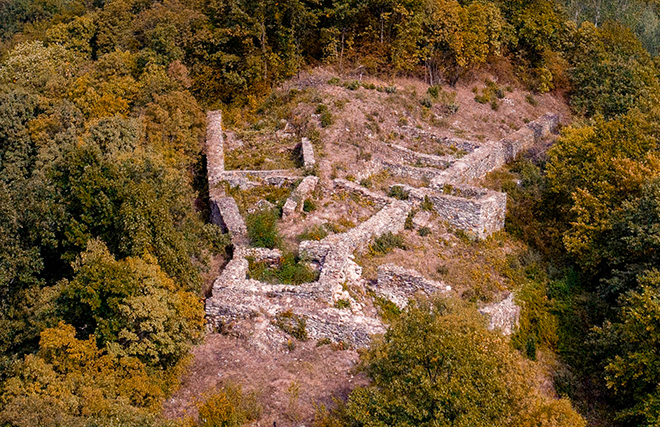
| Ruins of a third-century gold smelter in Middle Island Resources' Timok project area, which operated during the reign of Serbian-born Roman Emperor Constantine. |
➤ Middle Island Resources aims to release an initial resource estimate for its flagship Bobija copper-gold-silver project in Serbia in 2026.
➤ Serbia's mining reforms are designed to increase transparency and predictability.
➤ Significant competition is building for mineral prospects in Serbia, with investment by some major miners.
![]() |
| Peter Spiers, CEO of |
In November 2025, Middle Island Resources Ltd. acquired Konstantin Resources Ltd., a privately held company with a portfolio of copper-gold exploration assets in Serbia that also host other critical minerals. Konstantin co-founder Peter Spiers was appointed CEO of Middle Island in December 2025.
Serbia, which has had three mining ministers since 2020, is still evolving as a modern mining jurisdiction, according to Spiers. The country is working on new mining laws to align with the EU, which needs its critical minerals, including those from Rio Tinto Group's Jadar lithium project. Jadar was mothballed in November 2025 after over two decades of efforts to bring it into production.
Platts, part of S&P Global Energy, spoke to Spiers about Middle Island's new direction in Serbia and the country's attitudes about mining. This interview has been edited for clarity and length.
Platts: What prompted Middle Island to switch its focus from Australia, a top-tier mining jurisdiction, to Serbia?
Peter Spiers:
Between Middle Island looking for a change of focus and the assets and the people that we had, it was a good fit, so we put both of the companies together and raised some funds at the same time. So we're now cashed up and manpowered up with a brand new asset base in Serbia.
Copper and gold are the primary focus, but we also have a mixture of silver, lead and zinc, which are important these days.
Our prime project is Bobija, a polymetallic deposit we drilled just prior to Christmas 2025. We will do a series of phases of drilling then hope to move to a resource estimate later this year to assess the merits, size, scale and grade, and work out what the forward path is.
Priboj is a large-scale copper target in an area that's had historic workings since neolithic times. There has been historical copper mining across the whole region over 6,000 or 7,000 years and through Roman times as well.
This is an area that's had zero modern exploration. There's absolutely nothing recorded. We're seeing copper sulfides and copper carbonate minerals outcropping at surface, and we're going through a staged program working that up, doing the geochemistry, and gradually zeroing in on the bullseye targets. We plan to drill the easternmost targets in the second quarter this year.
Serbia is now reforming its mining act to align with EU objectives. Can you tell us what that means for industry?
Serbia is a relatively young country in terms of the post-Yugoslav mining sector. Leading up to the late 1990s, all mining was basically owned and run by the state. Then from the turn of the century onwards, they've been going through a process of reform and opening up the industry that resulted in them adopting a new European-based mining law in 2015. And now we understand that they're tweaking that around the edges rather than making any demonstrable changes. There has only been one revision of the Mining Act and that occurred in 2021.
There hasn't been a lot of disclosure about any of the proposed modifications. The preamble to the discussions that they're having — and they're largely internal — at this time are really all about improving the transparency and predictability of mining law for miners, explorers and the general public.
We are focused more on seeing mines develop and investors invest in the country. If they're having success, then that's the best demonstration you can have of a government that's supportive.
The major change for the country was the privatization of their copper sector in 2018, when Zijin Mining Group Co. Ltd. became the major investor in RTB Bor Group d.o.o., which had Serbia's sole copper mine and smelter. Zijin planned to spend north of $3 billion in Serbia. Zijin's big deposit there, the Cukaru Peki copper-gold mine, is the most recent major development in the country.
DPM also made a fantastic discovery just down the road from us at Coka Rakita, which is now charging headlong into the permitting process.
Zijin, BHP Group Ltd. and DPM are our neighbors at our Timok project in Serbia. So while it's a small country with not a lot of land area, it is hugely mineralized and highly competitive.
Did investors express any concerns about Middle Island's move into Serbia given the demise of Jadar?
Jadar is situated in a belt which is basically all farms and agriculture. There was a tailings dam spill in that area in the relatively recent past, so there's a heightened sense of the impact of mining there.
Our projects tend to be in more rugged non-agricultural areas. A lot of the deposit styles for lithium are in a different geological setting to where we focus on precious and base metals. Our terrains tend to be hillier, less agricultural, less populated. You always try to stick to known mining belts as well, where the local population has experience with mining, and we expect that will mean progressing any discoveries through to development should be an easier path.
Most investors who participated in the Middle Island transaction and the raising associated with it were either familiar with the team or with the geology and the prospectivity, as opposed to having any concerns on investment. There was no arm-twisting we had to do in terms of getting people to invest.
The key is, you just have to involve the government from the very earliest stage, keep them informed, and honor your commitments in terms of time frame and work. If you continue to do that, then you tend to have a good relationship. If the expectation would be you don't do that, you'll probably fail at the first hurdle.
Mining is very much part of the culture in Serbia's main mineralized belts, with a strong familiarity and strong support for industry.