18 Sep, 2025
Direct investments shape QIC's approach as private equity limited partner

By Dylan Thomas
➤ Australia-based QIC pursues private equity direct investments for both lower fees and the insights that come from partnering with private equity general partners.
➤ The rise of general partner-led continuation vehicles is creating compelling opportunities in the secondary market.
➤ The government-owned investment manager's "distributions winter" is thawing.
Zach Jackson, partner at QIC Ltd.'s San Francisco office, said working with private equity general partners on direct investments and coinvestments makes QIC a savvier institutional investor.
Jackson joined the Australian investment manager and sovereign investor in 2011, as QIC was building out teams in both North America and Europe. Founded in 1991 to manage investments for the government of Queensland, QIC had assets under management totaling US$74.5 billion as of 2024, according to S&P Global Market Intelligence data.
The conversation on the sidelines of the SuperReturn US West conference in Los Angeles also touched on opportunities in the fast-growing private equity secondary market and a rebound in distributions. An edited transcript follows.
|
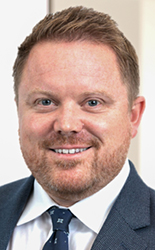
Zach Jackson, a San Francisco-based partner with Australian investment manager QIC. |
S&P Global Market Intelligence: A
Zach Jackson:
Particularly with single assets, we've seen a bit of a structural imbalance. The supply of capital to address that market is smaller than the opportunity set. That allows you to be selective.
From a selection standpoint, we really rely on both our learnings and exposure in and around a lot of the coinvestments we've executed. It's also philosophically ougrnded in the way we think about manager selection. Alignment to the asset is important — a sponsor that is well suited to be the owner of that asset but also a good sponsor.
You were here to talk on a panel about the role direct investment can play as part of a private equity strategy. Tell us about QIC's approach.
From inception of the program, it's very much been a focus on partnering with best-in-class managers. There are benefits, obviously, to better net returns. Oftentimes, coinvestments don't come with fees. But portfolio control and risk-adjusted exposure in the portfolio was the initial reason.
First and foremost, we certainly underwrite the manager as much as we do the asset. There's an opportunity to really engage with managers at the underwriting stage, to understand how the sausage is made, how they think about risk and how we align our thinking to that. That is informative in terms of thinking about the manager, the durability of the strategy and the platform itself.
At the asset level, we've started to express a lot of preference for things that align to secular growth trends, things that have a real competitive moat. Obviously, converting earnings to cash matters. Thinking about things like capital structure and industry and the asset and its durability, the quality of the management team — those are all things that have benefit.
Can you talk about QIC's approach to manager selection, including balancing new and emerging managers with established relationships?
Even in the newer or emerging categories, sometimes these are folks that are known to us as investors on other platforms. In most if not all cases, we do look for a real proof of concept around the platform. We're looking for a manager that is really trying to establish a franchise and is thinking about investing in the platform and is motivated and aligned to not just do a deal but build something that is enduring and be able to culture-carry and bring a team around them. It's hard to execute.
It's a lot different than just meeting somebody for the first time, which is not necessarily how we partner with managers. It's usually over the course of a lot of different points of engagement, either through just sort of the fundraising process itself or oftentimes through our network and relationships, triangulating against different points of connection.
Do you see differentiated returns from some of those younger funds?
We've supported about 28 emerging managers, so it's a core component of our private equity allocation. The things that contribute to the alpha are a team that's motivated and has pushed a lot of their chips into the center of the table. They are really able to purpose-build something without legacy or succession issues. In the age of AI, being able to outfit the infrastructure of the fund itself with more technological tools that don't require rip and replace. It's all net new.
The old adage, which we subscribe to, is "long-time investor, first-time fund." We're not backing people who've not invested before.
How is QIC managing new fund commitments at a time of lower distributions? How is that playing out in your program?
We had a distributions winter, and that was for a couple of reasons. There were the issues about the broader market, but we also leaned into innovation investing, which has meant exposure into venture and growth, which inevitably will have a longer duration. That's something that was done consciously and has been fruitful for the portfolio.
We are also seeing, over the last few quarters, the distribution levels out of our portfolio come back to closer to historic norms. There was a period of lost or missed distributions, so we're still in deficit. But in terms of our commitment to the asset class, there's a real philosophical appreciation that this is not an asset class that you step in and out of.