08 Aug, 2025
Citing funding cut, US EPA ends $7B Solar for All grant program

By Karin Rives
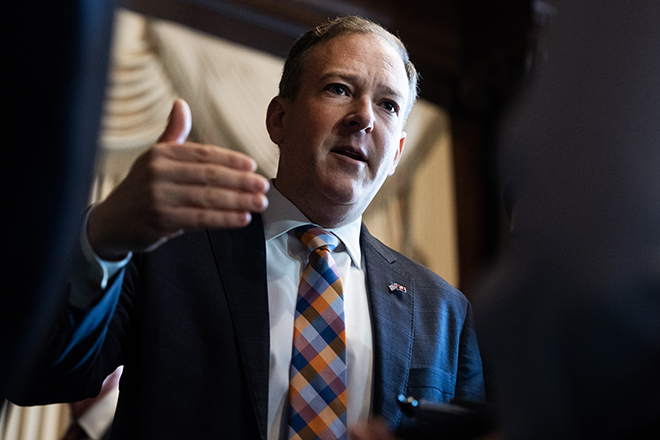
| EPA Administrator Lee Zeldin called the Solar for All program to bring solar energy projects to low-income communities a "boondoggle." Source: Tom Williams/CQ-Roll Call Inc./via Getty Images. |
The Trump administration's Aug. 7 decision to revoke a $7 billion solar energy program serving low-income communities rocked 49 states and six Native American tribes that had received grants.
Many grant recipients already had plans and some awards in place when Lee Zeldin, the US Environmental Protection Agency administrator, announced the cancellation of the Solar for All program.
Citing the sweeping Republican budget package President Trump signed into law on July 4, Zeldin said in a video posted on the social media platform X that the EPA is no longer authorized to administer the solar program. Zeldin added that he would not "keep this boondoggle alive."
As part of its 2026 budget, Congress eliminated the $27 billion Greenhouse Gas Reduction Fund it had established under the 2022 Inflation Reduction Act that included the Solar for All program.
650 Hopi homes were promised electricity
Fletcher Wilkinson, energy manager with Hopi Utilities Corp., said he received a letter from the EPA around 5 p.m. ET on Aug. 7 saying the Hopi Tribe in northeastern Arizona would no longer receive the $25 million it was awarded in April 2024. The money would have supported electricity supply for 650 of 900 homes on the Hopi Reservation that still lack electricity.
The homes had been selected to receive solar panels and energy storage batteries after the tribe spent months holding village meetings and conducting site visits to discuss the projects, Wilkinson said in an interview.
"I feel numb and sick to my stomach," Wilkinson said. "This is something we've been working on for five years, trying to get people up to the living standard of the rest of Arizona. We were just about to begin implementation."
Maryland hoped for $600M economic benefits
The Maryland Clean Energy Center had already received close to $1 million from Solar for All, said Katherine Magruder, executive director of the group tapped to manage the state's $62 million award.
Her team last week awarded contracts for software work needed to help provide 10,000 households with energy from rooftop panels and community solar projects, Magruder said in an interview.
Some 250 students in Baltimore were enrolled in workforce training run by the International Brotherhood of Electrical Workers trade union to support the solar expansion.
"Now we have to pull all that back," Magruder said. "The shockwave of pulling $7 billion out of the economy has yet to be felt."
The total economic benefit for Maryland from the Solar for All program had been estimated at $600 million.
Harms will be 'remedied'
State agencies and community organizations said they had not been notified prior to Zeldin's announcement that the program would be canceled.
The letter the EPA began sending out late Aug. 7 said grant recipients would be reimbursed for any outlays they had incurred before that day.
"The EPA recognizes that program participants may have begun to rely on funds made available through the Solar for All program and have in some instances made preliminary budgets, projections, outlays, and staffing decisions," the letter said. "Due to the early nature of such expenditures, we expect any harms to interests suffered to be remedied and remediable by the close out processes outlined in the program grants and discussed below."
State and tribal officials angered by the administration's decision to end Solar for All and other Biden-era programs said the harm goes beyond contracts.
The Trump administration's rollback of clean energy programs will "fly in the face of the federal government's commitment to energy dominance," Ken Lovett, a spokesperson for New York Gov. Kathy Hochul, said in an email.
New York had been approved for a $250 million Solar for All grant that sought to bring carbon-free energy to affordable housing agencies, among other things.
The Biden administration said the program would create 4 GW of new solar energy capacity nationwide and cut 30 million metric tons of carbon dioxide equivalent over five years.
An EPA spokesperson referred to Zeldin's video when asked about the agency's decision.
More litigation awaits
The EPA has for months sought to freeze and claw back billions from the Greenhouse Gas Reduction Fund earmarked for green banks and other financial programs seeking to spur clean energy investments in underserved communities. Several lawsuits challenged the agency's decisions.
Like Zeldin did in his latest video, the US Justice Department in July argued in one of those court cases that the plaintiffs no longer have a claim since Congress eliminated the fund. The outcome of that case could affect the next lawsuit the administration is expected to face over its latest program cut.
Yet, court battles were not foremost on Hopi Chairman Tim Nuvangyaoma's mind on Aug. 7.
Instead, the Hopi leader worried about how to break the news to hundreds of families, including some who today depend on generators to power medical equipment, that their solar projects will not be installed.
"It's not an easy message to bring to these people," Nuvangyaoma said in an interview. "It feels like we stepped back 100 years."