12 Aug, 2025
AMD, NVIDIA navigating enhanced scrutiny as US-China AI race accelerates

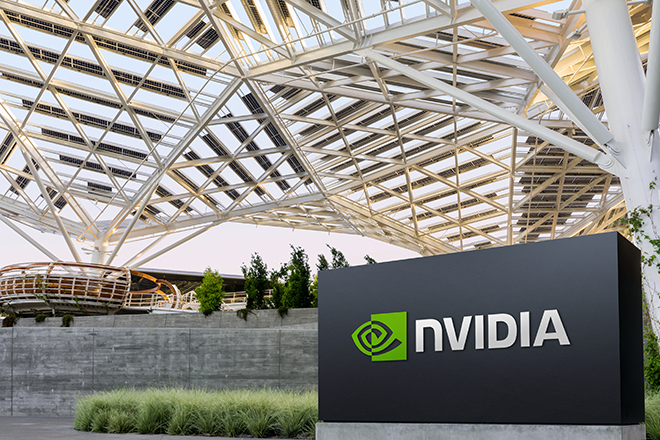
| AMD and NVIDIA have reached a revenue-sharing agreement with the Trump administration in exchange for access to the Chinese market. Source: NVIDIA. |
Advanced Micro Devices Inc. and NVIDIA Corp. struck a deal with the US government to begin selling advanced chips in China.
Advanced Micro Devices (AMD) and NVIDIA agreed to pay the US government 15% of their revenue from their respective MI308 and H20 chip sales to China, the Financial Times of London reported. President Donald Trump confirmed the NVIDIA deal during a press conference, calling the H20 chip "an old chip that China already has." Experts told S&P Global Market Intelligence that while the revenue-sharing agreement with the Trump administration is unconventional, it stands to benefit the two chipmakers as they regain access to the Chinese market.
NVIDIA said in July that it was filing applications to allow it to resume sales of its H20 graphics processing unit, which was designed to comply with export requirements to China. Chinese regulators summoned the company in late July to probe potential security risks posed by the chips, following the Commerce Department's decision to reissue export licenses. NVIDIA denied that its chips have backdoors that would allow them to be controlled or accessed by anyone.
"We follow the rules the US government sets for our participation in worldwide markets," an NVIDIA spokesperson said in a statement to Market Intelligence. "While we haven't shipped H20 to China for months, we hope export control rules will let America compete in China and worldwide. America cannot repeat 5G and lose telecommunication leadership. America's AI tech stack can be the world's standard if we race."
Spokespersons for AMD and the White House did not immediately respond to requests for comment.
While the US is still limiting access to the highest-end AI chips to China, the US can "do better" at enforcing existing export controls, White House Office of Science and Technology Policy Director Michael Kratsios said Aug. 6 at an event hosted by the Center for Strategic and International Studies.
"You can have the best export controls on the books, but if you're not able to enforce them because you're resource-constrained, that's a challenge," Kratsios said. "We have to be able to provide the tools that the [Bureau of Industry and Security] needs to do the enforcement activities necessary."
Market dynamics
In May, Sen. Tom Cotton, R-Ark., introduced the Chip Security Act with a bipartisan group of lawmakers. The act would make advanced AI chips traceable and accountable to prevent their smuggling and diversion to foreign adversaries.
US Rep. Bill Foster, D-Ill., a co-sponsor of the legislation in the House, told Market Intelligence that much of the technology needed to track chips is available and is already built into NVIDIA's chips.
"In fact, for most of the chips that NVIDIA is shipping today, they already have the ability to assign a cryptographic challenge with a secret number that's put in at the point of manufacture," Foster said.
Wedbush Securities analyst Matt Bryson said the "relatively rapid" approval of export licenses is a win for NVIDIA and AMD, while noting the additional payment to the US government will require the chipmakers to either increase prices or realize lower margins than anticipated, or some combination of the two scenarios.
"We view this decision by the US government to levy a charge for certain foreign companies to procure US technology as worrisome, given it opens the door for the US to selectively tax a variety of companies/products that enjoy technology leadership positions," Bryson wrote.
Geopolitical moment
Others, though, argue the latest agreement will benefit NVIDIA in the long term.
"I believe we're watching a geopolitical moment that only makes NVIDIA stronger over time. You're either building on NVIDIA, or you're not," said Shay Boloor, chief market strategist at Futurum Equities. "And if China opts out, then India, Southeast Asia, the Middle East and Latin America opt in even harder. They don't want to fall behind.
"And right now, NVIDIA owns 80-90% of the stack for anyone trying to build at the frontier. That's not a company under threat. That's a company absorbing global urgency as its own tailwind. This chip probe won't weaken that. It just proves how essential they've become."
NVIDIA holds a commanding lead in the semiconductor market, according to an analysis by S&P Global Market Intelligence Kagan, boosted by the release of its Blackwell chip in late 2024.
The complexity of the political gamesmanship between the US and China in the battle for AI supremacy underscores the need for an independent auditor or standard bearer, said Diane Rulke, distinguished service professor of organizational behavior and theory at Carnegie Mellon University's Tepper School of Business. She compared China's concerns about the security of NVIDIA chips to US concerns about 5G networking equipment from Huawei Technologies Co. Ltd.
"The difficulty there is who is independent in this race and who is the trustworthy third party that's [nonpartisan]," Rulke said. "That's something the international community probably needs to think about."
What's happening this week?
Below is a list of hearings, webinars and other tech, media and telecom-related events taking place virtually and in person in the nation's capital and beyond this week:
Aug. 12
➤ S&P Global Market Intelligence: Questioning the Answers — LLMS enter the Boardroom
➤ S&P Global Market Intelligence: Tariffs, Trade & Turbulence
Aug. 13
➤ House Financial Services Subcommittee on National Security, Illicit Finance and International Financial Institutions: Securing the Supply Chain — The Defense Production Act in Focus
Aug. 13-16
➤ Kansas City Developer Conference 2025
Aug. 15
➤ Atlantic Council: US-Japan global partnership in Central Asia