30 May, 2025
Americans seeking continuing unemployment benefits touches multiyear high

By Brian Scheid
The number of Americans applying to extend their unemployment benefits has risen to its highest level since 2021, a signal that while broader joblessness remains relatively low, finding new work is becoming increasingly difficult.
The number of recurring applications for US jobless benefits jumped to nearly 1.92 million in the week ending May 17, up 26,000 from the week prior and to its highest point since mid-November 2021, according to advance estimates released by the US Labor Department.
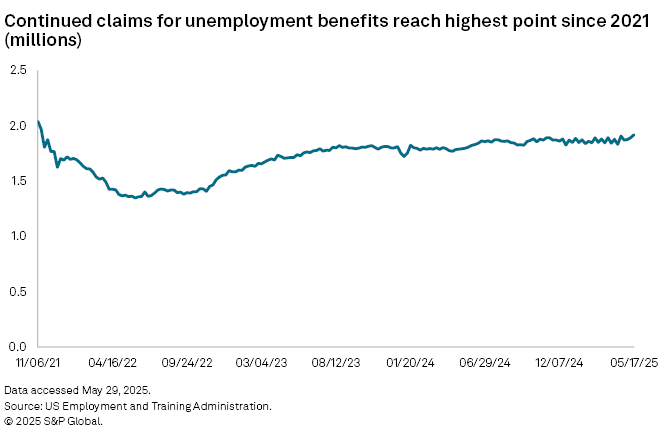
"It is a sign that US employers are not doing much hiring," said Aaron Sojourner, a senior researcher at the W.E. Upjohn Institute for Employment Research. "Continuing claims grow when fewer people flow out of unemployment insurance due to either getting a job or exhausting eligibility than flow in due to layoff."
Recurring benefit applications are up even as the domestic jobs market has remained relatively robust, with the US unemployment rate steadying at 4.2% in April and average hourly earnings growing 3.8% from the year before.
"The rise in continuing claims tells us something important: It's taking longer for people to find new jobs," said Gregory Daco, chief economist at EY-Parthenon. "That's not necessarily about a spike in layoffs, but more indicative of a slowdown in re-hiring. Firms are being more selective and cautious, holding the line on headcount rather than actively expanding."
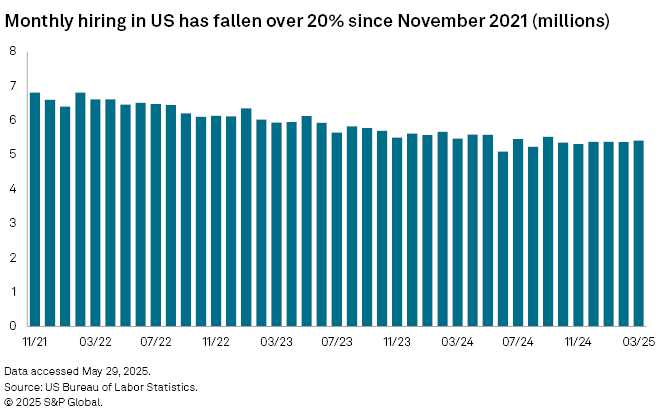
Though there have not been major layoff waves across the country, hiring has slowed considerably. In March, for example, employers hired for 5.41 million positions, down from 6.81 million in November 2021, according to the latest government data.
"Policy uncertainty is at record highs and businesses are very reluctant to gamble with new workers and payroll while future policies are so unpredictable," Sojourner said. "The labor market has basically frozen in place. There's little churn."
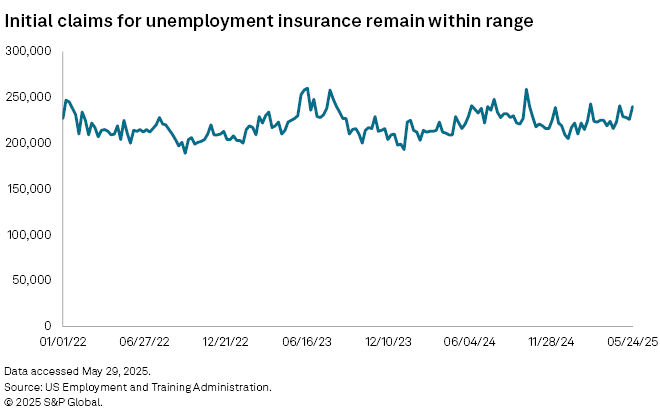
While hiring has slowed down, it has not stopped altogether, despite uncertainty over US trade policy, federal budget negotiations and deregulation efforts that have sent business and consumer sentiment lower, said Thomas Simons, chief US economist with Jefferies.
"It is reasonable to expect that 'uncertainty' is delaying big expansion and investment decisions, but we do not see evidence that there has been a broad impact on day-to-day activity," Simons wrote in a May 29 note. "In an environment with so many unknowns, past playbooks are the most reliable map for progressing forward, which suggests that seasonal hiring patterns will continue until businesses have more concrete takeaways from policy shifts."