13 Nov, 2025
Gaming studios navigating AI integration amid regulatory scrutiny

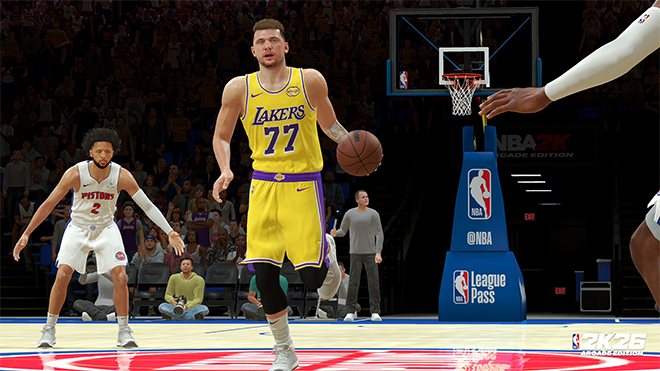
| Net bookings for NBA 2K26 grew 45% for Take-Two during the third quarter of 2025. Source: Take-Two Interactive |
Major gaming companies are adopting different approaches to integrating AI into their operations amid a shifting regulatory environment and evolving consumer acceptance levels.
Take-Two Interactive Software Inc. is taking a more cautious approach than its competitors to improve efficiency and maintain quality. During the most recent earnings call, Take-Two executives said the primary use of AI would be to free employees from non-creative tasks in game production.
"We are not using this as an excuse to, or frankly, seeing the opportunity to reduce head count," Take-Two CEO Strauss Zelnick said during the call. "We are seeing this as an opportunity to take our very talented people and release them from more mundane tasks so they can do more creative and more interesting tasks and we can work better as an organization. But if you said, can you cut your cost profile by 5% tomorrow using all things AI? The answer is no."
Take-Two reported fiscal second-quarter net bookings of $1.96 billion, which include physical and digital products, in-game purchases and subscriptions, the company's highest second-quarter result. The company raised its net bookings outlook for fiscal 2026 to between $6.4 billion and $6.5 billion, a 14% increase from 2025.
Recurrent consumer spending rose 20%, accounting for 73% of net bookings, while the NBA 2K franchise grew 45% in this category.
Take-Two's measured integration of AI came as regulators and consumers worldwide scrutinize AI-generated content.
Major publishers like Electronic Arts Inc. and Take-Two are cautious about pricing games with AI-generated content at high prices due to consumer skepticism, said S&P Global Market Intelligence Kagan analyst Neil Barbour. "Consumers have become pretty adept at picking up on the telltale signs of full-scale AI content production and are generally put off by it. So, at this point, it would be risky for a publisher like Electronic Arts or Take-Two to charge $70 for a game that has obvious AI overhang."
Oppenheimer analyst Martin Yang reiterated his "outperform" rating for Take-Two shares despite the six-month delay for Grand Theft Auto 6, calling it "hardly worrisome in our view." The game, initially set for a 2025 release, was delayed to May 2026 by developer Rockstar Games Inc. and then rescheduled for Nov. 19, 2026, during Take-Two's Nov. 6 earnings call.
"Our bullish thesis for TTWO remains intact: its expansive pipeline led by proven franchises (NBA 2K/GTA) will support accelerating bookings/profit growth rates well above other AAA peers in the next 12–18 months," Yang wrote in an analyst note.
In contrast, Roblox Corp. embraced AI more aggressively, reporting in its recent earnings call that it operates over 400 AI systems, with a focus on safety, discovery and content creation. The company posted third-quarter revenue growth of 48% year over year, up to $1.36 billion.
Roblox CEO David Baszucki emphasized the company's belief that "the future of platforms like Roblox is much more cloud integrated such that AI and generative AI are always available in the experience for all creators." The company has implemented AI-based facial age estimation to enhance safety and is adopting International Age Rating Coalition standards, raising the minimum age for restricted content to 18.
"Roblox has long been supported by user creations, but its development tools are a little more complex than you might imagine. Automating some of that process through GenAI could unlock some creativity and fuel more content generation," Barbour said. "In Roblox, where the stakes are much lower and the content quality expectations are a little looser, content with more AI in the production pipeline may have an easier time finding an audience."
The gaming industry's adoption of AI gained momentum as various legislative proposals gained traction. Roblox recently partnered with the Attorney General Alliance to form a child safety coalition, signaling proactive engagement with regulators. This approach may help the company navigate potential challenges from legislation such as the Kids Online Safety Act in the US and the Online Safety Act in the UK, which impose stricter requirements for platforms with younger users.
Take-Two and other major publishers face regulatory challenges, particularly around monetization practices and content ratings. Their measured approach to AI may reflect concerns about consumer perception and potential regulatory frameworks for AI-generated content in premium games.
"I think EA and Take-Two are comfortable running the playbooks they have and harvesting the corresponding profitability," Barbour said. "Would they like the user growth? Sure. Are they in a position to put up with the steep costs of standing up a Roblox-like open platform? Not a chance."