13 Oct, 2025
US utilities plan to add 120 GW of new fossil fuel-fired capacity by 2030
By Karin Rives and Susan Dlin
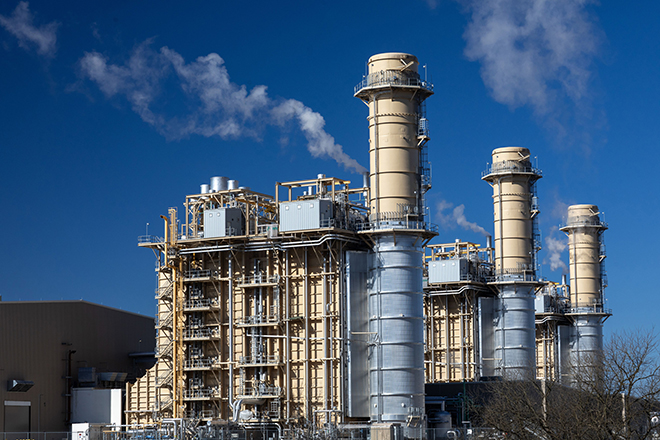
| Talen Energy recently acquired the 1.9-GW Guernsey natural gas-fired power plant, built atop an abandoned coal mine in Ohio and opened in 2023. Across the US, power companies are spending billions of dollars to meet rising demand and capitalize on the changing market. Source: UCG/Getty Images News via Getty Images. |
Three large natural gas-fired power plant projects planned for Indiana would together bring 5.1 GW to the grid and emit as much climate-warming pollution as 3 million gasoline cars driven for a year. The monthslong debate over how such projects will affect Indiana power bills and the environment is playing out nationwide amid the race to add more energy to the grid.
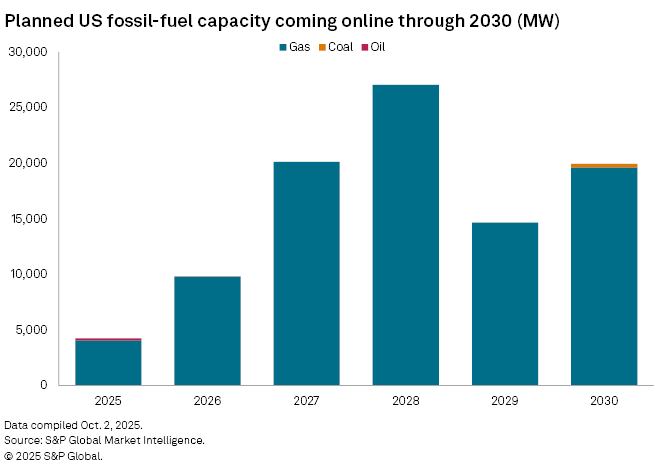
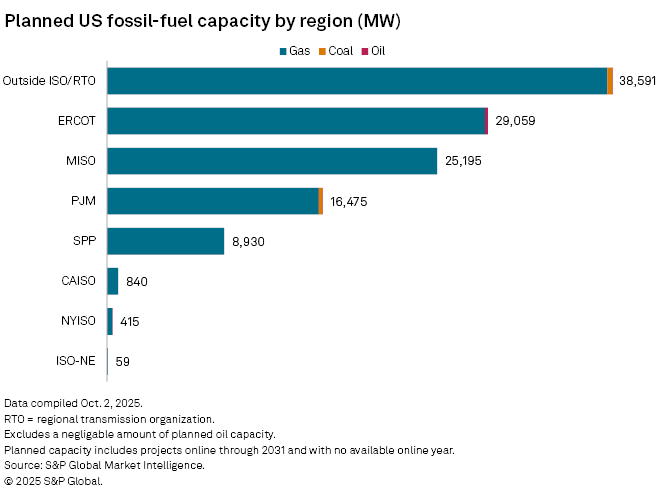
As of the end of the third quarter of 2025, US companies had plans to add 119.6 GW of new fossil fuel-fired capacity between 2025 and 2030, data from S&P Global Market Intelligence shows. That is up from 80 GW announced or under construction during the first quarter, a 50% increase.
Virtually all new projects, 99%, are for natural gas-fired plants.
The planned capacity growth shows how the buildout of data centers — and to a lesser degree, population shifts, new manufacturing plants, and electrification of vehicles and buildings — are driving investments in new power plants and related grid infrastructure.
"If you had told me two years ago that data centers were going to come in and double our peak load in five years and completely gut our sustainability goals, I would have laughed at you," said Ben Inskeep, program director with Citizens Action Coalition, an Indiana group advocating for ratepayers and clean energy. "But here we are."
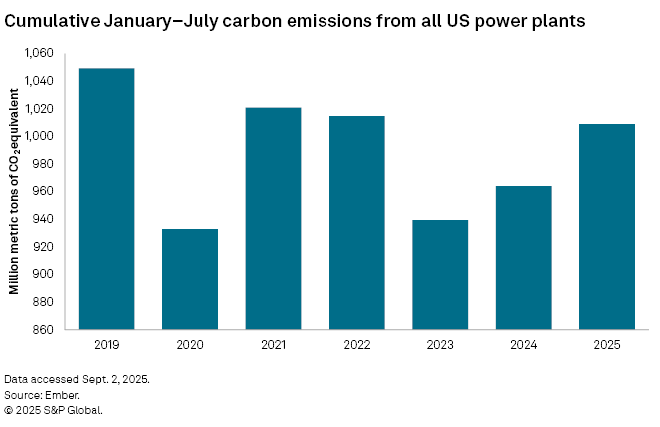
Some new gas projects will replace coal plants, resulting in a net reduction in heat-trapping emissions — although the US coal-to-gas trend appears to be slowing. Meanwhile, many companies are expanding their overall power generation fleets, allowing their total carbon footprint to expand.
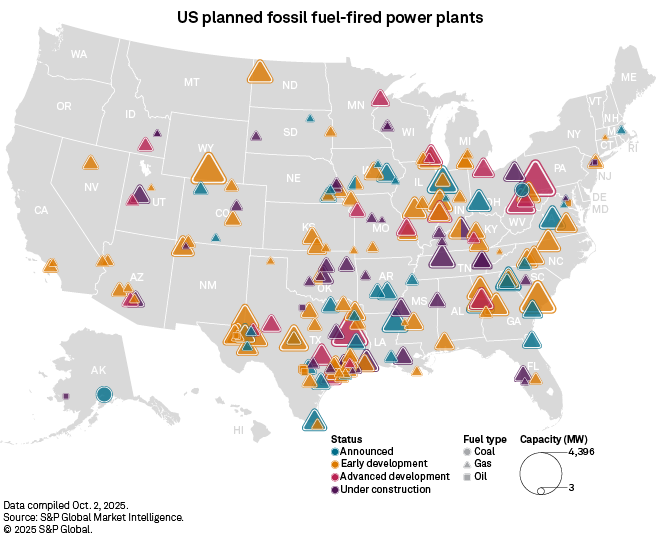
In Texas, electric utilities expect to add 34 GW of new gas-fueled generation over the next five years, the Market Intelligence data shows. Texas already emits more greenhouse gas emissions than any other state, according to the US Energy Information Administration.
Nationwide, investor-owned utilities are expecting to spend $1.1 trillion on new capital expenditures over the next five years, according to data released Oct. 7 by the Edison Electric Institute. Analysis by Deloitte earlier in the year projected that the power sector as a whole will spend $1.4 trillion over the same time frame.
Such investments on their own will not halt the energy transition, said Joseph Majkut, director of the Center for Strategic and International Studies' energy security and climate change program.
"Building more natural gas generation without carbon capture and storage will increase emissions — roughly speaking, building 100 GW of new natural gas capacity is equivalent to 50 GW of coal capacity," Majkut said in an interview. "But if you look at the entire package of new power generation being added, it's about as clean as it's ever been."
While markets and power companies view natural gas as a viable generation source for meeting new demand, the utility industry would benefit from building plants that can be retrofitted for carbon capture at a lesser cost if and when regulators and investors demand it, Majkut added.
Ratepayers face billions in new plant costs
Beyond emissions, the gas plant buildout has implications for US homes and businesses already struggling with rising energy bills.
Texas regulators in September imposed a rare $2.4 billion cost cap on two planned Entergy Corp. power plants to lessen the impact on ratepayers.
Voicing similar concerns, Inskeep's group, environmental organizations and the state ratepayer advocate have urged the Indiana Utility Regulatory Commission to reject a $3.3 billion Duke Energy Corp. proposal to build two new natural gas-fired units at the site of its Cayuga coal plant. The 1.5-GW gas plant would add $10 per month to household bills by 2028 and $29 per month when both gas units are operational in 2031, Inskeep estimated.
The plant would emit about 4 million tons of greenhouse gas emissions annually, according to regulatory filings.
Duke Energy said its proposal made economic sense and guarantees a reliable and cleaner power source for decades to come.
"The company believes it is much more prudent for our customers to invest in a new, state-of-the-art natural gas plant with the most advanced and efficient technology than to spend hundreds of millions of dollars to keep the coal plants online," Kelley Karn, Duke Energy Indiana's vice president of regulatory affairs and policy, said in testimony filed with state regulators in May.
The Midcontinent ISO wholesale power market, which includes Indiana, would have more than 25 GW of new gas generation on the way through 2030 if current plans hold.
New players vie for market share
The largest natural gas-fired project on tap for Indiana is a 2.3-GW facility that a Northern Indiana Public Service Co. LLC (NIPSCO) subsidiary plans to build to serve data centers. The subsidiary was created to shift costs associated with the plant from ratepayers to the company's data center customers and will not be subject to the typical regulatory oversight that accompanies retail rate cases.
The four gas units, to be built at the site where NIPSCO is closing a large coal plant by the end of 2025, are projected to release 7 million
A third large natural gas-fired plant on tap for the state is the 1.3-GW Maple Creek Energy Project to be built by Advanced Power AG, an infrastructure developer that is also looking for new opportunities in the MISO market. Maple Creek is projected to release 2 million tons of greenhouse gas emissions annually.
A similar venture is underway in Pennsylvania to serve data centers in the PJM Interconnection LLC wholesale market. The recently formed Homer City Redevelopment project is moving forward with plans for what would become the nation's largest natural gas plant at 4.4 GW.
The plant would emit more greenhouse gas emissions than all the cars in Pennsylvania on the road today without producing any electricity benefiting the state's residents, nine environmental groups wrote in comments filed Sept. 29 with the Pennsylvania Department of Environmental Protection.
The 17 million tons of annual greenhouse gas emissions from the plant would also "set Pennsylvania back in meeting its net-zero by 2050 goal outlined in the state's 2024 Climate Action Plan," they said.
Several other states hosting large power plant projects have no such policy constraints.