09 Oct, 2025
New FERC Republican majority could support fossil fuels, streamline permitting
By George Weykamp and Maya Weber
|
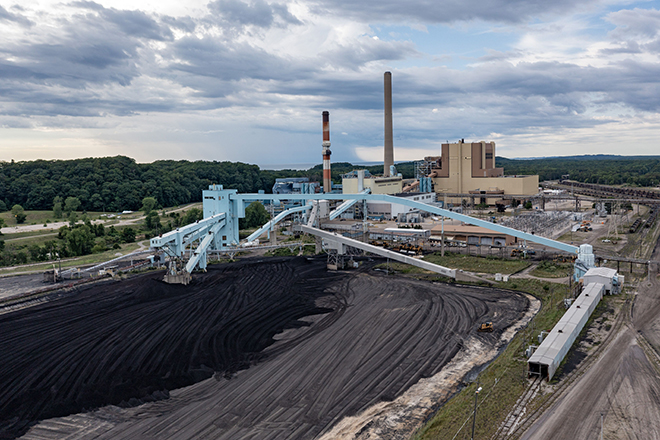
President Donald Trump has sought to prevent the retirement of fossil fuel-powered generation, including the JH Campbell plant in Michigan, since he returned to office in January. |
The US Federal Energy Regulatory Commission's newfound Republican edge could benefit fossil fuel plants and further streamline permitting of natural gas infrastructure, industry observers told Platts, part of S&P Global Commodity Insights.
With the Oct. 7 confirmation of Laura Swett and David LaCerte cementing a 3-2 Republican majority on the five-member panel, many industry observers anticipate that the commission could act on several Trump administration priorities, including support for the US coal and natural gas industries.
The commission is also largely expected to act on colocation for data centers and other large loads to support the nationwide deployment of artificial intelligence.
The confirmations come at a point of uncertainty for the commission as President Donald Trump has sought to exert more executive control over the independent regulator. While both LaCerte and Swett voiced support for FERC's independence during their confirmation hearing, many FERC observers still expect the White House to play a role in the commission's major rulemakings.
Industry observers largely expect Swett to replace current Chairman David Rosner once she is officially sworn in.
Increasing White House influence has some stakeholders concerned that FERC will follow the Trump administration's broader prioritization of fossil fuel resources over renewables.
"I hope the agency stays independent and that open access continues to be one of the guiding policies and that competitive generation markets are fostered," said Rob Gramlich, president and CEO of consulting firm Grid Strategies and former adviser to FERC Chairman Pat Wood. "It would be massive change after three decades of bipartisan commitment to those principles."
Fossil fuel resources
Some stakeholders said the commission could follow the US Department of Energy's lead to prevent fossil fuel-powered generation from retiring.
The DOE has used Section 202(c) of the Federal Power Act to temporarily delay certain power plants from retiring. Meanwhile, FERC has broad jurisdiction to make fossil fuel-powered generation more economical, Ari Peskoe, director of the electricity law program at Harvard University told Platts.
"Whether it's all fossil plants or nuclear, whatever the mix of resources or mix of attributes that they want to promote, [FERC] could change the compensation mechanisms for those plants," Peskoe said.
The Trump administration has argued that dispatchable energy resources like coal and natural gas are needed to maintain reliability as the nation copes with rising demand from data centers and AI.
The DOE sent the commission a notice of proposed rulemaking during the first Trump administration that was designed to provide more financial support to nuclear and coal-fired generating units. FERC unanimously rejected that proposal in 2018.
While Travis Fisher, director of energy and environmental policy studies at the Cato Institute, said he does not expect FERC to revive that exact proposal, he noted that many of the reliability issues raised in the Energy Department's NOPR "still linger."
"Grid resilience during prolonged heat and cold events is paramount," Fisher said in an Oct. 8 email. "It's my hope that the incoming commissioners will focus on maintaining a reliable grid at least cost to consumers. Bonus points if they go one step further and begin a data-driven evaluation of the role FERC policies play in ensuring a least-cost grid for everyone."
Neil Chatterjee, former FERC chairman during the first Trump administration, said the Energy Department's use of 202(c) was "sufficient" and he did not expect the commission to revisit the failed 2018 proposal.
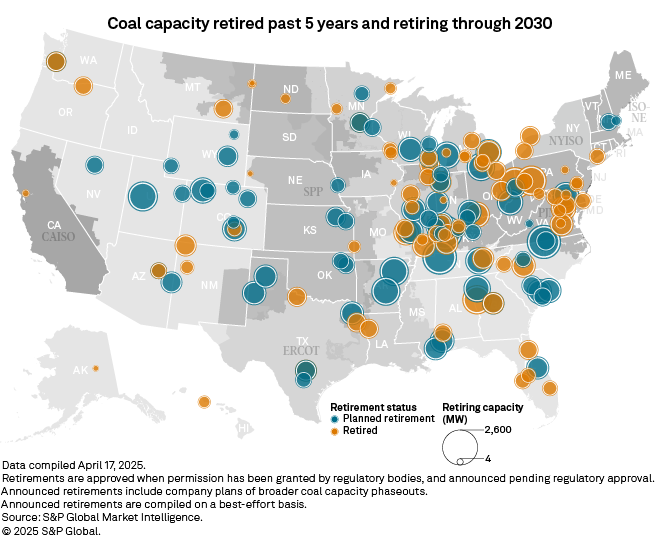
Energy Secretary Chris Wright has utilized Section 202(c) of the Federal Power Act to temporarily delay the planned retirement of several fossil fuel-powered plants, citing emergency conditions. Some of those actions are currently being challenged by Michigan Attorney General Dana Nessel.
Resource types
Some stakeholders said a Republican majority at FERC could also prioritize fossil fuel projects over renewable energy.
Peskoe pointed to Project 2025, a conservative policy blueprint written by current and former Trump administration staffers, that called for regional grid operators to incentivize dispatchable resources, like fossil fuel units, while requiring intermittent and renewable resources provide backup generation for when they are unavailable.
"Another option that's in [Project 2025] is just to reduce [renewables] capacity value for purposes in a capacity auction or other resource adequacy mechanisms," Peskoe said.
Those actions would almost certainly face legal changes that the commission violated its duty to prevent undue discrimination in resource types, Peskoe said, but noted that a final decision would ultimately be up to an appeals court in that scenario.
"It's kind of hard to predict ultimately what a federal appeals court might say about that, and it also will depend on exactly how FERC tries to craft this sort of rule," he said.
Both Swett and LaCerte pledged to remain resource-agnostic during their confirmation hearing.
Grid Strategies' Gramlich said while Swett and LaCerte were relatively "blank slates" regarding their personal views, he had concerns based on the administration's track record on renewables and the White House's attempts to exert influence at other independent regulators.
Since returning to office in January, the Trump administration has created a challenging regulatory environment for renewable energy resources, especially with regard to offshore wind projects. Trump on Jan. 20 signed an executive order to halt new offshore wind projects and identify any potential legal bases for terminating or amending existing leases. In August, the administration also issued a stop-work order on the 80% complete 704-MW Revolution Wind Offshore project off the coast of Rhode Island.
"I do have concerns that open access principles will be sacrificed for administration resource preferences," Gramlich said.
Gas projects
Some FERC observers expect the new chair will seek to further streamline National Environmental Policy Act reviews for natural gas projects.
A May Supreme Court ruling on the act called for courts to give deference to agency decisions on the scope of the reviews, potentially reducing the litigation risk facing the commission and gas project developers should FERC make more changes.
The commission has already pared back its consideration of greenhouse gas emissions and environmental justice since Trump took office. And it has proposed new NEPA implementing procedures but stopped short of more aggressive changes and timelines adopted by other agencies, such as the Interior Department.
FERC observers expect that the commission will continue to expeditiously consider and approve gas permits once the new commissioners are in place.
"Having additional commissioners in place could help expedite the permitting process," said Emily Mallen, a partner specializing in energy regulation at Akin Gump. "The commissioners are fond of saying that FERC works best when it is fully staffed and has its full complement of commissioners."
Mallen noted that Rosner has not shied away from implementing Trump administration priorities, as evidenced by a final order FERC issued Oct. 7 rescinding a rule that delayed the start of construction of gas projects while rehearing is pending.
The commission this year has also moved to lift the cost threshold for blanket gas pipeline certificates on a temporary basis and proposed a more permanent change, responding to a request from the Interstate Natural Gas Association of America.
A FERC spokesperson did not respond to a request for comment on the timing of the new commissioners' swearing-in ceremony.