01 Oct, 2025
Investor eyes 'critical moment' for solar, storage, geothermal breakthroughs

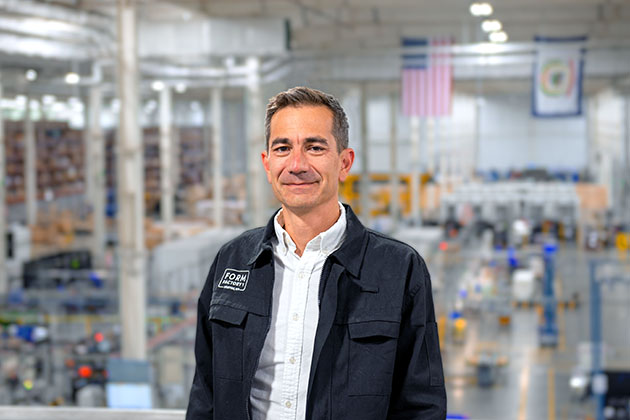
| Form Energy CEO and co-founder Mateo Jaramillo at the iron-air battery innovator's first factory in Weirton, West Virginia. |
Venture capital investors are betting billions of dollars on clean energy entrepreneurs in pursuit of the next generation of renewable and battery storage technologies.
San Francisco-based Prelude Ventures LLC is among them.
With roughly $2 billion under management, the climate-focused firm views the transition to a low-carbon economy as this century's top investment opportunity despite heightened financial and political risks, including a White House that frequently disparages renewables and a Congress that has ended some of the sector's long-term tax credits.
"We are believers that the economics of these technologies will ultimately win, and the need for electrons will ultimately win, so we're willing to keep investing despite some of those headwinds," Tim Woodward, a managing director at Prelude Ventures, told Platts, part of S&P Global Commodity Insights.
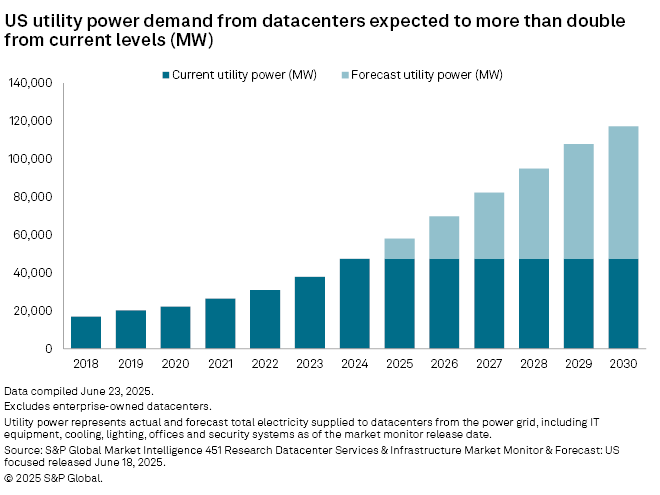
Several maturing upstarts in Prelude's portfolio are on the cusp of commercial breakthroughs that could ripple across the power sector over the next few years as utilities and tech companies race to meet rising AI-fueled energy demand, according to Woodward.
"Some of the things are nice and incremental, and they could be good investments, but a company like Form Energy could really change elements in the industry," Woodward said in an interview at the recent RE+ trade show in Las Vegas.
Launched in 2017, Form Energy has raised over $1.2 billion from at least two dozen investors — including Prelude, T. Rowe Price Group Inc., GE Vernova Inc. and Bill Gates-founded Breakthrough Energy Ventures LLC — to develop its iron-air battery systems. Designed to store electricity for multiple days, compared with just several hours for conventional lithium-ion battery projects, the technology has attracted substantial interest from buyers and investors.
"Very exciting and, obviously, capital-intensive," Woodward said of Form. "We worked through a lot of that capital intensity when capital was readily available. Now we're at that critical moment where it's going to have to source some capital to continue to scale."
|
A Form Energy test project in California, above, preceded its first commercial deployment in Minnesota. |

Form's inaugural factory at a former steel mill in Weirton, West Virginia, which is backed by US Energy Department funding, is ramping up to fulfill the company's first wave of orders.
Construction is under way at the 1.5-MW/150-MWh Cambridge Battery Storage Project in Isanti County, Minnesota, marking Form's first commercial system after two years of field testing. Great River Energy, a wholesale power cooperative in Minnesota, plans to discharge the 100-hour storage asset at times of high demand to support grid reliability.
"It's been a long journey, frankly, to where we are today, and we're very ready to start delivering to customers," Form Energy CEO and co-founder Mateo Jaramillo told Platts. "We're also already deep in the first phase of prototypes of the next generation of the product, which we will deliver next year."
Form plans to roll out a second-generation system in larger utility-scale arrays. That includes two 10-MW/1,000-MWh systems that Xcel Energy Inc. intends to add adjacent to retiring coal-fired power plants in Minnesota and Colorado, and an 85-MW/8,500-MWh DOE-backed project at a former paper mill in northern Maine in collaboration with New England states.
So far, the Massachusetts-based company has contracts to deliver 250 MW of its 100-hour systems, according to Jaramillo. But talks are progressing on a much larger development pipeline, the CEO added, pointing to future deals for projects each sized in the "hundreds of megawatts" and "tens of gigawatt-hour[s]."
Form customers can qualify for a 30% investment tax credit that Congress left in place into the mid-2030s for energy storage projects, in addition to another 10% for projects that meet certain domestic content thresholds.
Given its progress, the overall rising demand for electricity and favorable prices for suppliers, Form Energy is reevaluating the pace of its manufacturing scale-up, Jaramillo said. The company's current target is 500 MW/50 GWh by about 2028, but an expansion into the thousands of megawatts per year by the end of the decade is under consideration, he added.
"There's no new investment that we're taking for that, but it is very much under evaluation and consideration with our investors, both current and future."
Deploying solar farm robotics
Woodward cited solar farm robotics innovator Terabase Energy Inc. and enhanced geothermal systems developer Fervo Energy Co. as additional Prelude portfolio companies with potentially high-impact technologies at critical stages of development.
"The big driver for all of them is the AI demand," Woodward said. "Everyone's scrambling like crazy next year to put solar in the ground to meet that load, to put geothermal in the ground ... That is what is driving all of the scaling that will happen over the next two to three years."
AI and data center demand could also force the Trump administration to reassess its relationship with the renewables sector, in the view of the investor.
"There's no way we win the AI race if we don't allow the stuff to get built and take friction out of that development process," Woodward said.
Terabase, headquartered in Berkeley, California, has developed what CEO and co-founder Matt Campbell calls a "pop-up factory" for automated solar farm construction, building on the company's suite of engineering and design software tools.
Dubbed "Terafab," its mission is to address the market's need for speed while taking pressure off the solar industry's labor crunch and cutting installation costs.
"Think of it as a pop-up factory where we pre-fabricate sections of the tracker, then we have an off-road vehicle, a rover, that delivers and installs those sections," Campbell said in an interview.
Founded in 2019, Terabase has deployed roughly 100 MW of its Terafab product to date, starting with a 17-MW segment at Leeward Renewable Energy LLC's White Wing Ranch Solar Project in Arizona.
That is a small volume for the massive solar industry, but it is big for robotics, Campbell said. Terabase has worked with Nextracker Inc., a major tracking system supplier that itself is branching into AI and robotics, to refine its system.
With contracts accumulating, the company plans to deploy 500 MW in 2026 and quadruple to 2,000 MW in 2027.
 Terabase's robotics assist in the construction of a solar farm in Arizona. Source: Terabase Energy Inc. |
"One of the things that all the construction companies and developers are realizing is you've got to keep pushing down cost and schedule," Campbell said. "And really the only way you're going to do that is modernization ... there's no reason that the cost of solar power plants in the US couldn't be halved."
Terabase is starting with more modest cost reductions, but Campbell sees a clear path to slashing installed system costs by 30% to 40% with the steps the company is taking.
A veteran of solar power plant construction, Campbell sees the industry reaching a velocity that seemed unfathomable two decades ago when he was helping to supply large-scale projects at SunPower Corp., together with current top executives at Nextracker.
Twenty years ago, for instance, a 10-MW project in Bavaria that was once said to be the largest photovoltaic complex in the world took many months to build. Terabase's forthcoming second generation of Terafab could construct that much or more in a single day, according to Campbell.
"We think we can get to 100 megawatts a week," he said.
"Terabase could be really important for scaling solar," said Prelude's Woodward. "It addresses issues around labor access, building faster, the ability to start to build 24/7, or at least multiple shifts, and building higher quality."
To assist its expansion, Terabase in March closed a $130 million Series C financing round led by SoftBank Group Corp.'s Vision Fund II, pushing its total funding over $200 million. In addition to Softbank and Prelude, the company has received funding from Bill Gates' Breakthrough Energy Ventures and EDP Ventures, among others.
'Magic moment' for geothermal
While solar and batteries have emerged as the leading sources of new US power plant additions in recent years, Woodward sees geothermal becoming a "bigger piece of the puzzle" in the 2030s.
Geothermal developer Fervo, which relies on horizontal drilling technology pioneered by the oil and gas industry, aims to accelerate its commercialization with the aid of $206 million in additional debt and equity announced in June. The fresh funds, including $100 million in project-level equity from Breakthrough Energy's "catalyst" program, are backing Fervo's 500-MW Cape Station facility under construction in Beaver County, Utah.
The first 100-MW phase is on track for completion in 2026, followed by a second 400-MW phase targeted for completion in 2028. Baker Hughes Co. will supply equipment to Fervo under a deal disclosed in September.
Touted as the world's largest next-generation geothermal project, Cape Station is underpinned by power purchase agreements with Edison International subsidiary Southern California Edison Co., Shell Energy North America (US) LP and several community choice aggregators in California.
Cape Station is "sort of the flagship for the [enhanced geothermal system] revolution," said Dawn Owens, vice president and head of development and commercial markets at Fervo.
"The biggest message I have for folks is geothermal isn't going to be a big part of the energy mix going forward; it already is," Owens said in an interview. "And this project is just the proof and the demonstration of that."
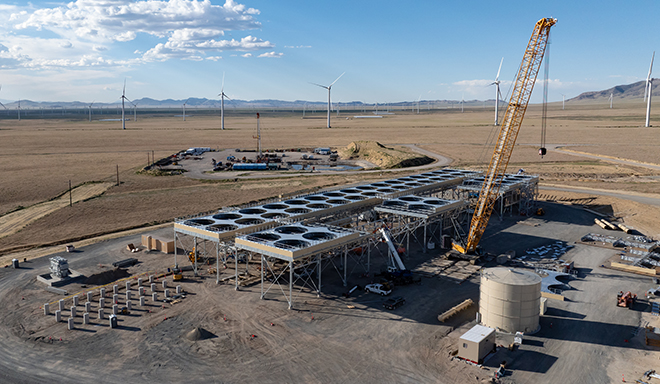
| Fervo Energy's Cape Station enhanced geothermal project, under construction in Beaver County, Utah. |
Ultimately, over 2 GW of geothermal generating capacity could be developed in the Cape Station area. It is part of Fervo's more than 15 GW of leaseholds across the US, mostly in the West.
"It's a bit of a magic moment," Owens said, pointing to favorable policies and strong demand for enhanced geothermal.
Like energy storage, geothermal dodged the abrupt end to federal tax incentives that solar and wind developers face in the second half of this decade. In addition, the Trump administration in July called for more enhanced geothermal development as part of its AI action plan.
Fervo, founded in 2017, has been working closely with Google LLC in an effort to help power its data centers in Nevada.
In May, the Public Utilities Commission of Nevada approved an energy supply agreement between the Alphabet Inc. subsidiary and NV Energy Inc., an affiliate of Berkshire Hathaway Energy, for 115 MW from Fervo's Corsac Station Enhanced Geothermal Project in northern Nevada. It builds on a 3.5-MW pilot project Fervo completed for Google in 2023.
A recent analysis from researchers at Rhodium Group found that next-generation geothermal could power almost two-thirds of anticipated data center demand in the US over the next decade.
"Irrespective of the AI demand, we're already seeing a realization within the country's biggest investor-owned utilities that they need a complementary resource, a clean firm complementary resource," Owens said. "But with AI, that demand is accelerating."