


28 Sep, 2022
Massachusetts favors building electrification in final energy code update

Massachusetts finalized a voluntary energy code that gives all-electric construction an advantage over building new homes and commercial buildings with natural gas hookups.
The Massachusetts Department of Energy Resources, or DOER, on Sept. 27 released final language for its stretch energy code, an option followed by roughly 85% of Massachusetts towns and cities. It also introduced a more stringent specialized stretch energy code that creates additional barriers to including fossil fuel hookups in new buildings. Both codes "stretch" beyond the base energy code.
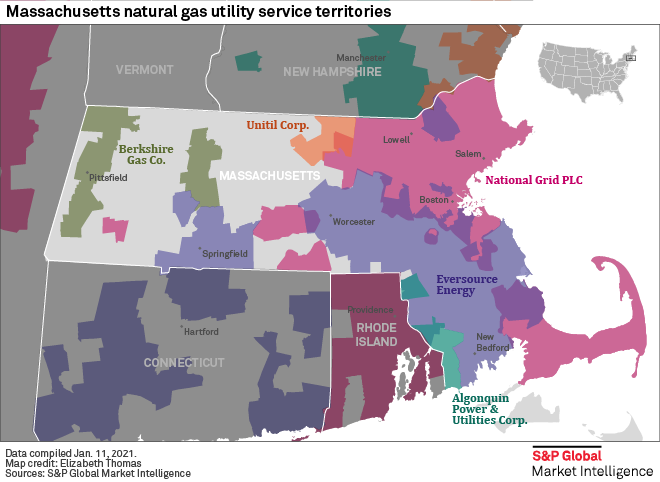
The code update is part of a suite of actions that Massachusetts is pursuing to decarbonize the state's buildings. Those policies present gas distribution challenges and electric segment opportunities for multi-utilities such as National Grid PLC, Eversource Energy and Unitil Corp.
Updated stretch energy code
DOER's final stretch energy code language preserves a key part of its initial proposal: By July 1, 2024, residential and commercial buildings that include gas hookups would have to achieve a home energy rating system score, or HERS score, of 42, while all-electric buildings must score 45. A lower score is more difficult to achieve.
In the current code, residential buildings must achieve a HERS score of 55-60. Reaching a HERS score of 42 in buildings with gas hookups will require developers to include additional energy efficiency interventions that tend to drive up the cost of construction.
Residential buildings can also achieve compliance by building to passive house standards, a design approach that prioritizes rigorous efficiency, a tight building envelope and other principles to drive down heating and cooling needs.
Commercial buildings, which tend to be more complicated, will have five pathways for reaching compliance with the stretch energy code. The updated stretch commercial code also requires partial or fully electric space heating in buildings with certain ventilation and architectural features.
New specialized stretch energy code
The specialized stretch energy code is designed to assure that builders achieve Massachusetts' greenhouse gas emission limits and sub-limits, helping to achieve a net-zero state economy by 2050. The main levers in the specialized code are "deep energy efficiency, reduced heating loads, and efficient electrification," DOER said.
New homes can achieve compliance with the specialized code by building all-electric. In a second pathway, they can include fossil fuel hookups but must also be wired for future conversion to electric heating and appliances and include solar panels. The third option is to build a zero-energy building, which consumes less energy than it produces over the course of a year.
New homes up to 4,000 square feet can follow any of the options, while residences above that threshold can only follow the all-electric or zero-energy building pathway.
The specialized commercial stretch energy code includes four pathways for compliance, including all-electric construction, zero-energy building, and modified pathways with additional energy efficiency and solar requirements.
Some lawmakers and climate activists have criticized the specialized stretch energy code because it does not explicitly allow local governments to prohibit gas hookups in new buildings. A recent state climate bill established a pilot program that will allow up to 10 towns and cities to adopt gas bans.
DOER submitted its proposed final regulation to the Massachusetts state legislature's Joint Committee on Telecommunications, Utilities and Energy for review. The regulations will go to the secretary of state for final promulgation in December.
S&P Global Commodity Insights produces content for distribution on S&P Capital IQ Pro.