25 Apr, 2021
Robo-adviser StashAway seeks to tap Hong Kong's mass-affluent after $25M funding
➤ Singapore-headquartered robo-adviser StashAway launched in Hong Kong on April 5.
➤ The company managed more than US$1 billion in assets as of January from three markets.
➤ The company raised series D funding of US$25 million on April 26.
 |
|
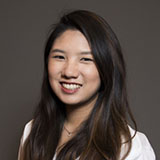
StashAway Hong Kong head Stephanie Leung. |
Singapore-headquartered StashAway is the latest robo-adviser to enter the Hong Kong market, formally launching its services on April 5. As of January 2021, the company managed more than US$1 billion in assets from the three markets it operated in: Singapore, Malaysia and the United Arab Emirates. It is also in talks with Thailand's financial regulator to obtain a license to offer its services. StashAway closed a series D funding round for US$25 million led by Sequoia Capital India LLP on April 26, bringing its total paid-up capital to US$61.4 million.
Currently, Hong Kong lags behind Singapore in terms of robo-advisory services, which provide algorithm-based investment recommendations and portfolios customized to a user's investment goal, risk appetite and time horizon. Most robo-advisers invest in low-cost exchange-traded funds and have little to no investment minimums, making them very affordable to customers. Hong Kong has three such companies, all regulated by the Securities and Futures Commission, whereas Singapore has at least 12, including those from its three largest banks by assets: DBS Group Holdings Ltd., Oversea-Chinese Banking Corp. Ltd. and United Overseas Bank Ltd.
The scarcity of robo-advisers in Hong Kong may be attributed to a misconception that residents are more brokerage-inclined, Stashaway Hong Kong Ltd. head Stephanie Leung told S&P Global Market Intelligence in an interview. Based on the company's market research, Hong Kong residents are willing to pay a management fee in exchange for investment services. She also believes that educating future customers on long-term wealth generation is the key to StashAway's success.
The following is an edited transcript of the interview.
S&P Global Market Intelligence: How have your services been received in Hong Kong?
Stephanie Leung
Which segment of investors are you targeting in Hong Kong?
We feel there's a gap in terms of the investment products for the mass-affluent segment. If your net assets are anywhere between HK$1 million to US$1 million [HK$7.8 million], there are not a lot of very personalized financial services available. At the very basic level we provide asset allocation and fund management services for [exchange-traded funds]. It's a low-cost way to build a diversified portfolio across asset classes globally and generate 80% of what you would generate without the stock picking, but at a fraction of the cost of a fund manager.
We have 33 ETFs, which were selected by our investment committee from thousands of ETFs. The 33 ETFs then went through our optimizer, which is our intelligent framework for optimizing the 12 different risk point portfolios we have for different economic regimes, which are defined by various degrees of growth and inflation.
The issue in Hong Kong is the misconception that people just want their own brokerage. But the ecosystem is growing: [rival] AQUMON has advertised more in the last few months, a few banks have rolled out their robo-advisory services, and a few other Singaporean players have announced that they're coming to Hong Kong. Maybe by the fourth quarter of this year, we'll have a few [more] players. These new market entrants will help create more awareness and consumers will be able to better compare services.
What is your target market?
Our sweet spot in Singapore is professionals in their mid-20s to mid-40s. Over half of our customers actually come from finance. The rest are from technology, legal or accounting industries. These are professionals who have a lot of choice, but they understand the value that we're adding. We charge a management fee, because we provide alpha-generating value and risk specifications that are quite unique in the market. So they're happy to pay us a very, very small fee for that level of service. We don't charge a performance fee.
What regulatory challenges do you face working in different jurisdictions?
I wouldn't say it was easy. [But] I would say it's a smooth process. We're helped by the fact that we are regulated by, and have experience setting up in, five jurisdictions: Singapore, Malaysia, Dubai, Hong Kong, and now we're in talks with the Thai regulators. Something our competitors may find difficult is the dedication of resources and effort to compliance. At the end of the day, we're a financial institution. If we're not compliant, it could easily bring down the whole company, and everything we've built over the last 4.5 years could go bust.
What are your expansion plans?
Going to Singapore to Malaysia was a very logical move. I believe we're the first to apply for a robo-advisory license in Thailand. Hong Kong is our first North Asian market, and the United Arab Emirates was our first [Middle East and North Africa] market. These will initially serve as regional hubs and allow us to think about how we want to expand in Asia and MENA. Ultimately, we think these are still underserved areas in terms of digital wealth management. These are places where the regulatory environment is also quite supportive.