BLOG — May 6, 2026
Banking Risk Monthly Outlook: May 2026
What we're watching
Our banking risk experts provide insight into events impacting the financial sector in emerging markets in May:
- Indian banks have been warned on liquidity pressures from digital rupee expansion.
- The removal of three Tajik banks from the EU sanctions list is likely to boost the development of the banking sector.
- Costa Rican banks will increase screening of operations following the electronic fraud law, which may halt operational efficiency in transactions.
- West African banks are likely to moderate their demand for Senegalese government debt due to increased investor scrutiny.
Asia-Pacific banking risks
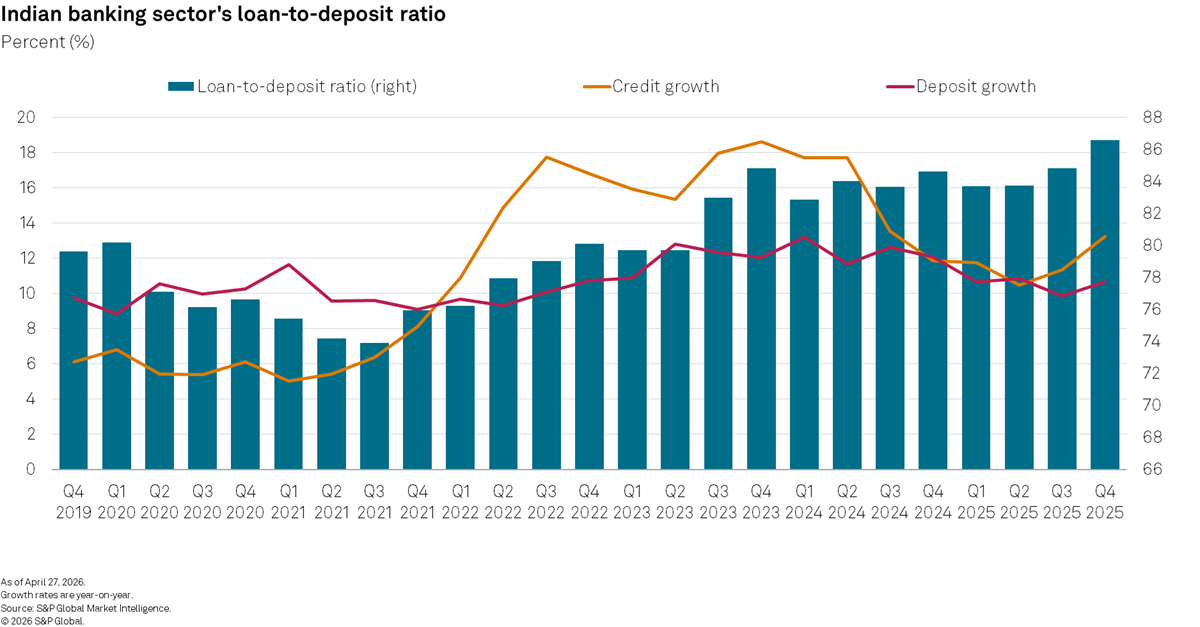
Indian banks face liquidity pressures from digital rupee expansion. In view of shifting household investments away from conventional deposit accounts and amid strong digital services adoption in the country, increased competition and costs attached to retail funds remain likely as the digital rupee is rolled out. As a result, the Indian central bank warned banks on potential liquidity pressures from the digital rupee. This is likely to constrain bank balance sheet growth, despite recent measures from the central bank aimed at loosening capital requirements and boosting credit supply to support lenders and firms, in view of the Middle East war. Additional measures to support banks are likely, including potentially reverting some of the tightening of the liquidity coverage ratio due since April 1, 2026, to generate on-paper liquidity improvements and incentivize banks to offer more attractive deposit interest rates.
Europe banking risks
Removal of three Tajik banks from EU sanctions list is likely to boost banking sector development. When the three banks were sanctioned in November 2025 under the EU's 19th sanctions package against Russia, they faced severe restrictions on international transactions. Sanction removal — as announced in the 20th sanction package in April — allows these institutions to re-establish correspondent banking relationships with Western financial institutions, enabling them to process international payments and clear foreign exchange transactions. The delisting reflects continued reforms to improve transparency and internal control systems, and signals continued commitment to compliance. The move will enhance financial stability by supporting banking sector development and improve confidence in financial services.
Latin America banking risks
Costa Rican banks will increase screening of operations following the electronic fraud law, halting operational efficiency in transactions. The electronic fraud law was enacted at the end of April of this year, making banks directly responsible of any electronic fraud affecting their clients and making it simpler for clients to claim losses from frauds on banks. It is very likely that the sector will increase screening of any operations to limit losses stemming from this new law, limiting operational efficiency within the system and constraining advancements in financial inclusion. Profitability is also likely to be affected over the short term, considering that there are indications of electronic fraud increasing in the country.
Africa banking risks
West African banks are likely to moderate their demand for Senegalese government debt on increased investor scrutiny. Following the findings of hidden government debt in Senegal, the sovereign turned to shorter term regional market issuances through 2025 that have largely been absorbed through the West African banking sector. Although banks continue to provide a key demand-side role in public debt markets, increased international scrutiny is expected to push banks to impose their own limits on debt purchases to allay investor concerns from counterparty credit risks facing them. In its stead, increased credit supply and cash holdings are likely, but so is a compositional shift away from Senegalese debt holdings toward other regional sovereigns with stronger fundamentals.
—With contributions from Tan Wang and Thandeka Nyathi
This article was published by S&P Global Market Intelligence and not by S&P Global Ratings, which is a separately managed division of S&P Global.