26 Aug, 2026
California's next wave of building electrification codes gets stuck in limbo

A new generation of building electrification policies adopted in more than two dozen California communities has run into a bureaucratic bottleneck.
The issue dominated public comment at the California Building Standards Commission's (BSC) Aug. 25 meeting, where city representatives and climate advocates urged the agency to approve local reach codes submitted over the last 10 months. The reach codes — which exceed minimum state building standards — would require residents to install heat pumps, upgrade household electric capacity, and improve energy efficiency when their equipment burns out or during home additions and alterations.
At least 28 communities have adopted one or more of the reach codes since August 2025, according to the Building Decarbonization Coalition. However, the BSC has approved the reach codes for only eight of the cities.
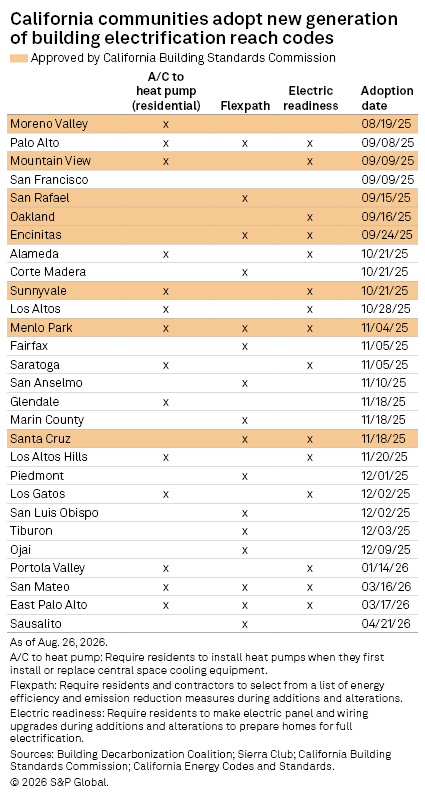
In cities that adopted the reach codes, the bottleneck has delayed development of further building decarbonization policy and held up regulation that consumed significant resources, city staff said. The delay has also caused other cities to pause code development, the speakers said.
"Reach codes help lower the cost of homeownership and renting by encouraging efficient technologies when equipment is being replaced or buildings renovated," Ana Capstick, energy programs analyst at community choice aggregator Central Coast Community Energy, told the BSC. "Delays risk missing these cost-effective replacement opportunities and postpone household savings at a time when Californians are already facing significant affordability pressures."
At the meeting, BSC Executive Director Stoyan Bumbalov said the agency is reviewing more than 500 local ordinances following the passage of Assembly Bill 130, which blocked new reach codes for residential buildings through the 2031 code cycle but included several exemptions. Additionally, lingering legal questions over policies that restrict natural gas use in buildings have complicated the BSC's review of the electrification reach codes, he said.
Policies developed to overcome legal hurdles
Many of the cities that adopted the new reach codes participated in the state's first wave of building electrification policymaking from 2019-2023, when at least 76 communities required or incentivized all-electric new construction.
That movement came to a halt in early 2023, when the US Court of Appeals for the 9th Circuit ruled that federal energy efficiency policy preempted Berkeley, California's first-in-the-nation gas ban. Bumbalov said the BSC was parsing more recent decisions in New York and California that broke from the 9th Circuit's opinion.
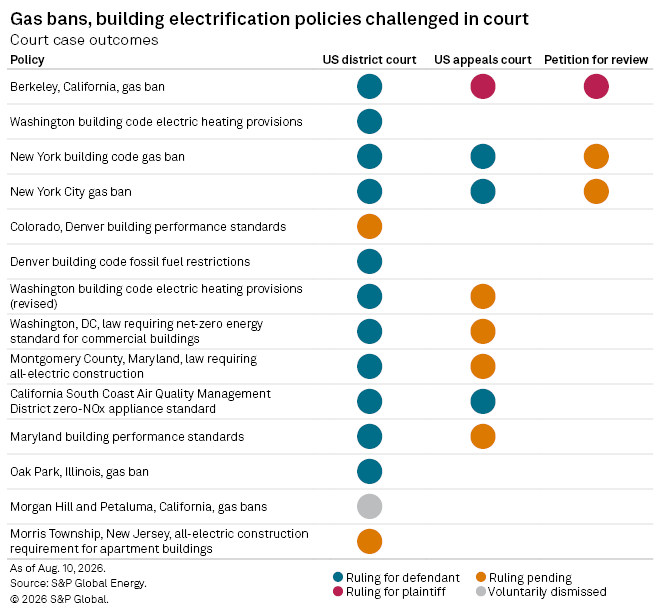
The Glendale City Council designed its AC-to-heat pump reach code to be fully compliant with the 9th Circuit decision, Councilmember Dan Brotman told the BSC.
The policy encourages residents to use electric-powered heat pumps, which provide heating and cooling, when they first install or replace air-conditioning. To avoid running afoul of the 9th Circuit precedent, residents can opt to use a gas furnace for primary heating, though they would have to make energy efficiency improvements beyond minimum state requirements, Glendale Sustainability Officer David Jones explained to the BSC.
Other cities adopted a flexpath reach code, which requires residents and contractors to select from a list of energy efficiency and emission reduction measures during home additions and alterations. The final reach code requires residents to make electric panel and wiring upgrades during additions and alterations to prepare homes for full electrification.
City staff spent months doing community outreach, drafting policy reports and scrutinizing the reach codes to ensure they were compliant with the 9th Circuit decision and A.B. 130, said Michael Rochmes, policy and advocacy manager for the US Green Building Council California.
"City attorneys are notoriously conservative when it comes to deciding whether policies will pass legal muster," Rochmes told the BSC.
Delays seen ignoring legislative intent
City representatives said their policies aligned with the legislative intent of exceptions to A.B. 130's six-year pause on updates to California's residential building standards and new local reach codes. The bill sought to promote housing affordability and development after multiple updates to the state building code heavily encouraged all-electric construction.
A handful of cities took advantage of an exception that allowed them to adopt reach codes that were substantially similar to previously filed ones, provided they were in effect by Sept. 30, 2025. Many cities could not meet the deadline and opted for another carve-out.
That exception allowed cities to adopt reach codes that align with the public health and safety, emission reduction and energy efficiency provisions in their overarching development plans. Those reach codes can incentivize — but cannot strictly require — building electrification and must be part of an emission reduction strategy.
Advocates and city representatives said they worked with lawmakers to craft that exception with the new generation of building electrification reach codes in mind. Those lawmakers included one of the architects of the building code pause, Assemblymember Nick Schultz, who assured cities that the policy would not interfere with their climate goals, Brotman said.
"The intent of the legislature was clear," Brotman said. "I understand the commission is under a lot of pressure with all the changes brought by A.B. 130, but it's not fair to our residents that we cannot deliver on our climate and clean air goals."
Lawmakers drafted the legislation "to allow for an exemption for certain reach codes," Schultz told Platts, part of S&P Global Energy. Glendale met the deadline requirements in the exception, and Schultz's office is reaching out to the BSC to determine when it will approve the city's reach code, he said.
Glendale and other cities answered follow-up questions from the BSC in early 2026 but are still awaiting a decision, municipal representatives said. Following public comment, Commissioner Frank Ramirez requested an update on the status of the code approvals from staff.