02 Jun, 2026
OP Pohjola overtakes UBS as Europe's least efficient large bank
By Samantha Lipana and Cheska Lozano
OP Pohjola became the least efficient large lender in Europe in the first quarter of 2026 as adjustments to the value of its investments weighed on performance, ending UBS Group AG's six-quarter streak.
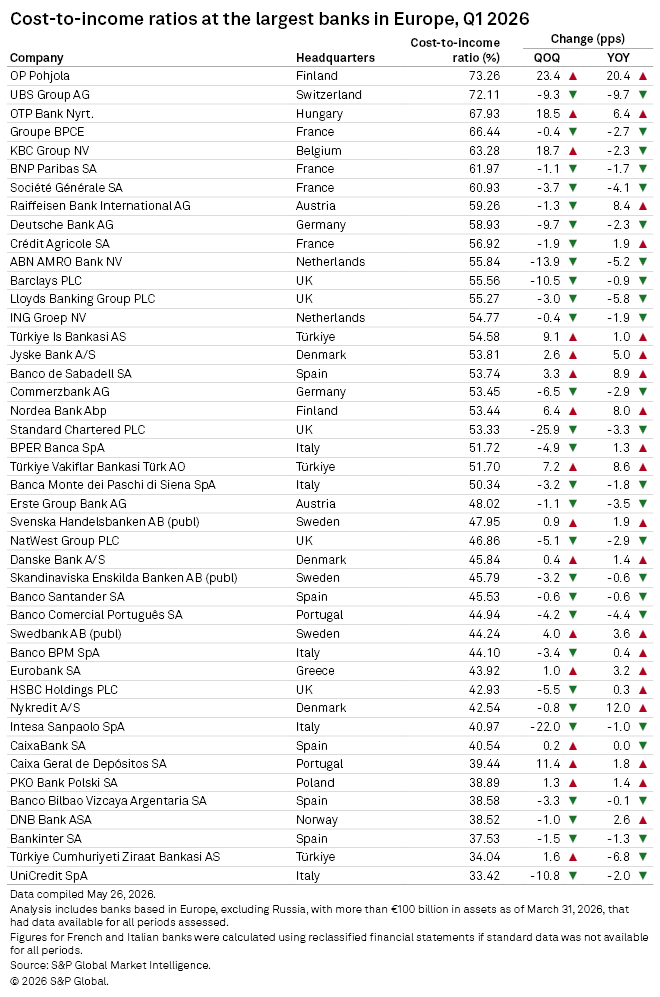
The Finnish bank, formerly known as OP Financial Group, had a cost-to-income ratio of 73.26% as of March 31, the highest in a sample of 44 banks based in Europe, excluding Russia, with more than €100 billion in assets, according to S&P Global Market Intelligence data. With a 20.4 percentage-point deterioration in the ratio from the prior-year period, OP Pohjola replaced UBS Group AG as the least efficient bank in Europe, ending the Swiss group's six-quarter streak.
OP Pohjola reported a 19.9% year-over-year drop in first-quarter total income and a 62% decline in operating profit, while operating expenses rose 5.5%, mainly due to higher IT and personnel costs.
The efficiency slump was largely driven by a €175 million loss from investment activities in the quarter, resulting from changes in the fair value of equities, compared to an income of €9 million a year ago, the lender said in an earnings report. Retail and corporate banking operating profit fell 34% and 15%, respectively, year over year, as market rate developments led to a 10% drop in net interest income.
For full year 2026, OP Pohjola downgraded its operating profit guidance and now expects it to be lower than in 2025, citing a rise in trade barriers that may affect the bank's operations amid the ongoing war in the Middle East and the subsequent uncertainty in the global economic outlook.
Swiss group UBS, which topped the list over the past six quarters, placed second as it improved its efficiency ratio by 9.7 percentage points year over year to 72.11%.
OTP Bank Nyrt. took the third spot in a sample of 44 banks after posting a 6.4 percentage-point increase in its ratio to 67.93%.
Banco de Sabadell SA, Raiffeisen Bank International AG, Türkiye Vakiflar Bankasi Türk Anonim Ortakligi and Nordea Bank Abp posted some of the largest year-over-year efficiency deteriorations, the data shows.
– Access detailed financials for OP Pohjola.
– View UBS's latest earnings call transcript.
– Set up alerts for more EMEA Data Dispatches.

AI-driven cost cuts
Cost-to-income ratios have come into sharper focus as banks intensify AI investments to boost efficiency and profits.
UK-based Standard Chartered PLC emphasized the role of AI in its recently announced medium-term targets, which include a cost-to-income ratio of around 57%. The emerging markets-focused bank reported an efficiency ratio of 53.33% in the first quarter, down 3.3 percentage points from the year-ago period.
Intesa Sanpaolo SpA said its cost-to-income ratio of 40.97% in the first quarter was a record, representing a 1.0 percentage-point improvement. By 2029, the Italian bank plans to reduce staff by 12,400, which is expected to generate about €570 million in annual cost savings, with AI-enabled processes supporting revenue growth.
In their respective investor day events, HSBC Holdings PLC CEO Georges Elhedery said the British bank will provide its 200,000-strong workforce with the capabilities necessary training to adapt to the changes brought by AI and to ensure that they are "not fighting us, not disenfranchised, not anxious, overwhelmed, and resisting the change," while Commerzbank AG CEO Bettina Orlopp said AI tools are expected to drive cost savings of about €350 million and contribute €500 million annually for the German bank by 2030, Bloomberg News reported.
HSBC's efficiency ratio rose 0.3 percentage point to 42.93% while Commerzbank's improved 2.9 percentage points to 53.45%.
European banks could improve their aggregate cost-to-income ratio over the next five years to 50% from 52% as of 2025-end if they reduce their staff count by 10% as part of their AI-led efficiency initiatives, Morgan Stanley Research said in a May 28 note. Lenders are projected to further lower their ratio to 47% if they were to cut their workforce by 20%, according to the note.