07 May, 2026
Nordea beats Q1 2026 profit estimates most among largest Nordic banks
By Adrian Jimenea and Cheska Lozano
|
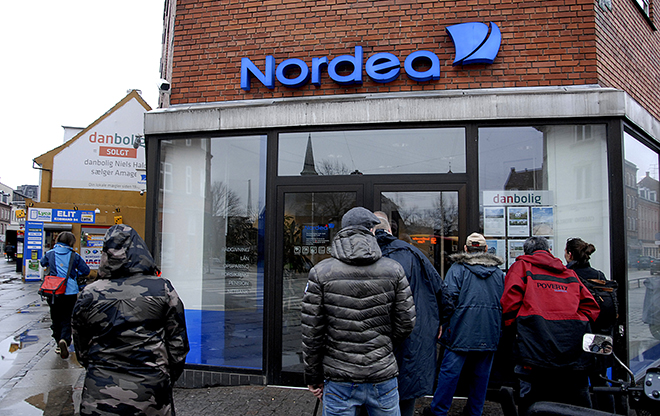
Nordea reported an 11% rise in corporate lending in the first quarter, the first double-digit increase in any quarter since 2022. |
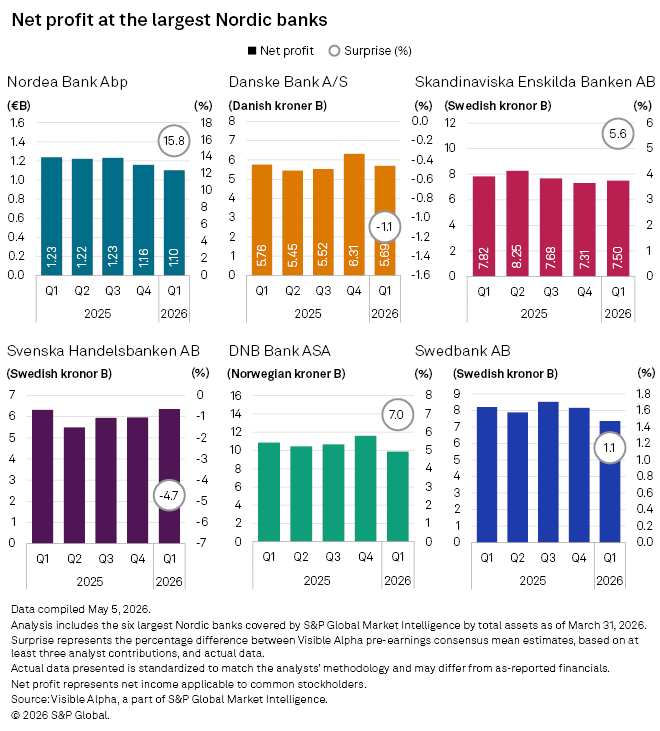
Nordea Bank Abp's first-quarter profit exceeded expectations most among large Nordic banks, with its lending and deposit growth softening the impact of lower interest rates.
All but one of the region's six largest banks reported lower quarterly profit year over year, but Finland-headquartered Nordea's €1.10 billion earnings surpassed the Visible Alpha consensus estimate by 15.8%. Norway-based DNB Bank ASA and Sweden-based Skandinaviska Enskilda Banken AB (publ) reported softer estimate surprises of 7.0% and 5.6%, respectively.
Svenska Handelsbanken AB (publ)'s profit was 4.7% short of expectations, while Danske Bank A/S missed consensus estimates by 1.1%.
Nordea reported an 11% rise in corporate lending in the quarter, which it said was the first double-digit increase in any quarter since 2022. The bank is confident volumes will continue growing through 2026, helping its net interest income (NII), CFO Ian Smith said during a call with analysts.
The bank booked €190 million in restructuring expenses in the quarter. It also recognized a €160 million release of management buffers to expected credit losses.
"We continue to like Nordea among the Nordic banks due to its ability to continually take share while maintaining above-average profitability," UBS Global Research analysts said in a note. They reiterated their "Buy" rating on the stock.
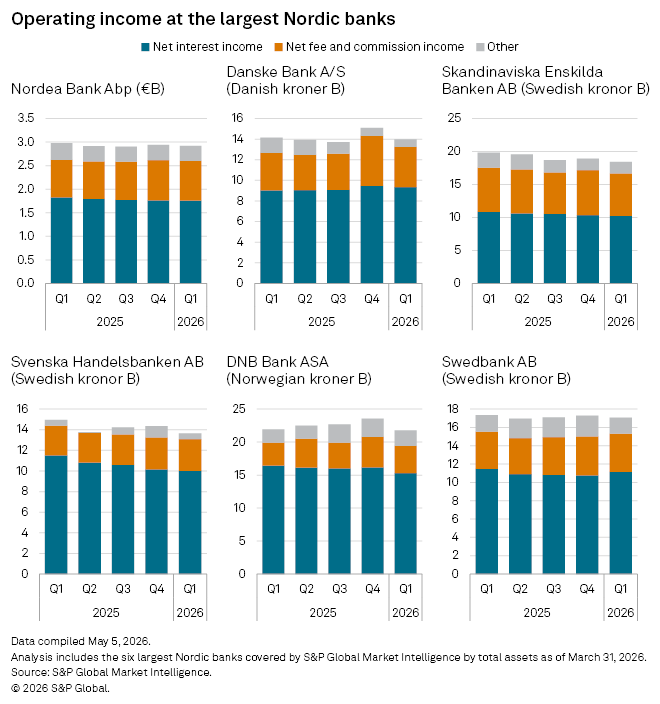
Handelsbanken, the most reliant on lending income among the banks in the sample, recorded the steepest revenue drop in the sample, at 8.67%. Its NII — the difference between interest earned on loans and that paid out on deposits — fell 12.94% year over year. The two other Swedish banks in the sample, SEB and Swedbank AB (publ), also booked NII declines, at 5.55% and 2.98%, respectively.
The Swedish economy's soft growth translated into "fairly flat" lending volumes, Handelsbanken CEO Michael Green said. The country's central bank has lowered its benchmark interest rate by 100 basis points since 2025.
DNB and Danske Bank also recorded lower NII, but received some cushion from higher fees, commissions and other income. DNB reported growth in both fee income and other income of more than 17%, but NII declined 6.77% in part due to tough lending and deposit competition in its home market.
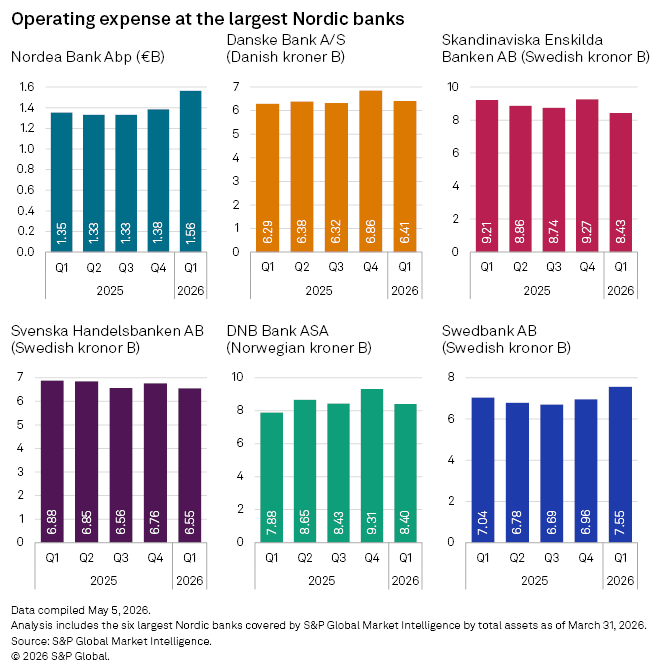
Nordea unsurprisingly incurred elevated operating expenses in the quarter, up 15.56% year over year, due to the restructuring charges. These charges related to the bank's plan to reduce its workforce in anticipation of a stronger adoption of automation and AI.
Similarly, Swedbank announced the sale of a couple of non-core assets as part of a wider cost-cutting push. The measures will first result in restructuring costs in 2026 before leading to a reduction in operating expenses in 2029, according to the bank. The plan is expected to cut Swedbank's headcount by around 500. Swedbank's first-quarter operating expenses rose by 7.24%.
Danske Bank also incurred slightly higher operating expenses. The bank upgraded its 2028 targets, including a return on equity of more than 14.5% and a cost-to-income ratio no higher than 43%. Executives and analysts said the new targets are conservative, implying some room to exceed them.
Nordic banks are putting more emphasis on their expenses in anticipation a dent in earnings from lower interest rates and a slower economic growth. However, these banks' expense lines have been relatively lower than their peers in other parts of Europe.
SEB CEO Johan Torgeby said the bank aims to control its cost base with "pretty much surgical precision." The bank's first-quarter operating costs were 8.46% lower year-over-year.
Visible Alpha is a part of S&P Global Market Intelligence.