28 May, 2026
Iran can implement maritime insurance program 'to some degree' — PARIMA head

By RJ Dumaual
|
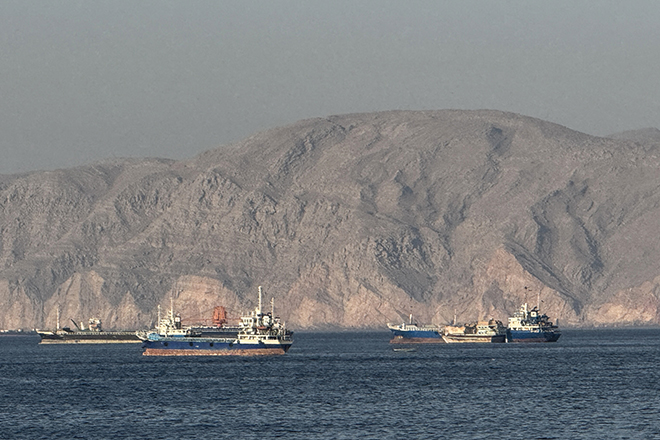
Vessels anchored in the Strait of Hormuz, off the port city of Khasab on Oman's northern Musandam Peninsula, on May 17, 2026. Source: AFP via Getty Images. |
Iran has the capacity to implement an insurance program for ships transiting the Strait of Hormuz, according to Steve Tunstall, general secretary of Pan-Asia Risk and Insurance Management Association (PARIMA).
The government of Iran has launched a bitcoin-backed insurance service for shipping companies looking to transit the strait, Bloomberg News reported May 18, citing a Fars News Agency report that was based on documents obtained from Iran's Ministry of Economy and Financial Affairs.
The insurance service, called Hormuz Safe, will reportedly provide "verifiable digital insurance" to Iranian shipping companies and cargo owners. Fars did not provide a detailed breakdown of how the insurance works or whether it is available to foreign shipping companies or vessels.
Iran's economy remains functional in terms of allowing some shipping to operate through the strait "within the limits of what they're able to do," Tunstall told S&P Global Market Intelligence on the sidelines of PARIMA's Manila Masterclass on May 21.
"I'm not saying it's right or it's wrong ... but there is a functional ability to make this business work to some degree, although it is very limited," Tunstall said.
Hong Kong, India step in
Multiple territories have launched insurance programs for ships navigating the Strait of Hormuz, where a significant portion of the world's oil supply is transported, as the US-Israel war with Iran, which began in late February, remains unresolved.
In April, India announced the creation of the Bharat Maritime Insurance Pool, which will provide marine hull and machinery, cargo, war risks, and protection and indemnity coverage backed by a 129.80-billion-rupee sovereign guarantee. The pool is available to Indian-flagged or controlled vessels or vessels destined to or starting from India. The policies will be issued by insurers that are pool members, using the combined underwriting capacity of the pool, which would be about 9.50 billion rupees, according to a statement.
The Hong Kong Marine War Risks Insurance Pool, which launched in March and is backed by five Hong Kong insurers, provides up to US$130 million in compensation for shipowners in Hong Kong and mainland China against war and emergency risks.
Meanwhile, the US government's $40 billion program seeking to insure ships transiting the strait has not provided any cover, the Financial Times reported, citing insurance brokers. This is not surprising to Tunstall, who said even though insurance is available, personal safety remains a concern.
"The problem is if I'm the captain of this vessel and I'm personally accountable for the safety of my crew and my own life, I'm not going to go through hell just because someone tells me there's insurance," Tunstall said. "If the captain deliberately puts company employees in harm's way, there are financial and ethical liabilities [for the captain]."