


07 Apr, 2026
Clean firm energy sources can boost grid capacity for less, researchers say

By Karin Rives
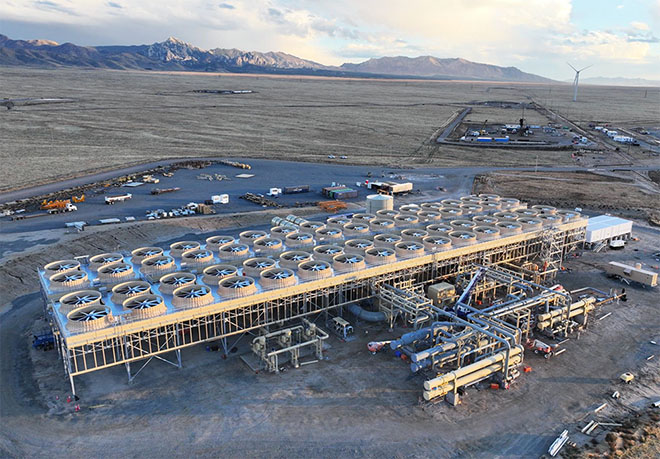
| Fervo Energy's 500-MW Cape Station geothermal plant in Utah will deliver its first electricity to the grid in late 2026. The air-cooled condensers seen here are part of the surface-level power plant. Source: Fervo Energy. |
By 2030, next-generation geothermal developer XGS Energy Inc. expects to deliver 150 megawatts of electricity to the New Mexico grid from a system that boasts a capacity factor greater than 90% and a lifespan of 30 years. Such resources, known as clean firm energy, remain nascent in the US, but perhaps not for much longer.
"Geothermal can support demand where it's at, so potentially even unlock highly localized grid constraints," Lucy Darago, XGS Energy's chief commercial officer, said in an interview. "That's really valuable to [electric] utilities, providing a whole new level of scale to enable load growth."
Not all firm, around-the-clock baseload power sources have to involve large infrastructure developments or fossil fuels, said Kasparas Spokas, electricity program director at the Clean Air Task Force.
Clean — or nearly carbon-free — firm energy technologies such as enhanced geothermal, sustainably sourced biomass, and small nuclear fission and fusion can help electric utilities lower capital investment costs over time. They can also fill a critical gap when intermittent renewables cannot produce, according to a recent report that Spokas co-authored.
"They can run as baseload power plants," Spokas said in an interview. "Clean firm generation technologies generally more fully utilize the transmission network to deliver more energy through the same amount of infrastructure. [They] can also lessen the overall build-out challenge and reduce the costs of decarbonizing the grid."
For now, geothermal energy and other emerging carbon-free firm power sources are supporting the overall increase in electricity demand without replacing fossil fuel-fired generation. That may change over time as technology costs come down, decarbonization efforts continue and volatile fossil fuel costs continue to put pressure on power customers, industry analysts said.
Consistent policy support is key
Clean firm energy technologies enjoy bipartisan support. If proven commercially viable and expanded, they could lower power costs for US homes and businesses over time, the Clean Air Task Force report said.
The study cited Princeton University research showing that 1 gigawatt of clean firm capacity can replace 5 GW of renewable and storage capacity needs. That, in turn, could lower investment costs associated with transmission build-outs. Clean firm energy sources can also help protect against price swings as seen in recent years with natural gas-fired generation, Spokas said.
The Trump administration has been ordering and incentivizing US coal plants to operate past their planned retirement dates, saying the electricity from such dispatchable generation is needed to meet rapidly rising power demand.
But US Department of Energy officials have also been supportive of nascent nuclear fusion technology and geothermal energy development, which share similarities with the oil and gas industry. Companies tapping into energy below the earth's surface can seamlessly transfer workers from oil drilling sites and sometimes colocate their projects at such sites.
Energy Secretary Chris Wright in his prior role as CEO of Liberty Energy Inc. invested $10 million in the startup Fervo Energy Co., another geothermal developer. Fervo is set to deliver the first power from its new 500-MW enhanced geothermal plant in Beaver County, Utah, in late 2026, a company spokesperson confirmed.
And the DOE once again has a stand-alone Office of Fusion. In December, the DOE held a meeting with more than a dozen CEOs of fusion startups to discuss new funding.
Early and consistent policy support will be critical to unlocking emerging clean firm technologies, bringing them to scale and making them bankable, the Clean Air Task Force study said.
A multi-terawatt opportunity
Renewable biofuels projects are underway in Louisiana and Michigan. Texas is seeking to boost advanced nuclear developments in the state.
But enhanced geothermal projects, building on centuries of geothermal harnessing of energy, are the talk of the town. Investors have poured more than $1.5 billion into next-generation geothermal projects in recent years, according to a National Laboratory of the Rockies report released in January.
A 2024 research paper published in Nature estimated that up to 184,112 GW of capacity may be available for next-generation geothermal developers across the US. That compares with the nation's 580 GW of installed natural gas-fired capacity and 184 GW of coal-fired plant capacity in April 2026, according to the energy data firm Cleanview.
XGS Energy and a number of other recent startups in the geothermal industry are eager to tap into what they believe could be an immense resource of steady electricity for which customers are willing to pay a premium.
Power purchase agreements for geothermal energy in the US West currently run between $100 and $120 for a megawatt-hour of electricity, compared with $30 to $50 for a MWh of solar.
"Geothermal isn't competing with wind, solar, even gas, to an extent, because its value to the grid is so unique and consistent," Darago said. "They're really completely independent pricing and procurement strategies."
Data centers — including the deal with Meta Platforms Inc. and Public Service Co. of New Mexico for which XGS Energy's New Mexico deal is designed — have been driving investments in clean firm energy. Yet, half of XGS Energy's customer base today consists of electric utilities looking for more reliable generation capacity unrelated to data centers, Darago said.
The geothermal developer expects to drill past 3 kilometers, or 2 miles, into the ground at the yet-unnamed New Mexico site to hit rock sizzling at more than 200 degrees C, or 391 degrees F. There, it will create a reservoir to heat water circulating through a closed loop of tubing. At the surface, the water is then turned into steam that drives an electric generator.
"We're doing early utility-scale projects like this," Darago said, "but once you build that operating history and that experience with finance, with insurance, with project underwriters and independent engineers, there's not a lot of blocks between the first 100 MW and scaling to terawatts."