05 Mar, 2026

US corporate bankruptcies set to climb again in 2026

SNL Image
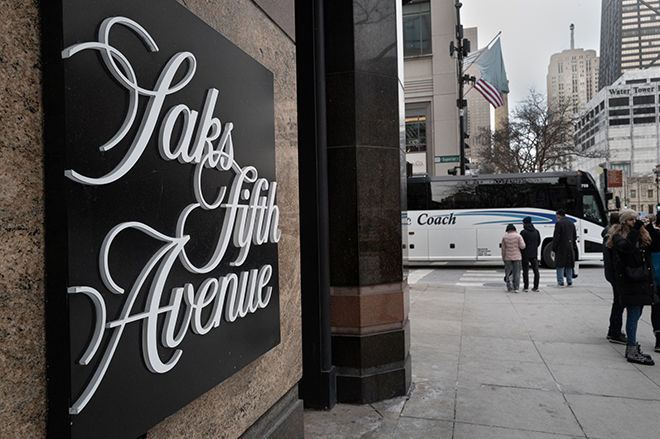
Pedestrians walk by a Saks Fifth Avenue store in Chicago on Dec. 30, 2025. The luxury retailer's parent company, Saks Global Enterprises LLC, filed for bankruptcy in January 2026, marking one of at least six US bankruptcies at the start of the year with liabilities of more than $1 billion at the time of filing, according to S&P Global Market Intelligence data.
Source: Scott Olson/Getty Images News via Getty Images.

Corporate bankruptcy filings in the US are expected to remain elevated and may rise again in 2026.

US corporate bankruptcies totaled nearly 800 filings in 2025, continuing a recent uptrend and marking the highest level since 2010, S&P Global Market Intelligence data showed. The data includes companies with public debt and at least $2 million in assets or liabilities, as well as private companies with at least $10 million in assets or liabilities at the time of filing.

Higher interest rates continue to pressure overleveraged companies due to the need to refinance large debt volumes, which was mostly issued at lower rates in 2020 and 2021 during the COVID-19 pandemic. The US Federal Reserve raised interest rates from 2022 to 2023 in response to a resurgent economy and surging inflation. Although rates were cut in 2024 and 2025, they remain elevated compared to levels during the pandemic-era borrowing spree.

"In 2020 and 2021, it was very cheap to finance or refinance," Jim Van Horn, bankruptcy partner at Barnes & Thornburg, said in an interview. "Now, companies are continuing to come up against their maturity dates. The problem is not that capital is not available. It's this refinancing issue and the fact that it's much more expensive."

SNL Image

While pandemic-era volatility has eased, economic growth and outlook have been clouded by several factors, including stubborn inflation, changing consumer patterns, a softening labor market and tariff policies. Against this backdrop, companies with stronger balance sheets have been better able to navigate debt while others have struggled.

"Economic growth is likely to remain below the threshold needed to stabilize insolvency trends," Sarah Murrow, president and CEO of Allianz Trade in Americas, told Market Intelligence. "Also, financial conditions may remain tighter for longer, widening the gap between well-capitalized large corporates and more vulnerable small and mid-sized enterprises."

SNL Image

Cost pressures

The rising cost of debt has combined with other factors weighing on profit margins, such as elevated business input and labor costs.

"The headline rate of inflation is not as scary as it used to be, but the cumulative cost hasn't gone anywhere as far as labor and raw materials," Van Horn said. "From an economic standpoint, it is a permanent weight that is still hanging on companies' margins."

Consumer inflation remained sticky in 2025, with monthly consumer price index readings showing year-over-year increases above 2.5% for most of the year, according to US Bureau of Labor Statistics (BLS) data.

Business input cost pressure was more elevated than consumer prices in the second half of 2025. The producer price index of processed goods for intermediate demand recorded year-over-year increases above 3% for each of the last four months in 2025 following milder gains earlier in the year. This included a 3.7% rise in September. The index tracks price changes for fabricated goods sold as business inputs.

SNL Image

SNL Image

Meanwhile, labor costs also continued to rise in 2025 above a 3% rate. Compensation costs for civilian workers increased 3.4% year over year in the fourth quarter of 2025, according to BLS employment cost index data.

Shifting tariff policy has created additional cost pressure for businesses, making it difficult to gauge future input costs and the ability to pass these costs through to consumers.

"That basic uncertainty in addition to increased costs for businesses is just not a good recipe for having lower bankruptcy filing rates," Van Horn said.

Economic outlook still positive

Bankruptcy rates have not reached the more drastic levels seen during the Great Recession in 2008 and 2009. Moreover, a rising number of filings does not necessarily signal greater economic distress, but rather a normalization of activity after the pandemic's distortions and disruptions that included unusually low filing totals, Leslie Tayne, founder and head attorney at Tayne Law Group, told Market Intelligence.

However, concerns may arise based on where financial stress is concentrated.

"When defaults rise in vulnerable sectors such as commercial real estate, lenders may become strained and therefore more cautious about lending credit to both consumers and businesses," Tayne said. "When credit tightens, it can trickle down to everyday borrowers who are trying to finance a car, buy a home or take out a personal loan, and reduced access to credit is what can ultimately slow economic growth."