Featured Topics
Featured Products
Events
S&P Global Offerings
Featured Topics
Featured Products
Events
S&P Global Offerings
Featured Topics
Featured Products
Events
S&P Global Offerings
Featured Topics
Featured Products
Events
Financial and Market intelligence
Fundamental & Alternative Datasets
Government & Defense
Professional Services
Banking & Capital Markets
Economy & Finance
Energy & Commodities
Technology & Innovation
Podcasts & Newsletters
Financial and Market intelligence
Fundamental & Alternative Datasets
Government & Defense
Professional Services
Banking & Capital Markets
Economy & Finance
Energy & Commodities
Technology & Innovation
Podcasts & Newsletters
13 Feb, 2026
By Karin Rives

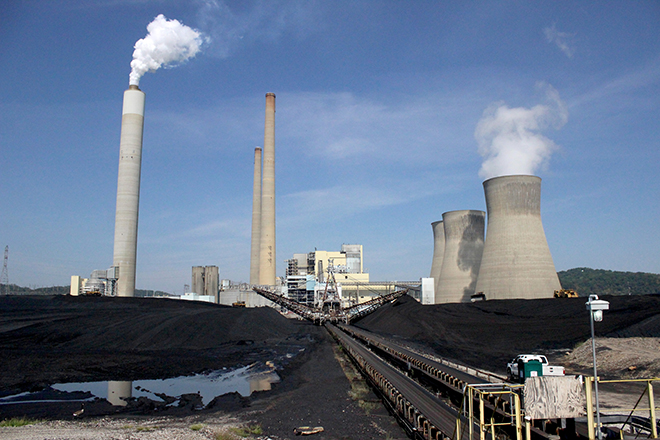
| The Trump administration's decision to revoke the 2009 endangerment finding is expected to also underpin the removals of emission reduction mandates for power plants and other industries. Source: S&P Global Market Intelligence. |
In a Feb. 12 final rule stripping the US government of its basis for regulating greenhouse gases, the Trump administration relied on the same array of legal arguments used when it proposed the sweeping change in July 2025.
Absent from the final rule, save a mention in a footnote, was a contentious climate science report commissioned and coordinated in support of the US Environmental Protection Agency's plan to cancel its 2009 endangerment finding. The EPA's unprecedented deregulatory move also skirted the broader issue of science, on which it relied heavily when crafting its finding more than 16 years ago.
The agency had concluded under President Barack Obama that climate-warming gases endanger human health and welfare and must therefore be controlled and reduced, a landmark determination now revoked.
Now, the "legal conclusions are sufficient to support rescission of the endangerment finding and repeal of the related GHG emission standards without the additional scientific basis set out at proposal," the EPA said in its newly released final rule.
By dropping the science elements, the EPA may have sought to avoid unflattering scrutiny by a judge, said Jody Freeman, a Harvard University Law School professor and expert on administrative law.
"They dropped the part that made them look most out of touch with reality, and now they're fixating on very nuanced legal arguments about how to read this section of the law," Freeman said in an interview. "And they think they have some takers on the Supreme Court."
Legal arguments
The EPA said in the Feb. 12 rule that its mandate under the Clean Air Act is to identify and regulate air pollutants to which Americans are exposed locally and regionally, rather than to tackle a global climate problem, representing a novel interpretation of the law.
The agency also said that US greenhouse gas emission standards have too small of an impact on the dangers of climate change to be warranted, and that Congress never empowered the agency to tackle a policy response of such a "significant and political importance" as climate change.
As for the section of the Clean Air Act covering vehicle pollution, the EPA said it was never authorized to issue a "standalone" endangerment and contribution finding that covers all cars and trucks, but rather that it must issue individual findings for specific emissions and for each class of new vehicles. The agency revoked all US emission standards for vehicles that had been on the books since 2010.
"There's some science lurking in there that is still part of their legal claim," Freeman said. "The idea that small shares don't matter to global warming essentially flies in the face of the science. So there are some scientific arguments that need to be made within those legal arguments."
What strategy the EPA plans to use to fight lawsuits from states and advocacy groups is unclear.
"Each of the legal bases finalized in this action is separate and independent from the others, and the EPA would rescind the Endangerment Finding and repeal the GHG emission standards on any one of these bases standing alone," according to the rule.
That would be true even if the "major questions doctrine" did not apply, the EPA rule said in another nod to potential future litigation.
The agency was referring to the 2022 Supreme Court ruling in West Virginia v. EPA, which held that federal agencies are not allowed to regulate on matters of vast "economic and political significance" unless they are authorized to do so by Congress. The agency also invoked the 2024 Loper Bright Enterprises v. Raimondo case, which overturned the 40-year-old Chevron legal doctrine giving regulatory agencies discretion over rulemakings.
2009 finding challenged several times already
Federal courts have repeatedly affirmed the EPA's authority to regulate greenhouse gases.
The US Court of Appeals for the DC Circuit in 2012 found that the "body of scientific evidence marshaled by the EPA in support of the endangerment finding is substantial," rejecting a challenge by the Coalition for Responsible Regulation. The Supreme Court declined to review that decision.
In the 2022 West Virginia v. EPA case — which restricted the agency's ability to limit carbon emissions from power plants — the high court did not question the agency's right to regulate greenhouse gases but said it had to be done differently. The following year, the Supreme Court again declined to hear a case seeking to strike down the endangerment finding, this time filed by the Concerned Household Electricity Consumers Council and the FAIR Energy Foundation.
The EPA is counting on the Supreme Court viewing the endangerment finding differently this time, said Matthew Leopold, an attorney with Holland & Knight who served as general counsel for the EPA during the first Trump administration.
"We've had an administrative law revolution in the last few years in the Supreme Court," Leopold said in an interview. "So the rules that were in place for reviewing the decision in 2009 are entirely different today than at that time because we have West Virginia, the major question doctrine, and the Loper Bright case eliminating deference to agencies."
The endangerment finding has been a key target for industry groups and hard-right activists opposed to climate policies they view as harmful to their economic or ideological interests. Revoking the rule became a priority under President Donald Trump's second term.
"The Trump EPA has finalized the single largest deregulation in the history of the United States, referred to as the holy grail of federal overreach," EPA Administrator Lee Zeldin said at a Feb. 12 White House event to announce his agency's decision. "For years, unelected bureaucrats twisted the Clean Air Act into something it wasn't supposed to be."
DOE science report posed problem
Leopold and other attorneys noted the fact that the EPA in its final rule chose not to rely on science. Since 2009, global temperatures have continued to rise, as have other impacts from global warming.
The disputed DOE report, written by five scientists skeptical of mainstream climate research, became problematic for the administration after dozens of researchers accused the authors of misrepresenting their work in the report. Government attorneys spent months in federal court over the group's work.
The DOE report became a liability for the agency, said Joe Goffman, who led the agency's Office of Air and Radiation under President Joe Biden.
"The problem with the DOE report was not its intrinsic flaws, but the fact that it was trying to deny what is now decades of scientific work establishing beyond any doubt that human activity is disrupting the climate," Goffman said in an interview.
The EPA stripped all references to the DOE report from its final rule, saying in a footnote it did not rely on it "for any aspect of this final action."
In an analysis released Feb. 11, the Environmental Defense Fund estimated that repealing the 2009 endangerment finding and rescinding vehicle emission standards will release between 7.5 billion and 18 billion metric tons of additional greenhouse gases by 2055. The rule would lead to additional fuel costs of $680 billion to $1.4 trillion and cause up to $500 billion in health costs in that time frame, the group estimated.
The EPA did not account for health costs in its rule, per a recently announced policy shift, but the agency estimated $1.3 trillion in vehicle technology savings between 2027 and 2055. That would translate into an average cost reduction of $2,330 per vehicle, the agency said.