Featured Topics
Featured Products
Events
S&P Global Offerings
Featured Topics
Featured Products
Events
S&P Global Offerings
Featured Topics
Featured Products
Events
S&P Global Offerings
Featured Topics
Featured Products
Events
Financial and Market intelligence
Fundamental & Alternative Datasets
Government & Defense
Professional Services
Banking & Capital Markets
Economy & Finance
Energy Transition & Sustainability
Technology & Innovation
Podcasts & Newsletters
Financial and Market intelligence
Fundamental & Alternative Datasets
Government & Defense
Professional Services
Banking & Capital Markets
Economy & Finance
Energy Transition & Sustainability
Technology & Innovation
Podcasts & Newsletters
20 Feb, 2026
By Karin Rives

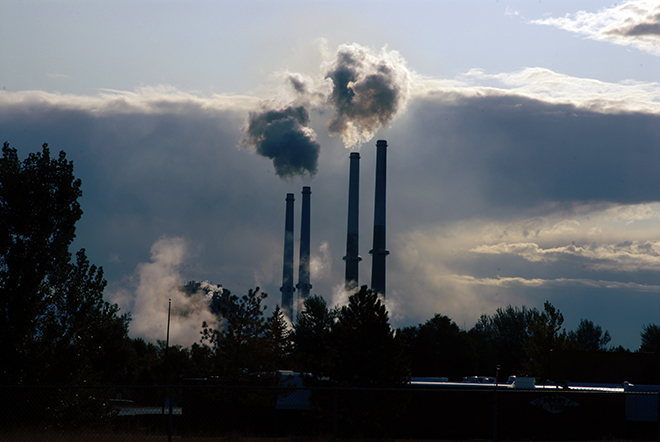
| The 1,480-MW coal-fired Colstrip power plant in Montana, above, will no longer have to install mercury and air toxics emission controls after the Trump administration rolled back a 2024 rule. Source: milehightraveler/iStock/Getty Images Plus. |
The Trump administration revoked a 2024 rule designed to reduce releases of mercury and other toxins from coal-fired power plants, saying the lower standards will advance baseload power and lower electricity costs.
EPA Deputy Administrator David Fotouhi made the announcement at a Feb. 20 event with Kentucky state and federal lawmakers at Louisville Gas and Electric Co.'s 1,177-megawatt Mill Creek coal-fired power plant.
The Biden administration "charged ahead with a slew of unnecessary, costly and burdensome new requirements based in part on incomplete information," Fotouhi said in a statement. "That mistake ends today. The Trump EPA's action follows the rule of law and will reduce the cost of generating baseload power, lowering costs and improving reliability for consumers."
The final rule canceling the Biden-era amendments to the nation's mercury and air toxics standards (MATS) means operators of coal plants already equipped with mercury controls will now be allowed to run the equipment less often and still be in compliance, saving operational costs.
Companies also avert a 2024 requirement to install continuous and more accurate emissions monitoring equipment by their plants, a change welcomed by a number of companies that said this would cost more than quarterly tests at plant stacks.
Dozens of utilities in 2025 took advantage of a two-year exemption from the MATS rule that the White House offered them in anticipation of the rule change.
The EPA estimated in its final April 2024 rule that only about 11.6 gigawatts, or 7%, of operational coal-fired power capacity would be expected to take some form of action to comply with the tighter standards by 2028. No coal plants were expected to retire as a result of the rule, the EPA said then.
A lignite loophole
The 2024 rule sought to close a loophole that had allowed lignite-fired coal plants in Texas and North Dakota to operate with weaker mercury limits. The new mandates built on regulations that had achieved a 90% reduction in mercury emissions from US coal plants since 2012.
"The mercury limit for lignite plants was just being lowered to the same level that every other power plant was meeting around the country," said John Walke, a senior attorney with the Natural Resources Defense Council focused on Clean Air Act cases. "And for the Trump administration, that was too much."
The EPA said the final 2024 rule reflected advances in pollution control technology, while preventing 1,000 pounds of mercury emissions in 2028. It was also projected to avoid the release of at least 7 tons of nickel, arsenic, hexavalent chromium and other hazardous air pollutant metals that same year. Those reductions will not occur under the final rule announced Feb. 20, the EPA said.

The 1,480-MW Colstrip power plant in Montana operated by a subsidiary of Talen Energy Corp. was the only facility that had to install entirely new emission controls under the 2024 rule, according to the EPA. The company did not immediately return a request for comment.
The rollback of the Biden-era MATS rule, like other decisions by the administration to curb or eliminate environmental rules, will immediately be challenged by health and environmental groups as well as states, Walke said in an interview. The US Supreme Court in the fall of 2024 rejected seven petitions from Republican-led states and industry groups seeking to halt the 2024 rule.
The EPA said the repeal of the 2024 rule will save industry an estimated $670 million in compliance costs.
Unlike during the first Trump administration, efforts to bring coal back to prominence have coalesced into a targeted strategy, said Brian Murray, director of Duke University's Nicholas Institute for Energy, Environment and Sustainability. Between emergency orders keeping coal-fired power plants from retirement, federal financial support and deregulatory moves, "all these things have come into place," Murray said in an interview.
"It's now a more consistent policy, whether people like it or not," Murray said. "Utilities that have coal generation will see this as a way to delay closures, but it's quite a different game when we're talking about new investments. You can keep old coal plants around for a while, and that's what we're seeing."
Health advocates warned the rollback will lead to more disease and health impacts, which were not monetized in the new rule per a recent policy change.
Mercury is a powerful neurotoxin that can stunt the brain development of young children and cause other serious health problems for adults.
"The science is clear, and profoundly alarming: No amount of mercury is safe for babies' developing brains," Dominique Browning, director and co-founder of the group Moms Clean Air Force, said in a statement. "Mercury ... damages the architecture of babies' and children's developing brains. This is why doctors recommend limiting tuna, salmon and large fatty fish intake during pregnancy."
The EPA's action came a week after the agency repealed a key 2009 endangerment finding used to regulate greenhouse gases under the Clean Air Act, along with all emission standards for vehicles.