Featured Topics
Featured Products
Events
S&P Global Offerings
Featured Topics
Featured Products
Events
S&P Global Offerings
Featured Topics
Featured Products
Events
S&P Global Offerings
Featured Topics
Featured Products
Events
Financial and Market intelligence
Fundamental & Alternative Datasets
Government & Defense
Professional Services
Banking & Capital Markets
Economy & Finance
Energy & Commodities
Technology & Innovation
Podcasts & Newsletters
Financial and Market intelligence
Fundamental & Alternative Datasets
Government & Defense
Professional Services
Banking & Capital Markets
Economy & Finance
Energy & Commodities
Technology & Innovation
Podcasts & Newsletters
17 Feb, 2026

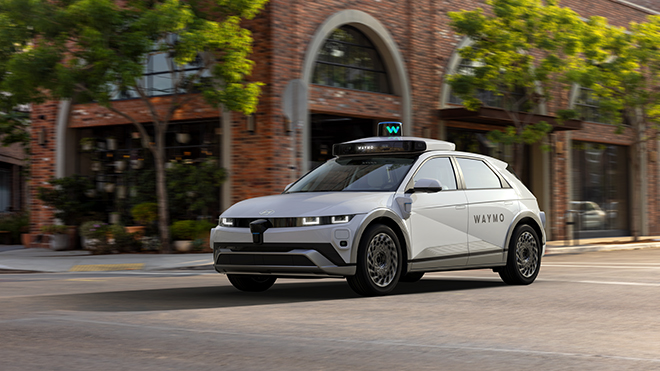
| As self-driving cars appear in more and more cities, Congress is seeking to establish a federal regulatory framework. Source: Waymo. |
This is the first in a two-part series exploring the pivotal debates shaping the future of autonomous vehicles in the US. Click here to read Part 2.
As the technology enabling autonomous vehicles speeds ahead, US Congress is trying to shift out of neutral.
Rep. Bob Latta (R-Ohio) recently introduced the latest version of the Safely Ensuring Lives Future Deployment and Research in Vehicle Evolution (SELF DRIVE) Act, which aims to establish a federal regulatory framework for autonomous vehicles that could, in some cases, supersede existing local and state regulations. Specifically, the bill would require autonomous vehicle manufacturers to develop structured "safety cases" documenting the capabilities of their automated driving systems but would not mandate regulatory preapproval before deployment. Additionally, states would be prohibited from blocking the sale or deployment of autonomous vehicle systems for which a manufacturer has filed a compliant safety case with the National Highway Traffic Safety Administration (NHTSA). The bill preserves state authority over traffic laws, vehicle registration, insurance and consumer protection, but critics argue the core preemption still strips states of meaningful safety oversight before federal standards exist.
While previous versions of the bill have enjoyed bipartisan support, the House Energy and Commerce Subcommittee on Commerce, Manufacturing, and Trade advanced the bill with a 12-11 vote that underscored the partisan divisions likely to shape its path forward. In particular, a key point of contention is that the bill would allow manufacturers to self-certify their safety without independent verification, advancing an unresolved industry debate over what constitutes adequate proof that self-driving systems are safe.
"This is a quickly evolving space, so much so that it would be difficult for any government agency to keep up," S&P Global Market Intelligence Kagan analyst Neil Barbour said, noting that the success of the self-driving vehicle market in the US relies on balancing innovation with consumer confidence. "People want to know that what they're buying and driving is safe, and they probably want to hear it from somebody other than the salesman."
A case of safety
In terms of establishing a federal framework, the bill directs the NHTSA to establish updated or new Federal Motor Vehicle Safety Standards (FMVSS) requirements that apply to vehicles with automated driving systems. The bill sets hard deadlines: Sept. 30, 2026, for NHTSA to establish the national crash data repository, and Sept. 30, 2027, for the agency to finalize safety case standards.
While the NHTSA said in a December 2024 proposed rulemaking that it lacked "the data, methods, and metrics to support such standards," in April 2025, Transportation Secretary Sean Duffy unveiled a framework to accelerate deployment.
Separate from the Department of Transportation's framework, the SELF DRIVE Act would authorize manufacturers conducting testing and evaluation to undertake limited commercial operations — including carrying passengers and transporting freight for revenue — subject to NHTSA authorization. The bill specifies that such activity should not constitute "de facto deployment of noncompliant motor vehicles," language that puts the burden of that distinction squarely on the NHTSA.
Safety advocates argue that Congress risks widening deployment faster than oversight can mature. In written testimony, Center for Auto Safety Executive Director Michael Brooks warned that the bill's "safety case" concept could become "a quiz that the manufacturers write themselves, grade themselves, and never have to turn in."
By contrast, Finch Fulton, a former deputy assistant secretary for policy at the Department of Transportation, told members of Congress that safety cases are structured arguments, supported by evidence, that help prove vehicle safety before public road operations.
"It takes a lot of expertise to be able to put forth a safety case," said Fulton, who now serves as a government affairs adviser and a member of the Public Policy and Law practice group at K&L Gates. "It is not a quick or easy thing to do."
Competing validation philosophies
Still, even those inside the industry have mixed opinions on whether manufacturers should be required to obtain independent third-party verification of safety. Eran Ofir, CEO of Imagry Inc., an autonomous driving software company, said in an interview that the question of independent versus self-certification could come down to the level of autonomy.
Autonomous vehicles are typically classified by the US Society of Automotive Engineers into six levels of automation. Level 2 systems, such as Tesla Inc.'s Autopilot, require constant driver supervision. Level 3 allows hands-off driving in specific conditions but requires drivers to be ready to intervene. Level 4 vehicles, such as Alphabet Inc.'s Waymo LLC robotaxis, operate without human intervention in defined areas, while Level 5 represents full autonomy anywhere.
The regulatory debate centers on whether Level 3 and Level 4 systems require different validation standards.

Ofir said self-certification may be appropriate for Level 3 supervised systems, but inadequate for Level 4 autonomous public transportation.
"One thing is enabling Level 3 self-driving functionality in passenger vehicles, which could be self-certified," he said. "But Level 4 driverless autonomous driving in public transportation is a completely different thing. Imagine a bus with 40 passengers driving autonomously on a public road in mixed traffic without a driver."
Others in the industry agree with the need for independent certification as the industry seeks to build trust with consumers.
"Right now, we don't have a universal AV driver's test," said Jon Miller, chief business officer at Nexar, which provides real-world driving data to autonomous vehicle developers. "And until we do, you're going to see companies designing to whatever local rules they can get approved, not necessarily to a standard that the public can actually trust."
Miller told S&P Global Market Intelligence that he supports a third-party assessment to validate safety. "It should not be a self-assessment," he said.
Time is of the essence
The SELF DRIVE Act's self-certification model also stands in tension with the type-approval frameworks used in Europe and Asia, according to Ofir at Imagry.
In Europe and Japan, autonomous buses face a multistage approval process that includes vehicle safety certification, cybersecurity testing and hundreds of thousands of kilometers of supervised autonomous driving. The process can take roughly 18 months.
"NHTSA is far behind its European, Japanese or Chinese counterparts," Ofir said. He compared those national frameworks to the US, where companies face a patchwork of state and local rules, pilot permits and ad hoc approvals — a system that favors cautious, limited deployments over rapid expansion. Ultimately, he believes that the state-based legislative structure in the US "prevents a market standard that will incentivize [original equipment manufacturers] to launch advanced autonomous driving capabilities nationwide."
This is the problem that the SELF DRIVE Act seeks to solve, with proponents arguing federal action is necessary to end regulatory fragmentation and provide investable certainty in a capital-intensive sector.
"This bill creates what autonomous vehicle leaders need: clear rules, strong safety standards, and the regulatory certainty needed to scale deployment nationwide," Jeff Farrah, CEO of the Autonomous Vehicle Industry Association, said in a Feb. 10 statement.
Previous congressional efforts to establish federal autonomous vehicle frameworks in 2017 and 2021 stalled in the US Senate over cybersecurity concerns and objections to a federal preemption of state safety laws. The autonomous vehicle industry believes that there is a path forward, however.
"The technology is ready," Ofir said. "What's slowing things down is regulation and public acceptance."