


02 Sep, 2025
South Australian energy reform 'beyond urgent' for smelters – former SACOME CEO

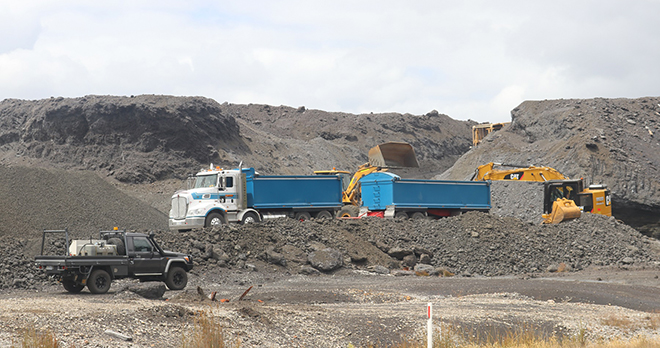
| Zeehan zinc slag is loaded for trial shipment to Nyrstar's Port Pirie smelter operations in 2017. China's increasing critical minerals manufacturing is pressuring such smelters. |
➤ China's increasing of critical minerals manufacturing is placing financial pressure on Australia's smelting industry.
➤ South Australia's hydrogen policy development has slowed the momentum of its critical minerals sector.
 |
| Rebecca Knol, who resigned as SACOME CEO on Aug. 8. Source: South Australian Chamber of Mines and Energy. |
Rebecca Knol resigned as CEO of the South Australian Chamber of Mines and Energy (SACOME) on Aug. 8, after taking the role in 2016. SACOME appointed Nicola McFarlane, former COO of South Australia's Office of Hydrogen Power, as interim CEO.
Knol oversaw several landmark initiatives during her tenure, including the establishment of a joint electricity purchasing group with SACOME and 27 South Australian businesses in 2017. However, energy policy continues to hamper the efforts of the mining and refining sectors, with the latter struggling economically and requiring government bailouts this year.
Platts, part of S&P Global Commodity Insights, and Knol discussed the highs and lows of her time in the job, and her hopes for the state's future. The following interview has been edited.
Platts:
Rebecca Knol:
The project was initially conceived by BHP Group Ltd. in 2013 but was not progressed at that time. Following the COVID-19 pandemic, when the Steven Marshall-led Liberal government was seeking post-economic recovery projects, SACOME advocated for this initiative as a whole-of-state project to resolve one of the key impediments to the development of South Australia's copper-rich Gawler Craton.
SACOME worked closely with Infrastructure SA to have "Northern Water" recognized by the federal government, with the initiative listed on the Infrastructure Australia Priority List in March 2021. A final investment decision is expected in mid-2026.
The most adversely impactful decision during my tenure as CEO was the Peter Malinauskas-led Labor government's introduction of its now-defunct Hydrogen Jobs Plan. This decision resulted in the formation of the Office of Hydrogen, diverting scarce resources from the Department for Energy and Mining, monopolizing funding, and significantly skewing planning and regulatory reform in pursuit of a hydrogen export industry.
The focus on the Hydrogen Jobs Plan, and associated enabling legislation, was to the detriment of practical and much-needed industrial strategies for critical minerals, copper and energy, and has ultimately resulted in a loss of momentum for the South Australian resources sector over the last term of government.
It was an ideologically driven focus that squandered the financial wealth flowing to the state during a cyclical upswing, and missed the opportunity for the state to focus on removing long-term barriers to resource sector growth.
What was the biggest frustration?
The biggest frustration during my tenure has been the lack of meaningful progress on energy policy, specifically, an energy transition plan or roadmap.
South Australia's energy transition experience is best characterized as disorderly, with policy goals set and pursued in relative isolation, resulting in unintended consequences elsewhere in the energy system with associated impacts on both consumers and the state's economy.
Despite over 70% renewable penetration, South Australia continues to have the nation's highest energy prices and largest number of market intervention mechanisms and highest direction charges. Strategic energy policy reform in South Australia is beyond urgent if industrial and commercial entities are to be both attracted and retained in the state.
What was SACOME's greatest achievement during your time as CEO?
In 2017, SACOME established a nation-leading Joint Electricity Purchasing Group. Authorization from the Australian Competition and Consumer Commission was secured for a diverse group of large energy users to aggregate their electricity load and underpin new renewable energy. A landmark seven-year deal signed with Zen Energy Pty Ltd. supported the development of the Tailem Bend 2 solar farm.
This accomplishment has been successfully replicated by others around the country. As energy prices continue to escalate in South Australia, and following the success of the initial agreement, SACOME is now working on further collective agreement.
Unquestionably, my proudest workplace accomplishment was the management of COVID-19 in collaboration with government representatives and members. Throughout the pandemic, we continued to move workers across state borders, introduced and trialed rapid antigen testing protocols, and maintained full operation of all sites throughout. We had a single site closure in a 24-hour period.
What is the state of the smelting industry in South Australia and what is your hope for its future?
Nationally, Australia has seven smelting operations with two nickel smelters in Western Australia that have recently closed. They are all affected by the same global headwinds resulting from China's escalation of critical mineral manufacturing.
South Australia has three smelters — Whyalla (steel), Port Pirie (zinc and lead) and Olympic Dam (copper). Both Whyalla and Port Pirie are in serious difficulty. Both have required a state and federal government response. The government funding for both of these assets finally recognizes the pressure on smelters nationally.
China is making it extraordinarily difficult for global smelting operations to remain competitive by subsidizing loss-making smelters. That is the problem.
The impact of geopolitical headwinds on South Australia's multigenerational smelting assets and declining state economic contributions from the sector are cause for a serious conversation ahead of the 2026 state election, should there be an appetite.
What do you see as the key challenges for the metals and mining industry going forward?
The peak of the commodity cycle was 2023 and we are now in a cyclical downswing, which has coincided with challenging geopolitical headwinds.
Unfortunately, governments have failed to strategically reinvest the economic stimulus of the past decade, and one can observe a trend of pursuing ideologically driven projects rather than resolving barriers to growth.
Aligning policy with strategic investment and the commodity cycle is critical to enabling growth and transformation, and I expect this will be problematic for the sector and the nation moving forward. The resources sector is adept at accommodating cyclical downswings; governments less so.