


14 Mar, 2025
NJ Energy Master Plan study sees gas demand cratering as state electrifies

|
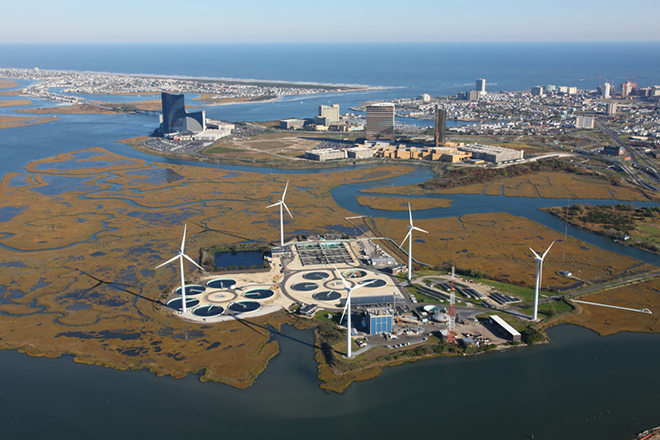
The Garden State will have to invest substantially in zero-carbon power resources in order to meet both surging electricity demand and policymakers' climate goals, consultants for the New Jersey Board of Public Utilities said. Source: Moment via Getty Images. |
The pathways to meeting New Jersey's climate goals all converge in plunging natural gas consumption in buildings and surging electric power demand, according to economy-wide modeling that will inform the state's energy plan.
In every scenario studied, gas demand in the building and industrial sectors will decline by more than 70% through 2050, according to an integrated energy plan (IEP), a core part of the state's Energy Master Plan (EMP). Meanwhile, electric power demand will roughly double by mid-century in those scenarios, driven by electric vehicle adoption and electric heat pump installations (docket QO24020126).
Consultants for the New Jersey Board of Public Utilities (BPU) outlined their findings during a March 13 webinar. The presentation offered a first look at energy modeling that will inform policymaking through the EMP, a multiyear framework for energy planning and decarbonization.
New Jersey last updated the EMP in 2020. Since then, the state has adopted several new clean energy targets, and the IEP reflects those policies.
They included pulling forward the state's 100% clean electric power goal from 2050 to 2035 and increasing its 2040 offshore wind capacity target by nearly 50%. New Jersey also endeavored to install zero-emissions heating equipment in roughly 10% of its building stock and joined an interstate initiative that seeks to ensure heat pumps dominate the market by 2040.
The state also passed rules that would target 100% light-duty EV sales by 2035 and ramp up medium- and heavy-duty EV sales.
'No regrets' solutions
In order to meet New Jersey's climate target — an 80% reduction in greenhouse gas emissions from 2006 levels by 2050 — the state will have to rapidly and sustainably deploy low-carbon technology, according to Chelsea Petrenko, an associate director at Energy and Environmental Economics Inc. (E3).
E3 identified building and transportation electrification and deployment of utility-scale solar and battery storage as near-term "no regrets" climate actions across three modeled scenarios.
"The state must stay laser-focused on its 'no regrets' policies," Petrenko said during the webinar. "Through these policies, New Jersey will achieve its mid-century clean energy and climate goals."
In each of the scenarios, heat pump sales account for 65% of heating and cooling equipment sales by 2030 and 90% by 2040, the targets established in the interstate initiative. These scenarios result in heat pumps accounting for 85% of installed heating equipment by 2050, Petrenko said.
They also result in the more than 70% decline in building gas demand that appeared in the models. The gas distribution system would continue to provide backup during peak demand days through 2050, Petrenko said. In a hybrid heating scenario, gas utilities would use a 5% blend of renewable natural gas, she said.
State needs zero-carbon power buildout
In each scenario, zero-carbon resources would accommodate surging electric power demand, including utility-scale and distributed solar, offshore wind, battery storage and some new nuclear, according to Kevin Steinberger, a director in E3's integrated system planning practice. New Jersey will have to invest significantly in new capacity, though hybrid gas-electric heating could alleviate battery storage spending needs, Steinberger said.
New Jersey would maintain its gas-fired power fleet to backstop the grid during high-load, low-renewable-capacity periods, but the fleet's annual utilization would drop significantly, Steinberger said.
On the affordability front, rebates will be necessary to offset upfront vehicle and heat pump costs, Petrenko said. Existing rebates already make EVs affordable, but New Jersey will have to layer incentives on top of federal dollars to close a roughly $15,000 heat pump premium over gas furnaces, she said.
E3's modeling showed heating expenses for all-electric homes and residences with gas equipment roughly achieving parity in 2035 as gas utility costs increase. Gas service costs could continue to rise after 2035 as the customer pool shrinks, Petrenko noted. Alternative electric rate designs and building efficiency improvements could make heat pumps more cost-effective relative to gas heating, she noted.
Next steps will support EMP
In the most aggressive high-electrification scenario, New Jersey would avoid 400 premature deaths per year and realize $6 billion in annual health-related savings by 2050 by reducing fossil fuel combustion, E3 found. The state would add a net 53,900 positions to its current 63,200-strong clean energy workforce, with electricity and building sector job growth offsetting fuels and transportation job losses.
The BPU will take comments on the IEP through May 1 and incorporate the feedback into its draft EMP, which is now overdue by about six months. The EMP will include a progress report on the prior plan's goals and outline best practices, executive orders, funding and other actions to support decarbonization scenarios.
New Jersey's Partnership to Plug In EV infrastructure initiative and its buildings roadmap will support EMP efforts, Petrenko noted. The state's Comprehensive Climate Action Plan, slated for completion in December 2025, will establish targets and strategies for achieving sector-specific emissions reductions, she said.
To address growing power demand, the BPU plans to develop a clean firm capacity roadmap after finalizing the EMP, Petrenko said. The BPU's proceeding to align future gas system planning with state climate goals is also on hold while the board develops the EMP.