17 Nov, 2025
Experts weigh efficiency gains, risks of USPTO's AI patent search pilot

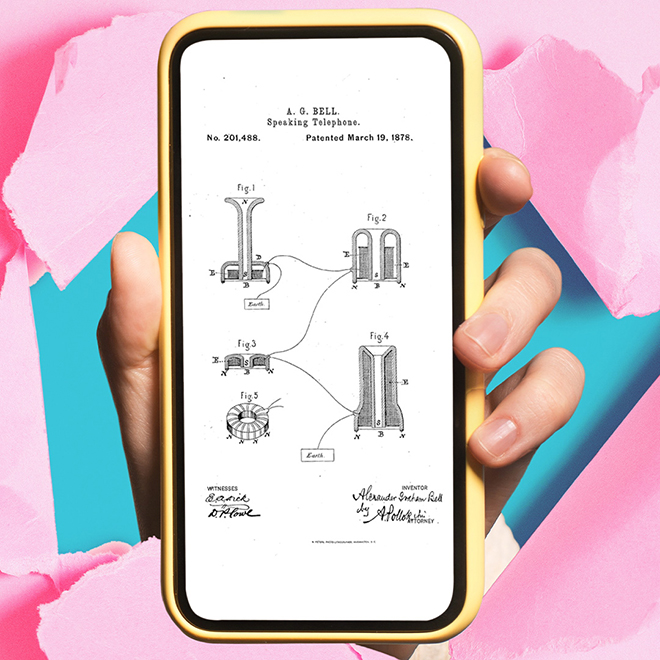
| Alexander Graham Bell's patent for the telephone. The US Patent and Trademark Office has launched an AI pilot for prior art, which experts hope will streamline the application process. Source: US Patent and Trademark Office. |
The AI pilot program of the US Patent and Trademark Office has drawn mixed reactions from patent attorneys who worry efficiency gains could come at the price of reduced transparency.
The Artificial Intelligence Search Automated Pilot (ASAP!) program, launched in October, will accept at least 1,600 patent applications through April 2026 or until each technology center that examines utility applications has accepted at least 200 filings. The voluntary program uses AI to generate automated search results identifying potential prior art or previous similar patents before a human US Patent and Trademark Office (USPTO) examiner's first action. Following the search, the program will send an automated search results notice to an applicant, with the goal of providing earlier communications to an application about potential prior art issues.
"It gives applicants an indicator of what an examiner is likely to find — almost like reading the mind of the examiner ahead of time," said Jessica Broyles, a patent attorney at UnitedLex.
The pilot represents a significant step in the USPTO's integration of AI into patent examination processes, but experts cautioned that the program adds complexity to an already intricate system. To participate in the pilot, a patent applicant must petition the USPTO and pay a petition fee.
Lucas Amodio, a patent attorney for Armstrong Teasdale and former examiner, noted that while the AI results "could serve as a good starting point," they risk adding "an extra review layer — and another expense" for applicants. This concern reflects broader industry questions about whether AI tools will streamline or complicate patent prosecution.
Nathan Mammen, a partner at Snell & Wilmer and former examiner, said early results may strengthen patents but are unlikely to cause applicants to change their prosecution strategy until the USPTO publishes performance data demonstrating the system's effectiveness. Gerard Donovan, a litigator and counselor at Reed Smith focusing on intellectual property (IP) and emerging technology, said that depending on how well the pilot performs, it could inform applicant strategy in the long term.
"Hopefully, the increased use of AI assistance will help examiners do a better job and help both have less bad patents issued and have stronger patents issued so that applicants can make sure they're getting value from the process," Donovan said.
Transparency concerns have emerged as a central issue for IP litigators who would like to know more about the data used to train the AI.
George Chen, an IP lawyer and partner at Bryan Cave Leighton Paisner, warned that undisclosed AI training data could potentially expose confidential information if abandoned applications were included in the model's training.
"USPTO has stated that it has implemented security measures to maintain patent application confidentiality," Chen said. "However, the USPTO has not explained how it has maintained such confidentiality." In addition, Chen noted that participation could later affect litigation.
The USPTO's initiative comes as private sector alternatives emerge. Perplexity AI recently launched a public patent search tool leveraging USPTO and European Patent Office databases to deliver prior art searches using natural language. The project was led by Jerry Ma, former USPTO chief AI officer and director of emerging technology, who is now Perplexity's vice president of global affairs and deputy chief technology officer.
Unlike the USPTO's internal system, Perplexity's tool is publicly accessible.
IP experts said the contrast highlights the need for regulatory benchmarks for AI reliability and confidentiality in patent workflows. The parallel development of public and government AI tools indicates a broader transformation in how IP is searched, examined and prosecuted.
Ethical considerations also remain a big concern for patent attorneys. UnitedLex's Broyles urged regulators to focus on documenting human inventorship, while Amodio at Armstrong Teasdale warned attorneys not to overrely on AI drafting tools.
As the pilot progresses, experts have called for the USPTO to release performance and fairness data on the AI model before any potential expansion. Chen at Bryan Cave Leighton Paisner suggested implementing a formal rulemaking process to address concerns.
Broyles expects the AI pilot to serve as a catalyst for enhanced collaboration and transparency.
"I do believe we're going to see a positive impact," Broyles said, "Not just in the timeliness and the quality of patents that are coming through. Because if we get all of the different perspectives in the IP space speaking on a frequent basis and truly collaborating, we have the opportunity to make those changes for the better."
A spokesperson for the USPTO did not respond to an emailed request for comment.