23 Oct, 2025
UK urged to rethink 2030 clean power target to focus on cheaper energy bills

|
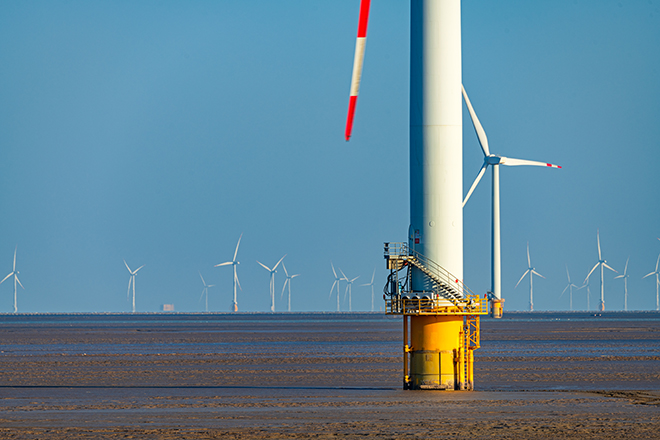
As the UK's 2030 clean power goal is called into question, analysts see a significant capacity gap in the country's ambition to scale up offshore wind to between 43 GW and 50 GW. |
The UK government has been urged to reframe its 2030 clean power target to prioritize more affordable energy bills, amid reports that ministers are preparing to fall short of the goal.
The Tony Blair Institute for Global Change (TBI), the think tank led by the former UK prime minister, said in an Oct. 23 report that Britain's political priorities must shift to incorporate growth and value for money, while keeping longer-term net-zero goals intact.
The government's Clean Power 2030 ambition — a central piece of the Labour Party's election manifesto — envisages a power system that is 95% low carbon, a target that TBI called into question.
"Launched in the middle of the gas crisis and in a low-interest environment, [Clean Power 2030] was right for its time, but circumstances have changed," Tone Langengen, the think tank's energy policy adviser and author of the report, said in a statement.
Among a series of recommendations designed to reduce costs, TBI called on the government to reverse a decision to scrap zonal power pricing and urged it to reform its contracts for difference (CFD) system to "put risk back into the hands of energy suppliers rather than consumers."
TBI said carbon taxes on gas-fired generation should be suspended until 2030, and the UK's National Energy System Operator (NESO) should conduct annual reviews to monitor net-zero delivery for cost-effectiveness.
The think tank reiterated Britain should still aim for net-zero by 2050, distancing itself from those seeking to roll back the UK's climate commitments by saying such choices "would amount to rolling back progress."
The Conservative Party recently pledged to scrap the UK Climate Change Act, while the right-wing Reform UK — which is ahead of Labour in the polls — has campaigned against the government's net-zero policies.
TBI's intervention follows a report that Labour is prepared to miss its 2030 clean power target in an effort to keep energy bills down. The Guardian reported Oct. 22 that Prime Minister Keir Starmer is willing to fall short of the goal rather than openly scrap it.
A spokesperson for the UK Department for Energy Security and Net-Zero said the TBI report "rightly recognizes that clean power is the right choice for this country," and that the government's clean power plan is "exactly how we will deliver cheaper power and bring down bills for good."
The spokesperson called the report in The Guardian "completely wrong," saying the government is "fully committed" to delivering Clean Power 2030.
Target 'unfeasibly ambitious'
The UK's Clean Power 2030 ambition is centered on a rapid acceleration of renewables capacity, including a quadrupling of offshore wind, a tripling of solar and a doubling of onshore wind.
Analysis by NESO pegged the share of clean power in Britain's electricity generation at 73.8% in 2024, including renewables and nuclear, up from 68.3% the previous year.
Still, forecasts by analysts at S&P Global Commodity Insights do not see the UK meeting the 2030 clean power goal.
"Keeping the target with no expectation or ambition of meeting it would undermine investor confidence, but it may not be that different from the current situation, where the goal is widely regarded as unfeasibly ambitious," said Glenn Rickson, associate director of European power research at Commodity Insights.
The main immediate outcome could be less funding for the UK's next renewables auction round, Rickson said.
The Guardian reported that UK Energy Secretary Ed Miliband would be willing for the UK's next CFD auction — Allocation Round 7 — to under-deliver on new capacity if contract prices are deemed to push energy bills higher.
Miliband told an industry conference on Oct. 14 that the government "won't buy at any price, and if specific technologies aren't competitive, we will look elsewhere."
As of the end of September, the UK is still 12 GW to 19 GW short of its ambition to reach 43 GW to 50 GW of offshore wind by 2030, according to analysts at Barclays, taking into account existing installations and additional capacity being built or already under contract.
The analysts added that only the next two CFD auctions can procure capacity in time for 2030, given offshore wind projects take up to five years to commission after securing a contract. The government's decision to allow projects to bid before they have planning permission may also raise the clearing price, they said.
"With only two auctions remaining for capacity to be secured for [Clean Power 2030], we see pricing power held by the earlier-stage, higher-risk projects," the analysts said. "This should provide upside returns for the more established farms."