29 Oct, 2025
Australian miners warn of risk from critical minerals price floor in Trump deal

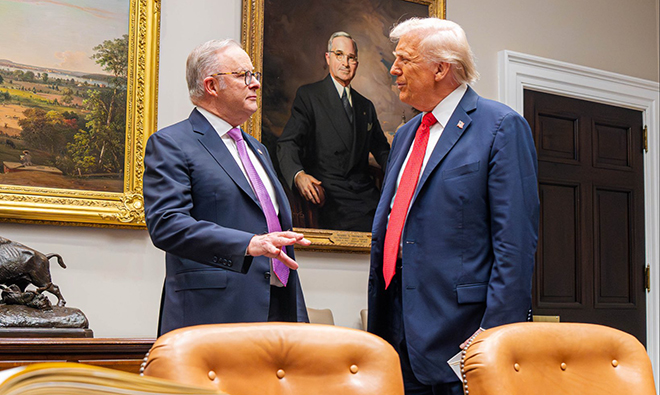
| Australian Prime Minister Anthony Albanese with US President Donald Trump in Washington on Oct. 20, when they signed an US$8.5 billion critical minerals agreement. |
Australian miners warned of complications and risks in setting price floors for critical minerals, a key part of a framework US President Donald Trump signed with Australian Prime Minister Anthony Albanese on Oct. 20.
The agreement included a framework whereby the countries will "work to protect their respective domestic critical minerals and rare earths markets from non-market policies and unfair trade practices, including through the adoption of standards-based systems in which those who adopt the standards can trade freely and within a pricing framework including price floors or similar measures," the governments said Oct. 20 in a joint statement.
Both countries seek to develop rare earths resources outside of China, the primary global supplier of these minerals, which are widely used in defense applications and robotics.
"If we deploy the right way, there could be positive [impacts], but equally there could be bad unintended consequences if not rolled out the right way," Dale Henderson, managing director and CEO of Pilbara Minerals Ltd., said Oct. 24 during a quarterly results call when asked about the proposed floor price.
Instead, Henderson wants any government funding resulting from Trump's deal with Albanese to be invested in shared infrastructure, such as port facilities and network power, to "lower the cost for all."
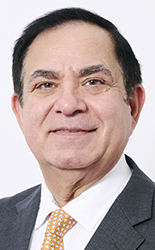 |
| Sanjiv Manchanda, CEO of |
Sanjiv Manchanda, CEO of projects at Hancock Prospecting Pty Ltd. which has several critical mineral investments in Australia and the Americas, said the company would prefer the government lower the cost of power to aid competitiveness, rather than offer a floor price, which amounts to a subsidy.
"How is the floor price meant to work? The government buys [product] off you at a certain given price if you can't sell it at that price. That's a subsidy," Manchanda told Platts, part of S&P Global Commodity Insights, on Oct. 28.
However, "if the government says 'I'm giving you an offtake agreement at a guaranteed minimum price of x dollars per pound,' that is very different from a floor price," the executive added.
"Then the government is just a customer, which is a different scenario. It's no different to BMW Group saying 'I'll take lithium from this mine and here's the money to develop it,'" Manchanda said.
Hancock increased its holding in Arafura Rare Earths Ltd. to about 15.7% on Oct. 29 as part of Arafura's A$475 million institutional placement. Hancock also contributed to rare earths explorer St George Mining Ltd.'s A$72.5 million share placement on Oct. 13.
Arafura was one of several mining companies that received offers for hundreds of millions of dollars from US and Australian government agencies within a day of the signing of the critical minerals agreement. As part of the deal, the two countries made a US$8.5 billion commitment towards the processing and exporting of rare earths.
Hancock, along with Sociedad Química y Minera de Chile SA, is part-owner of the Andover lithium project in Western Australia. Hancock is also the largest shareholder in Australian lithium producer Liontown Resources Ltd. with an 18.09% stake, according to S&P Global Market Intelligence data.
Differing opinions
 |
| Luca Giacovazzi, CEO |
Luca Giacovazzi, CEO of Wyloo Pty. Ltd., said in a statement to Platts that a price floor would help projects secure funding on commercial terms. Wyloo operates the Yangibana rare earths and niobium project in Western Australia, under a joint venture with Hastings Technology Metals Ltd.
"With a price mechanism in place to support rare earth offtake, we can take a final investment decision and begin construction within six months. This agreement [between Trump and Albanese] creates a real opportunity to move quickly," Giacovazzi said.
Commercial law firm Allens said in an Oct. 21 note that to "support project bankability and counter market volatility, governments may backstop pricing through minimum price commitments in offtake arrangements, particularly for high-risk processing ventures."
Magnet manufacturers, battery component companies and defense electronics firms need to "remap their cost to serve under the proposed standards-based pricing mechanisms (including price floors) that the [US-Australia] framework envisions," Edelman Global Advisory said in an Oct. 23 note.
"Early adopters can develop indexation or offtake strategies aligned with these standards to stabilize margins in volatile markets," Edelman said.
Other possible challenges
Edelman warned that "implementing standards-based pricing/price floors will invite [World Trade Organization]/anti-dumping scrutiny and could spark retaliatory measures by non-market actors," and urged firms to plan for volatility stemming from possible tariffs and sanctions.
China could also implement further measures to maintain control over the rare earths market.
"The deal ... might upset China, which processes up to 90% of the world's rare earths and dominates refining of lithium, graphite and gallium, giving it almost monopoly power across key inputs in everything from smartphones to missiles, drones and jet fighters," Paul Zwi, portfolio strategist at Clime Investment Management, said in an Oct. 23 note.