


09 Dec, 2025
Utility costs, energy efficiency seen as key in commercial real estate deals

US commercial real estate clients view utility costs and energy efficiency as key building features, as energy and electrification policies face a tug-of-war among policymakers and lawmakers at the federal and state levels.
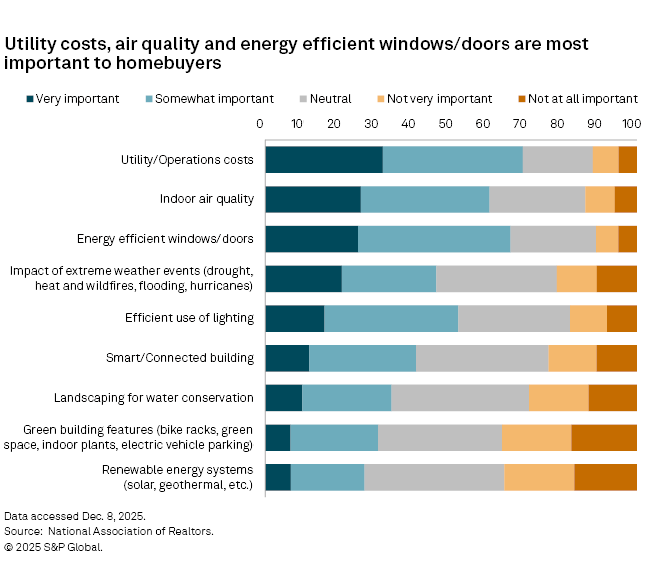
When it comes to sustainable building features, potential commercial real estate buyers and renters are highly concerned about utility costs, indoor air quality and energy-efficient windows and doors when deciding where to buy or lease property, according to the National Association of Realtors' (NAR) 2025 Commercial Sustainability Report released Dec. 4.
Specifically, 70% of NAR's commercial-focused members said their clients find utility and operating costs to be somewhat or very important when deciding where to buy or lease property. The NAR surveyed the members about sustainability issues facing the industry in August.
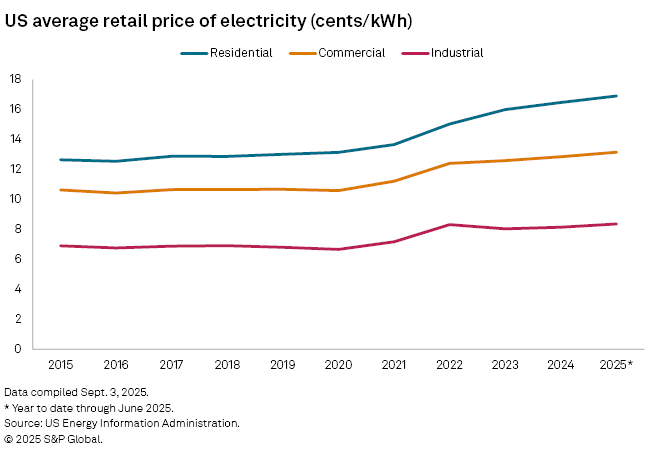
Utility bills have continued to increase at a faster rate than any other consumer cost, Morningstar flagged in a report earlier this year. Electric utility prices were up 6% year over year in August for the third consecutive month, and utility gas service prices were up 14%, the highest of all spending categories, according to the analysis that cited the US Labor Department's monthly Consumer Price Index report.
There are various causes for the uptick in utility costs, including rising demand — particularly due to data center growth — and independent power producers identifying expanding transmission and distribution costs.
Energy efficiency
Energy efficiency was also highlighted as important to more than half of prospective clients, the NAR survey found.
Survey respondents said promoting energy efficiency in commercial listings is most valuable in the South, at 24%, and in the West, at 23%.
Given the prioritization, commercial real estate agents are putting building performance, operating costs, indoor air quality and energy efficiency at the center of their real estate decisions.
"Commercial real estate agents recognize the importance of sustainability when purchasing, leasing, or selling properties," NAR Deputy Chief Economist Jessica Lautz said in a statement. "Properties with green building certifications tend to have higher property values ... than buildings without a certification."
According to the survey results, 55% of agents and brokers reported that energy efficiency promotion in listings was valuable.
At the same time, energy efficiency-related policies are in a state of flux.
The Energy Choice Act passed the US House of Representatives Energy and Commerce Committee on Dec. 3. This legislation is part of a larger package of bills that would limit federal authority to set energy conservation standards, cut funding for efficiency programs and overhaul decades of federal energy efficiency policy.
Rep. Nick Langworthy's (R-NY) bill, which passed the House Energy Subcommittee on Nov. 19, prohibits state and local governments from banning certain sources of energy. Langworthy said his bill aims to block New York's All-Electric Buildings Act, which he said will remove the affordability and reliability that natural gas offers consumers.
Meanwhile, as the Energy Choice Act seeks to stop restrictions on energy sources such as natural gas, the New York Attorney General's office defended a district court's decision to uphold the state's all-electric construction code on Dec. 5.
As 61% of survey respondents reported that they believe their commercial clients find indoor air quality an important consideration, gas-fired appliance policies could also have implications in the real estate space. Previous research has indicated that some gas-fired appliances can expose occupants to hazardous air pollutants.