












































1. Introduction
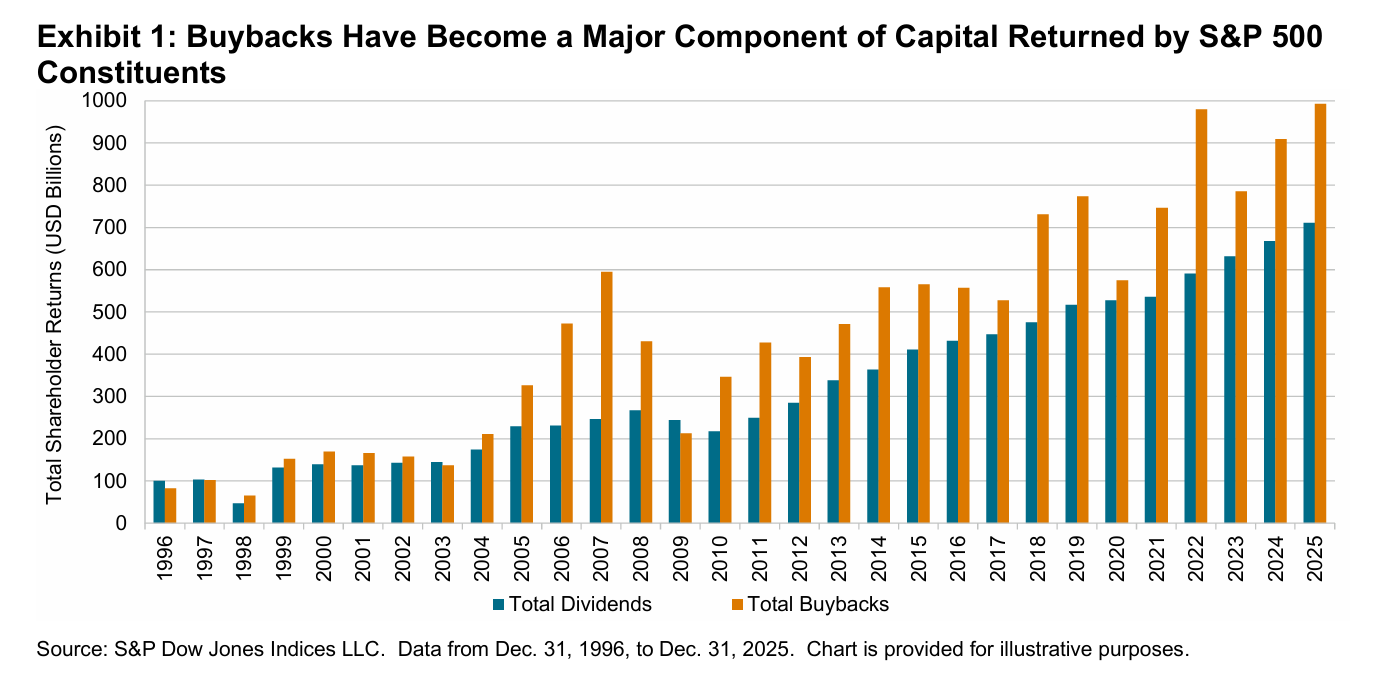
Dividends have long been a widely recognized form of shareholder return, reflecting a company’s capacity and willingness to distribute cash to investors. Yet the ways in which companies return capital have evolved materially over the past decade, with share repurchases becoming an increasingly significant component of capital returned by S&P 500® constituents. Companies may also support shareholder returns indirectly through balance sheet management, including reductions in net debt.
The S&P 500 Resilient Shareholder Yield Index reflects these multiple sources of shareholder capital return by including companies with high shareholder yield while requiring evidence of certain fundamental strengths. By combining capital return characteristics with measures of profitability, cash generation and balance sheet resilience, the index seeks to identify companies with sustainable shareholder return profiles. Historically, this approach has also been associated with more defensive characteristics than the S&P 500, while maintaining a focus on companies associated with long-term capital return through disciplined capital allocation and sustainable business performance.
2. Capital Return and Shareholder Yield
2.1 Defining Capital Return and Shareholder Yield
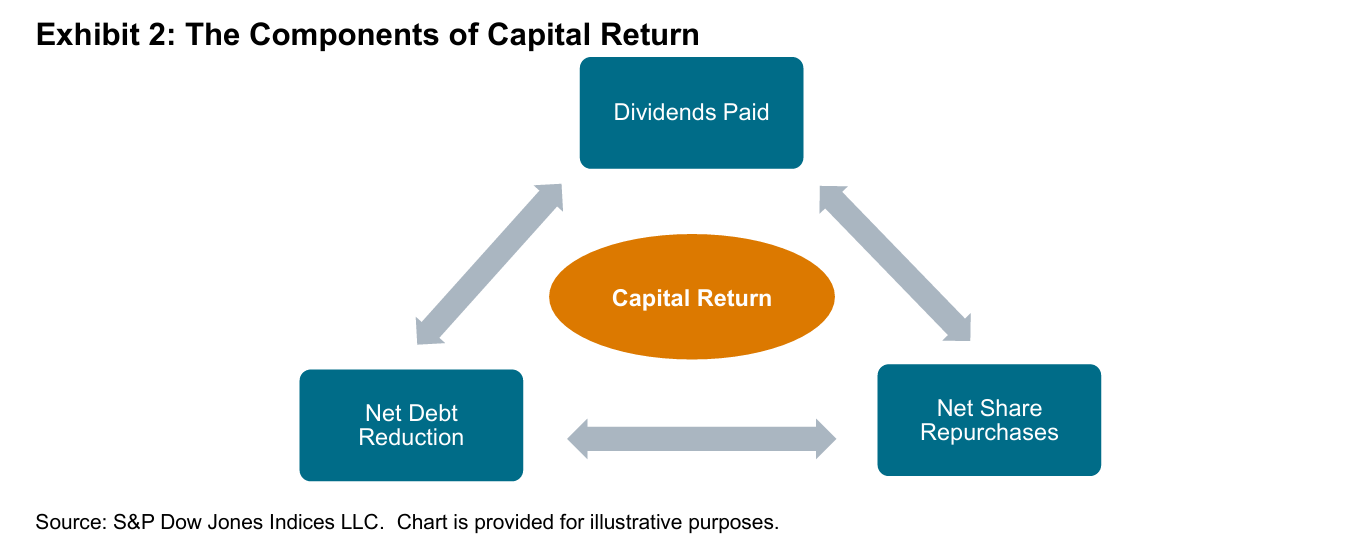
Shareholder yield is a comprehensive measure of the capital a company returns to shareholders. It is calculated as capital return divided by float-adjusted market capitalization (FMC), where capital return is defined as the sum of dividends paid, net share repurchases and the net reduction in total debt.
Put simply, capital return represents the absolute amount of capital distributed directly to shareholders or used to reduce debt, while shareholder yield scales that amount by FMC.