


Refined Products, Agriculture, Energy Transition, Jet Fuel, Biofuel, Renewables
November 05, 2025
South Korea’s JC Chemical plans SAF facility in Malaysia

By Gawoon Vahn
HIGHLIGHTS
JC Chemical mulls UCO facility in Malaysia for SAF
Malaysia aims to be regional hub for green aviation fuel
JC Chemical's tech, Malaysia's resources seen beneficial
South Korean biofuel company JC Chemical is considering establishing a used cooking oil processing facility in Malaysia to produce sustainable aviation fuel (SAF), a move that aligns with Malaysia's ambition to become a regional hub for green aviation energy.
JC Chemical's management recently met with Malaysia's Minister of Investment and Industry Tengku Zafrul Tengku Abdul Aziz to discuss the construction of a used cooking oil (UCO) processing plant in Malaysia, the Embassy of the Republic of Korea in Malaysia said in a statement on Nov. 4.
"This discussion aligns with Malaysia's National Energy Transition Roadmap and the New Industrial Master Plan 2030," Aziz said during the meeting, adding that the goal is to accelerate the transition to a sustainable and high-value industrial economy, according to the South Korean embassy statement.
JC Chemical's investment in Malaysia could serve as a case study for other South Korean companies aiming to enter the overseas SAF production market, with many seeking opportunities in Southeast Asia, a senior market research analyst at Seoul-based Korea International Trade Association told Platts, part of S&P Global Energy.
Asia is emerging as a major region for SAF production, given its abundant resources like palm oil and used cooking oil, coupled with a rapidly growing aviation market. The synergy between South Korean technology and Malaysia's raw materials and geographical advantages could yield significant benefits, the KITA analyst said.
JC Chemical has recently succeeded in exporting SAF raw materials using its proprietary technology, strengthening its position in the global market. The company completed the expansion of its bio-feedstock pretreatment (PTU) process, setting the foundation to boost the supply chain for sustainable aviation fuel feedstocks for major local and international refiners, Platts reported previously.
The successful expansion of the PTU process enabled the bio-feedstock output capacity of the JC Chemical plant in Ulsan to double from 60,000 metric tons/year to 120,000 mt/year, the company spokesperson said on Oct. 27.
JC Chemical's expansion will enable the company to secure PTU volumes that will directly support SAF conversion projects for both domestic and international refiners. The company has already signed a SAF raw material supply contract with SK Energy and is close to finalizing a long-term supply agreement with a major US refiner, though the specific refiner has not been disclosed, Platts reported previously.
SAF, jet fuel dual focus
Meanwhile, sales traders and supply managers at two major South Korean refiners based in Seoul and trading offices in Singapore told Platts over Nov. 3-5 that the companies are committed to both sustainability and core operations in conventional jet fuel production and sales.
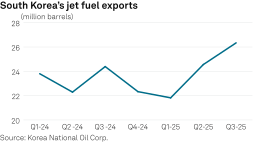
South Korea is the world's leading exporter and supplier of jet fuel, with the country's four major refiners—SK Energy, Hyundai Oilbank, S-Oil, and GS Caltex—selling 8.8 million barrels of the middle distillate in international markets in September, a 1.7% increase from 8.65 million barrels a year earlier, according to the latest data from state-run Korea National Oil Corp.
"While SAF is set to become a core future business, it is essential not to overlook the need to provide Asia-Oceania customers with a stable supply of conventional jet fuel," a sales and trading manager at a South Korean refiner operating in Singapore told Platts on Nov. 5.
SK Energy's co-processing technology enables the simultaneous production of both SAF and traditional jet fuel, boosting operational flexibility and competitiveness, supply and distribution planner Yang Hong-suk said in the company's analysis report.

Editor: