










































Daily Index Insights offers a concise two-minute read on the latest news and trends in index markets. This resource includes performance data from S&P Dow Jones Indices across equities, fixed income, multi-asset, commodities, and factors. Our daily insights are designed to provide you with a comprehensive understanding of market movements, empowering you to make informed decisions based on the most current indices data and analysis.
"What information consumes is rather obvious: it consumes the attention of its recipients. Hence a wealth of information creates a poverty of attention."
Herbert A. Simon (June 15, 1916 - February 9, 2001)
Happy 547th birthday to Lisa del Giocondo. Born into Florence’s prominent Gherardini family, this Italian noblewoman would eventually become the face of the world's most famous painting. When her husband, a wealthy silk merchant, commissioned Leonardo da Vinci to paint her portrait to celebrate the birth of their second son, the Mona Lisa was born. Known in Italian and Spanish to this day as La Gioconda, her identity remains a permanent part of the masterpiece. To paint a clearer picture of markets, here is your daily dashboard.
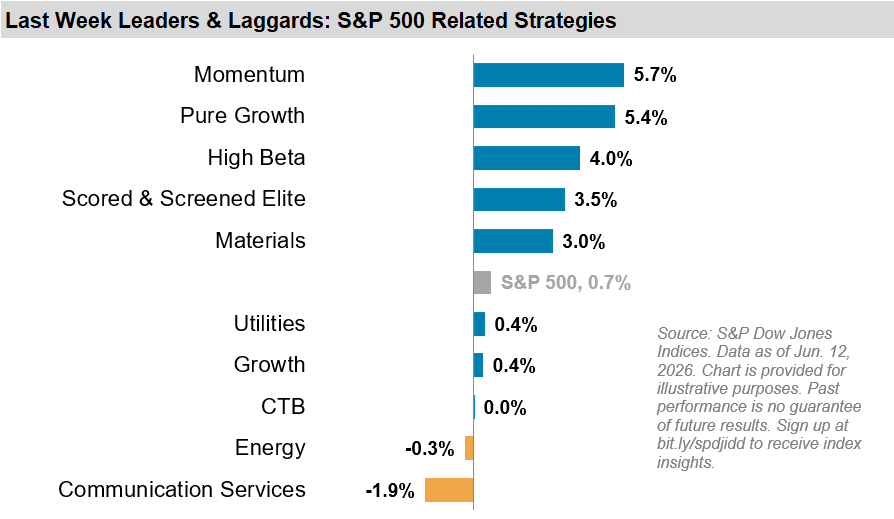
- The S&P 500® bounced back last week and posted a 0.7% advance. Once again, the index was led higher by the quarter’s leading factors: Momentum, Pure Growth, and High Beta. Meanwhile, the Energy and Communication Services sectors posted slight declines. Last week, the market focused on the record-breaking SpaceX IPO; this week, attention shifts to the Fed for Kevin Warsh’s first meeting as Chair, with his first speech scheduled for Wednesday.
-
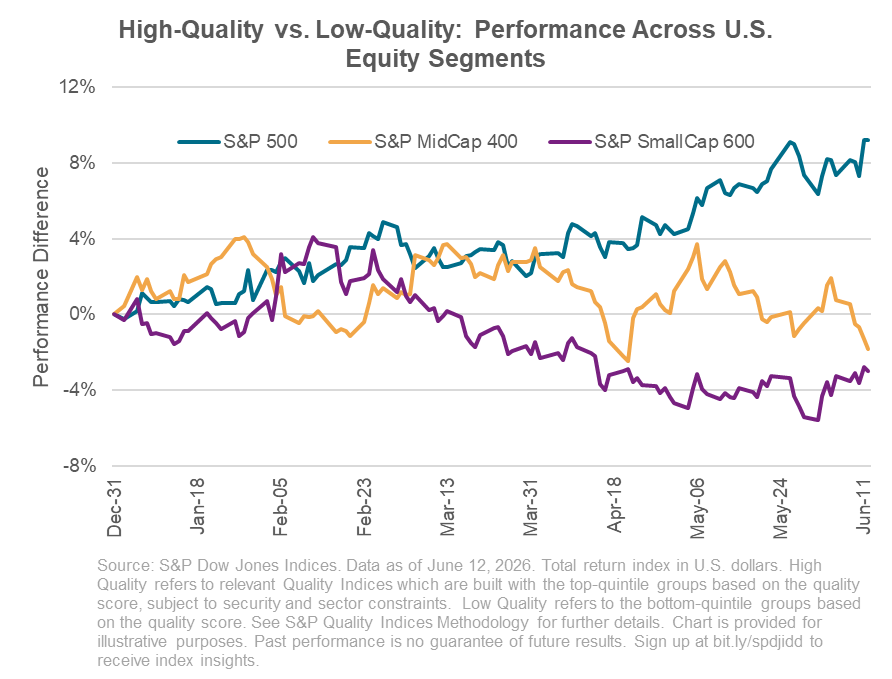
Quality has taken a slight backseat this year, and particularly this quarter, as other factors have posted standout returns. That said, the factor has held up well among large caps, with high-quality outperforming low-quality and the S&P 500 Quality Index up 16% this quarter. The same cannot be said further down the size spectrum: both mid and small caps have seen “junk rallies” this year, with low-quality stocks outpacing their high-quality counterparts.
-
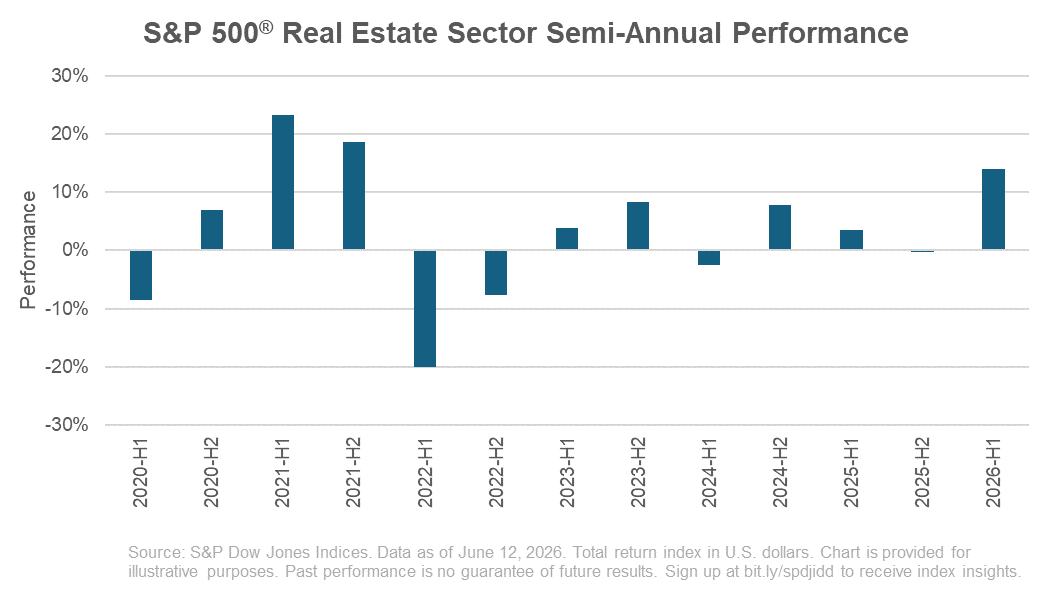
It has been a strong first half so far for Real Estate. While it may have flown somewhat under the radar as the S&P 500’s smallest sector, it is up 14% year-to-date and on pace for its strongest half-year return since the second half of 2021.
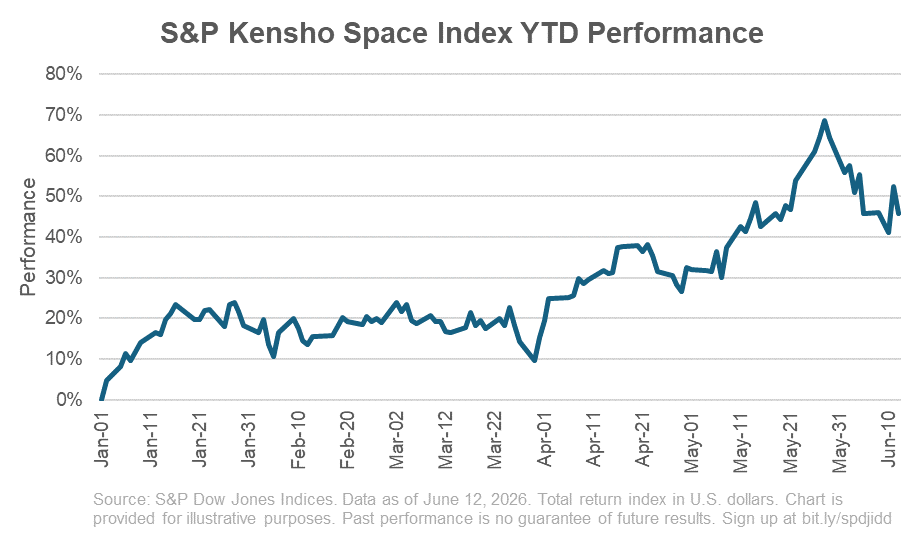
- And finally… while recent market discussion around space has largely focused on SpaceX, the broader space theme has been having a strong year. The S&P Kensho Space Index is up 46% year-to-date. For more on this and other market themes, check out the latest Thematics Dashboard.