Customer Logins
Obtain the data you need to make the most informed decisions by accessing our extensive portfolio of information, analytics, and expertise. Sign in to the product or service center of your choice.
Customer Logins



QUARTERLY
Mar 11, 2015
A fractured government spells trouble for Brazil
Although the left-leaning Dilma Rousseff held on to the presidency in Brazil's recent election, her PT party and coalition base suffered losses and she will struggle to pass legislation, which could lead to slower economic growth and widespread labor unrest. With markets and investors losing confidence in Brazil, what can Rousseff do to reverse the trend?
Brazil's second-round presidential election on October 26 saw Dilma Rousseff, from the leftist Workers' Party (Partido dos Trabalhadores: PT), re-elected by a slim 3.2% margin over Aécio Neves of the center-right Brazilian Social Democratic Party (Partido da Social Democracia Brasileira (PSDB)). This has weakened the government's position, against an economic backdrop of faltering growth (GDP contracted in the first two quarters of 2014), widening fiscal and current-account deficits, and persistently above-target inflation. The drivers that generated robust growth up to 2011 (rapidly increasing real wages, a big expansion of domestic credit, and the commodity super-cycle) have receded. A lack of corporate competitiveness, high regulatory uncertainty, and an onerous bureaucracy have since come to the fore.
A close election and fractured Congress
Rousseff and the PT effectively campaigned on their record of poverty reduction and low unemployment, but they also depicted the election as a contest of poor against rich. Her margin of victory was the narrowest since 1989, with the vote split along geographic and social lines. The poorer north overwhelmingly supported Rousseff, while the wealthy southeast went with Neves. Indeed, the 2014 vote pattern departed markedly from the PT's previous three election wins in which its support had been spread more nationally and amongst Brazil's middle class.
The ruling PT remains the largest party in Congress, though it lost 18 seats in the Chamber of Deputies (the lower house). In total, the government coalition secured 304 seats, 36 fewer than in 2010. In the Senate, Rousseff should have the support of at least 50 of the 81 seats, but parties frequently switch sides amidst ad hoc alliances and horse trading. The election also produced a more fractured and disjointed Congress, with 28 parties represented, up from 22 in 2010, making it harder for Rousseff to secure approval for key legislation.
The PT's approach was clearly successful in winning the election but has polarized Brazilian politics. Rousseff will have to contend with a less co-operative Congress in her second term. The Brazilian Democratic Movement Party (Partido do Movimento Democrático Brasileiro: PMDB), while still an ally of the government, has become more distanced from the PT, increasing the risk that some of its members will vote against or abstain on crucial bills. Three hundred and eight votes in the Chamber of Deputies and 49 in the Senate will be needed to approve any change to Brazil's constitution, including the one Rousseff needs for her proposed political amendments.
Meanwhile, dialogue with the opposition has become more difficult. Senator Aécio Neves has made any co-operation dependent on measures to tackle corruption, including actions against Petróleo Brasileiro S.A. (Petrobras), the state-controlled oil giant, and economic policy changes. Rousseff is addressing the economic concerns with promised austerity measures in 2015. However, the seriousness of the allegations against Petrobras-considered the most serious case of alleged government corruption in two decades-gives Neves a good justification for refusing to cooperate.
The Petrobras probe relates to an alleged money-laundering scheme involving overpricing and bribery, known as "Lava Jato" or "Car Wash," and risks bogging down the government's policy agenda and limiting Rousseff's ability to lead the country. Former Petrobras director Renato Duque has denied any involvement and Rousseff, the company's former chairperson (2003-10), said she was not conscious of any corruption while in her position. The investigation includes allegations against former Petrobras directors and several of Brazil's top construction companies that conducted business with the oil company. The probe will likely be extended to look at the role of the ruling PT and its main ally, the PMDB, in an alleged kickback scheme. President Rousseff has warned that any PT member found guilty will be expelled from the party. The alleged incidents of corruption being investigated took place when Rousseff, as government minister, was responsible for Petrobras' strategic decisions.
Congress to thwart Rousseff?
Upon re-election, Rousseff committed to push through policies addressing the lack of accountability in Congress and tackling corruption. She has proposed ending private financial contributions to political campaigns, public funding for political parties, and re-election of executive posts with the introduction of five-year mandates. She wants to put these proposals to a plebiscite in which the Brazilian people will have the final say.
However, there are already indications that the government will struggle to pass important bills through Congress. Two days after the election, the Chamber of Deputies rejected a presidential decree instituting the "National Policy of Social Participation"-a measure intended to include local communities and other social movements in public policy decisions. This is a significant setback for Rousseff as the decree was made in the spirit of her reforms to consult Brazil's people.
One week later the Senate approved, against the government's wishes, a bill restructuring state and municipal debt contracted with the federal government. The proposed bill would write off R$360.8 billion in sub-national debt, thereby breaching the Fiscal Responsibility Law passed in 2000. If approved in the lower house, the debt write-off would be a red flag for investors already concerned about Brazil's widening fiscal deficit. Also, on 26 November, the government was forced to postpone a vote, due to a lack of quorum, on a law that eases stringent requirements on the fiscal primary surplus. Several disgruntled PMDB legislators refused to turn up, frustrating the vote.
Corporate tax cuts unlikely
Brazil's fiscal position has improved over the last two decades. New taxes have been introduced pushing the overall tax burden up to 37% of GDP, from 24% in 1994. This is nearly double Latin America's average. Employers' social security contributions have risen quickly and now represent 14.5% of GDP. This has had a powerful impact on companies' production costs, with the likely knock-on effect of deterring private investment.
In 2013, the government hinted it would reduce the PIS/Cofins tax in response to strong criticism from a struggling manufacturing sector. The PIS tax is a mandatory employer contribution to an employee savings fund, while Cofins is a contribution to financing social security. However, reducing the PIS/Cofins tax is not expected any time soon. Meaningful tax code changes require congressional approval, which is unlikely given the lost revenue this would imply at a time when cutting the budget deficit is a government priority.
More broadly, the ruling PT's left-wing leanings and its close association with labor unions make it highly unlikely that it would heed measures aimed at reducing taxes earmarked for social security benefits. Brazil's structural reforms of the 1990s were triggered by a serious debt and financial crisis. The government's view is that Brazil's current economic difficulties are not severe enough to merit a thorough overhaul of tax policy.
Another problem companies face is tax compliance. Brazilian states are free to create new taxes and set value-added tax rates, which has resulted in a proliferation of dozens of new levies. This makes tax compliance time consuming and expensive. One of the most cumbersome is the ICMS value-added tax. ICMS tax rates differ according to the state where the business operation takes place, creating an accounting burden for companies with operations in several states. Standardizing and streamlining ICMS is one of the few taxation areas where the government has promised action. It plans a 4% flat rate to stop state governors offering ICMS tax reliefs to attract private investment, and to turn its focus from production to consumption, easing pressure on manufacturers.

Work-around for pension tightening
Brazil's pension regime is very expensive compared to countries with a similar demographic profile. There is no minimum retirement age after 35 years of service, a relatively low minimum retirement age for women (60, or less after service), and survivor benefits are generous. Brazil has two separate pension schemes for private and public employees and both are running primary deficits despite high employer social security contributions. Furthermore, the pool of claimants is set to rise in the next two decades. Expert projections show that the share of population aged 60 or older-about 10% currently-will jump to 21% in 20 years and is projected to exceed 36% by 2050. The link between pension benefits and the rapidly rising national minimum wage compounds the pressure on government accounts. For each US$1 increase in the monthly minimum wage, pension and current government expenditures climb by over US$100 million.
According to IHS sources, government officials are quietly debating how to reduce pension outlays during Rousseff's second term but do not know where to start. Constitutional reform to change pension rules requires a congressional vote, which would be unlikely to pass, so officials acknowledge that any changes will likely be creeping. One starting point could be reducing survivor benefits. Another would be to sever the link between increases in the minimum wage and pensions. This mechanism will expire in 2015 and whether the president renews it will say much about her appetite for tightening control over government spending.

Costly labor laws persist
Many of Brazil's labor laws date from the 1940s and prevent employers and workers from reaching what would probably be mutually beneficial agreements over flexible contracts, part-time work arrangements, or occasional employment. This has resulted in high levels of job informality and staff turnover.
Onerous non-wage payroll costs-dismissal charges, lots of national bank holidays, bonuses, and other compensation mechanisms-have accentuated the deterioration in Brazilian firms' competitiveness. Another big factor has been the federal minimum wage. The minimum wage rate is determined by adding inflation over the last year to average GDP growth over two years, which has led to more than a doubling of the rate over the last decade.
There are no indications that Rousseff intends any overhaul of labor regulations as she never mentioned labor reform during her presidential campaign and no mainstream candidate flagged it as a priority. There were some timid attempts in this area under previous PT administrations, which had close relations with labor unions, but all floundered in Congress. This limits the prospect of policies to ease employment costs or increase labor market flexibility in the next four years.
Fiscal woes may spark social unrest
There will also be significant labor opposition to any moves to curtail workers' benefits in the name of austerity or market liberalization. São Paulo state's beleaguered manufacturing sector is susceptible to industrial action if job losses mount, particularly from metal workers. Construction workers are most likely to strike in Brazil's northeast. Dockworkers will continue strikes to pressure the government ahead of planned legislation to open ports to non-unionized labor. Public-sector industrial action is likely to persist throughout Rousseff's second term, particularly in the transport, education, and waste disposal sectors. The military and civil police have strong unions and a history of protesting over pay grievances. Strikes are most likely in the state of Bahia, with high potential for interstate coordination.

Urban public transportation will probably remain a flashpoint for protest. Additionally, water shortages caused by a severe drought are likely to galvanize further large-scale protests and road blockades in São Paulo state and elsewhere, especially since it emerged that the government knew five years ago that shortages would be likely. Housing shortages have also become a pressing issue. The homeless workers' movement, Movimento dos Trabalhadores Sem-Teto (MTST), occupies empty buildings and vacant plots of land. MTST marches in São Paulo city regularly block major roads to maximize disruption. In 2014, the MTST protested in Brasília and Rio de Janeiro's neighboring municipality of São Gonçalo; protests are likely to widen and intensify in 2015.
A new mining code?
In June 2013, Rousseff proposed the mining code bill aimed at creating a more predictable royalty structure and a more flexible operating environment for mining companies. The original proposal was for an expansion of the tax base from net to gross income, and an increase in the royalty levy from a range of 0.2-3% to 0.5-4%.
The draft bill was withdrawn in October in the wake of the nationwide protests that engulfed Brazil in 2013. These forced the government to re-prioritize its policy agenda to pacify social discontent in the run-up to the election. Delays in the passage of the code have led some mining companies to put off projects and others to avoid Brazil altogether. Ibram, the industry group representing the country's mining industry, estimated that Brazil has missed out on over US$8.5 billion of investment due to uncertainty over the code.
The mining code bill has gone through more than 300 amendments and is likely to need further negotiation. The draft proposes replacing the current first-come-first-served framework with a competitive bidding process to secure concessions, something critics in Congress say would discourage exploration by small players.
Another point of disagreement relates to the way the new royalty regime will be implemented. The government wants the right to set rates by decree. Local governments, which receive the lion's share of the revenue, are resisting such a discretionary approach because it lacks transparency. These disagreements suggest negotiations will be protracted, especially now that the ruling coalition has lost influence in both houses of Congress. However, given that the mining code has been heavily debated already, the chances of it getting approved by the end of 2015 are high.
Outlook
Brazil experienced a marked economic deterioration during Rousseff's first term. The primary fiscal surplus all but disappeared and inflation has been stubbornly high since 2012. The current-account deficit has widened even though growth has stagnated. This has undermined investor confidence, increasing the risk of Brazil losing its investment-grade bond rating.
Congress is now more fractured and polarized after October's election, and the Petrobras corruption probe is likely to be protracted and damaging to an already weakened government. Any companies hoping for legislation designed to restore their international competitiveness are likely to be disappointed.
Instead, the government has signaled it will adopt austerity measures to restore a primary fiscal surplus (sovereign debt service not included). It is likely to reduce or freeze elements of social spending, eliminate some tax breaks, and reduce financial support for state-owned banks. The government has increased fuel prices by 3%, helping Petrobras' financial position and assisting a gradual liberalization of the domestic energy market. It has appointed Joaquim Levy, an investment banker, as the new minister of finance to reassure investors. The central bank is also affirming its anti-inflation credibility. Since the election it has raised interest rates twice, first to 11.25% and then to 11.75% (on December 3), the highest rate in three years, despite the weak economic backdrop.
On the plus side, infrastructure development and the oil sector offer good growth prospects during Rousseff's second term. The government has made significant progress on the Programa de Aceleração do Crescimento (PAC) growth acceleration program, its ambitious infrastructure program that started in 2007. A string of airport, marine port, and highway concessions are in the pipeline, which would help to boost growth and improve competitiveness. Changes in the oil sector are likely to be more gradual, but offer improved conditions for foreign investors. This would be most visible in an easing of rules governing local content provision.
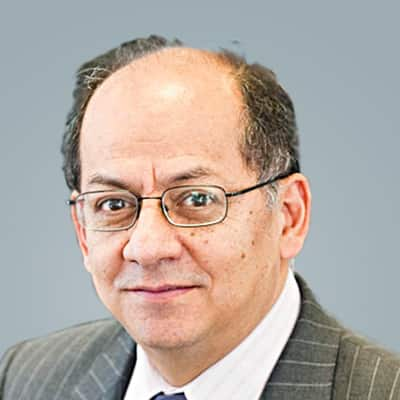
Carlos Caicedo is senior principal analyst, Americas, IHS Country Risk
{"items" : [
{"name":"share","enabled":true,"desc":"<strong>Share</strong>","mobdesc":"Share","options":[ {"name":"facebook","url":"https://www.facebook.com/sharer.php?u=http%3a%2f%2fwww.spglobal.com%2fmarketintelligence%2fen%2fmi%2fresearch-analysis%2fq21-a-fractured-government-spells-trouble-for-brazil.html","enabled":true},{"name":"twitter","url":"https://twitter.com/intent/tweet?url=http%3a%2f%2fwww.spglobal.com%2fmarketintelligence%2fen%2fmi%2fresearch-analysis%2fq21-a-fractured-government-spells-trouble-for-brazil.html&text=A+fractured+government+spells+trouble+for+Brazil","enabled":true},{"name":"linkedin","url":"https://www.linkedin.com/sharing/share-offsite/?url=http%3a%2f%2fwww.spglobal.com%2fmarketintelligence%2fen%2fmi%2fresearch-analysis%2fq21-a-fractured-government-spells-trouble-for-brazil.html","enabled":true},{"name":"email","url":"?subject=A fractured government spells trouble for Brazil&body=http%3a%2f%2fwww.spglobal.com%2fmarketintelligence%2fen%2fmi%2fresearch-analysis%2fq21-a-fractured-government-spells-trouble-for-brazil.html","enabled":true},{"name":"whatsapp","url":"https://api.whatsapp.com/send?text=A+fractured+government+spells+trouble+for+Brazil http%3a%2f%2fwww.spglobal.com%2fmarketintelligence%2fen%2fmi%2fresearch-analysis%2fq21-a-fractured-government-spells-trouble-for-brazil.html","enabled":true}]}, {"name":"rtt","enabled":true,"mobdesc":"Top"}
]}