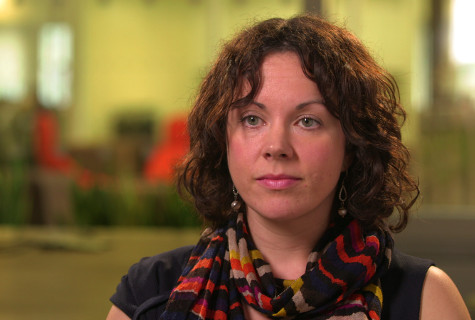
In this video Anna Boyd, Manager, MENA Country Risk, discusses four key factors to watch out for: participation in the Constitutional Referendum, Acceptance of IMF Conditionalities, Strengthening of Islamist Militias, and General al-Sisi Standing for the Presidency. This video accompanies a full article published in the Fall 2013 edition of the Country Risk Quarterly on Egypt’s likely political scenarios and their commercial implications.
Change in Egypt - Key Economic and Political Indicator. Published: Oct 18, 2013
In light of recent events why is Egypt important to pay attention to?
In terms of recent events it’s really important to pay attention to Egypt because essentially Egypt is a bellwether for the rest of the Middle East and North Africa region. Egypt was one of the first countries to experience a revolution and what we’re seeing now in terms of the political divide between Islamists and Secularists that is playing out in Egypt is also playing out amongst a lot of other Middle Eastern countries too, so if we can understand what’s happening in Egypt that will also help us to understand future developments in the rest of the region.
What is the first key indicator for change and the probable timeframe?
The first key indicator for change in Egypt will be participation in the constitutional referendum which is due to happen in November this year. At the moment it is looking likely that that process will be boycotted by the Muslim Brotherhood. What we don’t know is the extent to which other Islamist parties are going to boycott that process as well, for example the Al-Nour party or the Gamaat Islamiya group. At present those groups still look as though they would like to take part in the constitutional redrafting process, although their influence over that has been very much reduced. They've threatened on a number of occasions to withdraw from that process, if they were to do so and to join forces with the Muslim Brotherhood that would raise the risks of destabilizing unrest around the time of the referendum in November.
What is the second key indicator for change?
The second indicator for change in Egypt is whether the newly elected Egyptian government that will come into power early next year will accept the conditions laid down by the International Monetary Fund to supply it with a loan.
Egypt spends about $1.7b each month on food and fuel imports and until now it’s been able to sustain itself largely by injections of money through allied Gulf States such as Saudi Arabia, however this situation is unsustainable. Egypt really needs to get access to IMF funding in order to really make any difference to its economic situation which right now is very poor.
What’s important to most Egyptians is having food on the table and fuel. Under former President Morsi that was a problem. Since the army took over we've seen these injections of Gulf aid improve the situation but they’re really going to need IMF funding going forward to keep that situation improving and for that purpose they’re probably going to have to make subsidy cuts in order to meet the terms of the IMF conditions.
That in turn raises protest risks in itself: the cut of subsidies in Egypt is likely to be very controversial and likely to see mass protest even among people who are not particularly politicized and don’t support either the Muslim Brotherhood of the army one particular way or the other. So if the new government agrees to make those cuts that will be positive in the long term for funding, but in the short term there’s a very high risk of protests.
What is the third key indicator for change?
The third key indicator for change in Egypt would be whether Islamist militias are able to form and are able to take over several villages and towns simultaneously. What we see at the moment is most of the militant capability in Egypt is concentrated in the Sinai Peninsula and in that area we know that there’s a large amount of smuggled weapons and explosives going through there, for example rocket propelled grenades and other weapons that come between Libya and the Gaza strip and are smuggled through that area.
So far militants in the rest of Egypt have not really obtained that capability, however if we were to see them obtain that capability to transfer it into the rest of Egypt and to obtain large weapons caches, that could be used in the rest of Egypt, that would strengthen their capability to move on from the current sporadic terrorist attacks, for example the 5th September attempted assassination of the interior minister in Cairo with a bomb, towards a more sustained campaign to actually take over towns and villages, that would be much more threatening to the army and show that the army was losing control of the situation.
What is the fourth key indicator for change?
One key indicator for change will be whether the current defence minister Abdel Fattah al-Sisi, who is also an army general, decides to stand for president in the elections that are scheduled to be held in early 2014. Right now the army is very popular amongst the Egyptian public and especially al-Sisi who is viewed as the man who stood up to the Muslim Brotherhood and rescued the Egyptian public from the chaotic situation that existed under former-President Morsi, and there are a lot of people calling for al-Sisi to stand as President.
However the army until now has been content to exert its political influence from behind the scenes and really it is safer for it to have a civilian figurehead who can take the blame for any economic or political problems that might emerge, and can be changed easily without disturbing the army’s own economic and political interests. So it’s really up to al-Sisi whether he decides to run for President, but we would see this as quite a high risk strategy, because the risk for al-Sisi would be that any economic problems or any political problems would instead be blamed on him and the rest of the army, and if protests start to target the army and call for the army to withdraw from politics, that would be a very risky situation.
